
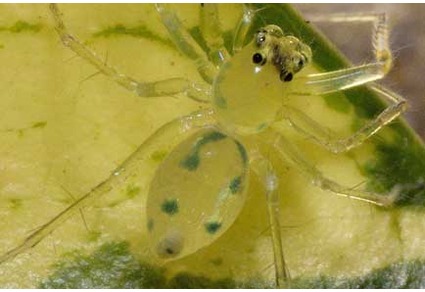

Abstract
The genus Onomastus represents an ancient, basal lineage of jumping spiders confined to the Oriental region. In this study, three new species, O. brahmagiri Jose & Benjamin, sp. nov. (male, female) and O. silentvalley Jose & Benjamin, sp. nov. (male, female) from India, and O. wijesinghei Benjamin & Jose, sp. nov. (male, female) from Sri Lanka are described. O. patellaris Simon, 1900 is redescribed based on new material. Detailed morphological descriptions, diagnostic illustrations and scanning electron micrographs are provided. Newly described species, along with recently reported species are incorporated into a revised cladistic framework based on 36 morphological characters across 25 taxa. The analysis supports the monophyly of the genus and separates it into South East Asian and South Asian clades. Within the South Asian clade, the Indian species forms a separate monophyletic group and in the South East Asian clade, O. chenae, O. subchenae, O. zhuwu, O. kanoi, and O. complexipalpis form a cluster. This further substantiates the phylogeographic structuring and micro-endemism within South Asian Onomastus. The study highlights the restricted distribution of the genus within the sky islands of the Western Ghats, rendering them particularly vulnerable to rising global temperatures and habitat loss.
References
- Benjamin, S.P. (2010) Revision and cladistic analysis of the jumping spider genus Onomastus (Araneae: Salticidae). Zoological Journal of the Linnean Society, 159, 711–745. https://doi.org/10.1111/j.1096-3642.2009.00580.x
- Benjamin, S.P. (2011) Collaborative studies on the fauna of the Western Ghats–Sri Lanka biodiversity hotspot. Current Science, 100, 290–291.
- Benjamin, S.P. & Hormiga, G. (2009) Phylogenetic placement of the enigmatic genus Labullinyphia van Helsdingen, 1985, with redescription of Labullinyphia tersa (Simon, 1894) from Sri Lanka (Araneae: Linyphiidae). Contributions to Natural History, 12, 161–181.
- Benjamin, S.P. & Kanesharatnam, N. (2016) Description of three new species of the tropical Asian jumping spider genus Onomastus Simon, 1900 from high altitude cloud forests of Sri Lanka (Araneae: Salticidae). Zootaxa, 4205 (5), 431–453. https://doi.org/10.11646/zootaxa.4205.5.2
- Bopearachchi, D. & Benjamin, S.P. (2021) Phylogenetic placement of Flacillula Strand, 1932 with seven new species from Sri Lanka (Araneae: Salticidae). Journal of Zoological Systematics and Evolutionary Research, 59, 812–830. https://doi.org/10.1111/jzs.12485
- Bremer, K. (1988) The limits of amino acid sequence data in angiosperm phylogenetic reconstruction. Evolution, 42, 795–803. https://doi.org/10.2307/2408870
- Bremer, K. (1994) Branch support and tree stability. Cladistics, 10, 295–304. https://doi.org/10.1111/j.1096-0031.1994.tb00179.x
- Chandrashekara, U.M., Muraleedharan, P.K. & Sibichan, V. (2006) Anthropogenic pressure on structure and composition of a shola forest in Kerala, India. Journal of Mountain Science, 3 (1), 58–70. https://doi.org/10.1007/s11629-006-0058-0
- Deepak, V. & Karanth, P. (2018) Aridification driven diversification of fan-throated lizards from the Indian subcontinent. Molecular Phylogenetics and Evolution, 120, 53–62. https://doi.org/10.1016/j.ympev.2017.11.016
- Edwards, G.B. (2015) Freyinae, a major new subfamily of Neotropical jumping spiders (Araneae: Salticidae). Zootaxa, 4036 (1), 1–87. https://doi.org/10.11646/zootaxa.4036.1.1
- Farris, J.S. (1970) Methods for computing Wagner trees. Systematic Zoology, 19, 83–92. https://doi.org/10.2307/2412028
- Fitch, W.M. (1971) Toward defining the course of evolution: minimum change for a specific tree topology. Systematic Biology, 20, 406–416. https://doi.org/10.1093/sysbio/20.4.406
- Galiano, M.E. (1962) Redescripciones de especies del genéro Lyssomanes Hentz, 1845, basadas en los ejemplares típicos. Descripción de una especie nueva (Araneae: Salticidae). Acta Zoologica Lilloana, 18, 45–97.
- Galiano, M.E. (1976) Comentarios sobre la categoría sistemática del taxón Lyssomanidae (Araneae). Revista del Museo Argentino de Ciencias Naturales Bernardino Rivadavia, Instituto Nacional de Investigación de Ciencias Naturales, 5 (3), 59–70.
- Galiano, M.E. (1980) Revisión del género Lyssomanes Hentz, 1845 (Araneae: Salticidae). Opera Lilloana, 30, 1–104.
- Goloboff, P.A., Farris, J.S., Källersj, M., Oxelman, B., Ramírez, M.J. & Szumik, C.A. (2003) Improvements to resampling measures of group support. Cladistics, 19, 324–332. https://doi.org/10.1111/j.1096-0031.2003.tb00376.x
- Goloboff, P.A., Farris, J.S. & Nixon, K. (2008) TNT: a free program for phylogenetic analysis. Cladistics, 24, 774–786. https://doi.org/10.1111/j.1096-0031.2008.00217.x
- Lin, Y. & Li, S. (2020) Two new genera and eight new species of jumping spiders (Araneae: Salticidae) from Xishuangbanna, Yunnan, China. ZooKeys, 952, 95–126. https://doi.org/10.3897/zookeys.952.51849
- Lin, Y., Li, S., Mo, H. & Wang, X. (2024) Thirty-eight spider species (Arachnida: Araneae) from China, Indonesia, Japan and Vietnam. Zoological Systematics, 49, 4–98. https://doi.org/10.11865/zs.202401
- Maddison, W.P. (2015) A phylogenetic classification of jumping spiders (Araneae: Salticidae). Journal of Arachnology, 43, 231–292. https://doi.org/10.1636/arac-43-03-231-292
- Maddison, W.P. & Maddison, D.R. (2023) Mesquite: a modular system for evolutionary analysis. Available from: https://www.mesquiteproject.org (accessed 9 October 2025)
- Maddison, W.P. & Needham, K.M. (2006) Lapsiines and hisponines as phylogenetically basal salticid spiders (Araneae: Salticidae). Zootaxa, 1255 (1), 37–55. https://doi.org/10.11646/zootaxa.1255.1.4
- Nixon, K.C. (2002) WinClada. Published by the author, Ithaca, New York. [program]
- Ono, H. (1995) Four East Asian spiders of the families Eresidae, Araneidae, Thomisidae and Salticidae (Arachnida: Araneae). Bulletin of the National Science Museum, Series A (Zoology), 21, 156–157.
- Prószyński, J. & Deeleman-Reinhold, C.L. (2013) Description of some Salticidae (Aranei) from the Malay Archipelago. III. Salticidae of Borneo, with comments on adjacent territories. Arthropoda Selecta, 22, 113–144. https://doi.org/10.15298/arthsel.22.2.02
- Schmerbeck, J., Einhellinger, B., Hangsing, M. & Abdullah, S. (2024) Tropical montane forest (Shola) tree species can regenerate under abandoned exotic tree plantations in the Western Ghats of India. Forestry: An International Journal of Forest Research, 97, 388–400. https://doi.org/10.1093/forestry/cpad050
- Simon, E. (1900) Description d’arachnides nouveaux de la famille des Attidae (suite). Annales de la Société Entomologique de Belgique, 44, 381–407. https://doi.org/10.3406/bsef.1900.22529
- Simon, E. (1901) Histoire naturelle des araignées. Deuxième édition, tome second, fascicle 3. Roret, Paris, 288 pp. [pp. 381–668] https://doi.org/10.5962/bhl.title.51973
- Wanless, F.R. (1980a) A revision of the spider genus Onomastus (Araneae: Salticidae). Bulletin of the British Museum (Natural History), Zoology, 39, 179–188. https://doi.org/10.5962/p.13271
- Wanless, F.R. (1980b) A revision of the spider genera Asemonea and Pandisus (Araneae: Salticidae). Bulletin of the British Museum (Natural History), Zoology, 39, 213–257. https://doi.org/10.5962/bhl.part.13273
- Wanless, F.R. (1981) A revision of the spider genus Hispo (Araneae: Salticidae). Bulletin of the British Museum (Natural History), Zoology, 41, 179–198. https://doi.org/10.5962/p.13271
- Wang, C., Wang, W.H. & Peng, X.J. (2021) A new species of the spider genus Onomastus Simon, 1900 from China (Araneae: Salticidae). Acta Arachnologica Sinica, 30, 31–35. https://doi.org/10.3969/j.issn.1005-9628.2021.01.005
- Wijesinghe, M.R. & Brooke, M.de L. (2004) What causes the vulnerability of endemic animals? A case study from Sri Lanka. Journal of Zoology, 264, 141–156. https://doi.org/10.1017/S0952836903004709
- World Spider Catalog (2025) World Spider Catalog. Version 26. Natural History Museum Bern. Available from: https://wsc.nmbe.ch/genus/2829 (accessed 9 October 2025)
- Żabka, M. (1985) Systematic and zoogeographic study on the family Salticidae (Araneae) from Viet-Nam. Annales Zoologici, 39, 197–485.
- Zhang, J.X. & Li, S.Q. (2005) Four new and one newly recorded species of the jumping spiders (Araneae: Salticidae) from subtropical China. Raffles Bulletin of Zoology, 53, 221–229.
- Zhisheng, A., Kutzbach, J.E., Prell, W.L. & Porter, S.C. (2001) Evolution of Asian monsoons and phased uplift of the Himalaya–Tibetan Plateau since Late Miocene times. Nature, 411, 62–66. https://doi.org/10.1038/35075035