

Abstract
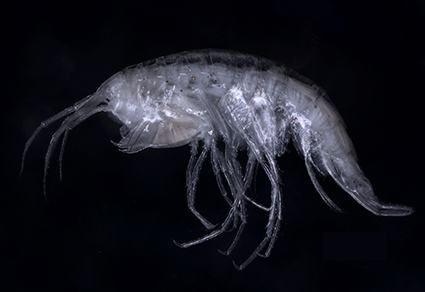
Subterranean ecosystems play a pivotal role in shaping diversification processes, particularly among invertebrates, which frequently exhibit convergent troglomorphic traits such as ocular reduction and elongation of appendages. Among crustaceans, amphipods demonstrate exceptional adaptive potential for colonizing hypogean habitats, revealing an often underappreciated reservoir of subterranean biodiversity. In the semiarid Caatinga of northeastern Brazil, the Jandaíra Formation constitutes an extensive Cretaceous limestone system, harboring more than 1,400 documented caves and representing a critical hotspot for stygobiotic taxa. Building on this insight, we expand the known range of Seborgia within the Jandaíra Formation and describe a single new troglobitic species from a spatially isolated cave system. This species is readily diagnosable by distinct morphological characters of the gnathopods, uropods, and telson, and its occurrence in strict allopatry is consistent with diversification driven by subterranean vicariance. Its highly restricted distribution highlights the role of hydrogeological isolation and habitat fragmentation as key evolutionary forces shaping subterranean diversity in this region. Notably, the newly described species occurs in a cave in the Furna Feia National Park, highlighting the importance of protected areas for the conservation of subterranean ecosystems and their unique biodiversity.
References
- Bento, D.M., Souza-Silva, M., Vasconcellos, A., Bellini, B.C., Prous, X. & Ferreira, R.L. (2021) Subterranean “oasis” in the Brazilian semiarid region: neglected sources of biodiversity. Biodiversity and Conservation, 30, 3837–3857. https://doi.org/10.1007/s10531-021-02277-6
- Bento, D.M., Ferreira, R.L., Vasconcelos, S., Lima, J.L.R., Oliveira, G., Silva, T.C. & Lima, S.M.Q. (2024) Before it’s too late: priority areas for conservation of cryptic and threatened species of troglobitic arthropods in the Brazilian semiarid. Biodiversity and Conservation, 33 (6), 1985–2010. https://doi.org/10.1007/s10531-024-02833-w
- Cardoso, R.C., Ferreira, R.L. & Souza-Silva, M. (2021) Priorities for cave fauna conservation in the Iuiú karst landscape, northeastern Brazil: a threatened spot of troglobitic species diversity. Biodiversity and Conservation, 30 (5), 1433–1455. https://doi.org/10.1007/s10531-021-02151-5
- Ferreira, R.L., Prous, X., Bernardi, L.F.O. & Silva, M.S. (2010) Fauna subterrânea do estado do Rio Grande do Norte: caracterização e impactos. Revista Brasileira de Espeleologia, 1 (1), 25–51.
- Fišer, C., Zagmajster, M. & Ferreira, R.L. (2013) Two new Amphipod families recorded in South America shed light on an old biogeographical enigma. Systematics and Biodiversity, 11 (2), 117–139. https://doi.org/10.1080/14772000.2013.788579
- Gilbert, H., Keany, J. & Culver, D.C. (2018) Response of shallow subterranean freshwater amphipods to habitat drying. Subterranean Biology, 28, 15–28. https://doi.org/10.3897/subtbiol.28.30700
- Holsinger, J.R. (1982) Four new species of subterranean amphipod crustaceans (Artesiidae, Hadziidae, Sebidae) from Texas, with comments on their phylogenetic and biogeographic relationships. Texas Memorial Museum, Speleological Monographs, 3, 1–22.
- Hutchins, B.T., Tovar, R.U. & Schwartz, B.F. (2013) New records for stygobionts from the Edwards Aquifer of Central Texas. Speleobiology Notes, 5, 14–18.
- Hutchins, B.T., Schwartz, B.F. & Nowlin, W.H. (2014) Morphological and trophic specialization in a subterranean amphipod assemblage. Freshwater Biology, 59 (12), 2447–2461. https://doi.org/10.1111/fwb.12440
- Mammola, S. & Isaia, M. (2018) Day–night and seasonal variations of a subterranean invertebrate community in the twilight zone. Subterranean Biology, 27, 31–51. https://doi.org/10.3897/subtbiol.27.28909
- Puppin-Gonçalves, C.T., Bento, D.M., Perbiche-Neves, G., Ferreira, R.L., Souza-Silva, M., Becker, V. & Dias, J.D. (2024) Exploring uncharted waters: insights into groundwater zooplankton of the Brazilian semiarid region. Aquatic Sciences, 86 (3), 88. https://doi.org/10.1007/s00027-024-01100-y
- Pyron, R.A. & Burbrink, F.T. (2010) Hard and soft allopatry: physically and ecologically mediated modes of geographic speciation. Journal of Biogeography, 37 (10), 2005–2015. https://doi.org/10.1111/j.1365-2699.2010.02336.x
- Santos Filho, M.A.B., Piovesan, E.K., Fauth, G. & Srivastava, N.K. (2015) Paleoenvironmental interpretation through the analysis of ostracodes and carbonate microfacies: study of the Jandaíra Formation, Upper Cretaceous, Potiguar Basin. Brazilian Journal of Geology, 45 (1), 23–34. https://doi.org/10.1590/23174889201500010002
- Shaw, P. (1989) New amphipods from geothermal vent sites off the west coast of Vancouver Island, British Columbia, with a reappraisal of the amphipod family Sebidae. Canadian Journal of Zoology, 67 (8), 1882–1890. https://doi.org/10.1139/z89-269
- Shimomura, M. & Fujita, Y. (2021) Seborgia cavernicola sp. nov. from a submarine cave on Okinawa Island, Ryukyu Islands, southwestern Japan (Crustacea, Amphipoda, Seborgiidae). Zootaxa, 4927 (1), 133–142. https://doi.org/10.11646/zootaxa.4927.1.9
- Steele, D.H. & Steele, V.J. (2020) Morphological and environmental restraints on egg production in amphipods. In: Kuris, A. (Ed.), Crustacean Egg Production. CRC Press, London, pp. 157–170. https://doi.org/10.1201/9781003072560-13