

Abstract
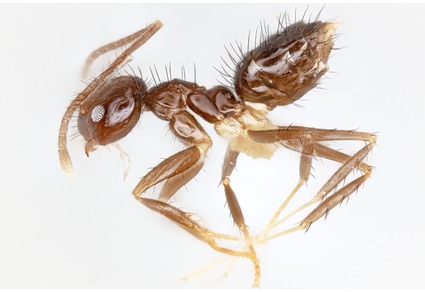
The ant genus Nylanderia Emery comprises 138 known species and is common across most terrestrial regions worldwide. At least 15 species have spread beyond their native ranges, some becoming ecologically and economically destructive. Subtle morphology, unresolved taxonomy, and widespread distributions make these species difficult to identify, complicating conservation efforts in biodiversity hotspots like the Galápagos Islands. Here, based on a comprehensive examination of Neotropical Nylanderia, we revise the taxonomy of the N. guatemalensis complex, recognizing seven described species: N. ambulator Williams et al.; N. coveri LaPolla & Kallal; N. docilis (Forel); N. guatemalensis (Forel); N. insularis Williams sp. nov.; N. nesiotis (Wheeler) stat. nov.; and N. silvestrii (Emery); plus an undescribed eighth, N. sp. JKW1 (singleton). Among these, we confirm two in the Galápagos: the non-native N. guatemalensis and the endemic N. nesiotis. While eight other ant species in the Galápagos are considered probable endemics, N. nesiotis is the first confirmed as such. We synonymize N. lietzi (Forel), N. steinheili (Forel), N. guatemalensis cocoensis (Forel), N. guatemalensis itinerans (Forel), and N. silvestrii kuenzleri (Forel) with N. guatemalensis, and N. guatemalensis edenensis (Linsley & Usinger) with N. nesiotis. Species boundaries are supported by combined evidence from Ultraconserved Element (UCE) phylogenomics and morphology. We provide distributions, a worker-based key, and high-resolution images of available castes to facilitate species recognition, support biodiversity monitoring, and improve detection and management of invasive Nylanderia.
References
- Abbott, K.L. (2006) Spatial dynamics of supercolonies of the invasive yellow crazy ant, Anoplolepis gracilipes, on Christmas Island, Indian Ocean. Diversity and Distributions, 12 (1), 101–110. https://doi.org/10.1111/j.1366-9516.2006.00193.x
- Ahmad, A. & Bharti, H. (2015) Taxonomic review of ant genus Nylanderia Emery, 1906 (Hymenoptera: Formicidae) in India. Journal of Asia-Pacific Biodiversity, 8 (2), 105–120. https://doi.org/10.1016/j.japb.2015.04.007
- Amand, A. (2000) Boiga irregularis (brown tree snakes) on Guam and its effect on fauna. Restoration and Reclamation Review, 6 (6), 6.
- AntWeb (2026) AntWeb. Available from: http://www.antweb.org (accessed 1 April 2026)
- Bankevich, A., Nurk, S., Antipov, D., Gurevich, A.A., Dvorkin, M., Kulikov, A.S., Lesin, V.M., Nikolenko, S.I., Pham, S., Prjibelski, A.D., Pyshkin, A.V., Sirotkin, A.V., Vyahhi, N., Tesler, G., Alekseyev, M.A. & Pevzner, P.A. (2012) SPAdes: A new genome assembly algorithm and its applications to single-cell sequencing. Journal of Computational Biology, 19 (5), 455–477. https://doi.org/10.1089/cmb.2012.0021
- Bertelsmeier, C., Ollier, S., Liebhold, A. & Keller, L. (2017) Recent human history governs global ant invasion dynamics. Nature Ecology & Evolution, 1 (June), 0184. https://doi.org/10.1038/s41559-017-0184
- Bolton, B. (2026) An online catalog of the ants of the world. Available from: http://antcat.org (accessed 1 April 2026)
- Borowiec, M. (2016) AMAS: A fast tool for alignment manipulation and computing of summary statistics. PeerJ, 4 (January), e1660. https://doi.org/10.7717/peerj.1660
- Borowiec, M. (2019) Spruceup: fast and flexible identification, visualization, and removal of outliers from large multiple sequence alignments. Journal of Open Source Software, 4, 1–6. https://doi.org/10.21105/joss.01635
- Borowiec, M.L., Zhang, Y.M., Neves, K., Ramalho, M.O., Fisher, B.L., Lucky, A. & Moreau, C.S. (2025) Evaluating UCE data adequacy and integrating uncertainty in a comprehensive phylogeny of ants. Systematic Biology, syaf001. https://doi.org/10.1093/sysbio/syaf001
- Brues, C.T. (1919) A new species of the Hymenopterous genus Scleroderma from the Galápagos Islands. Proceedings of the California Academy of Sciences, (4) 2, 309–310.
- Castresana, J. (2000) Selection of conserved blocks from multiple alignments for their use in phylogenetic analysis. Molecular Biology and Evolution, 17 (4), 540–552. https://doi.org/10.1093/oxfordjournals.molbev.a026334
- Edelman, N.B., Frandsen, P.B., Miyagi, M., Clavijo, B., Davey, J., Dikow, R.B., García-Accinelli, G., Belleghem, S.M.V., Patterson, N., Neafsey, D.E., Challis, R., Kumar, S., Moreira, G.R.P., Salazar, C., Chouteau, M., Counterman, B.A., Papa, R., Blaxter, M., Reed, R.D., Dasmahapatra, K.K., Kronforst, M., Joron, M., Jiggins, C.D., McMillan, W.O., Palma, F.D., Blumberg, A.J., Wakeley, J., Jaffe, D. & Mallet, J. (2019) Genomic architecture and introgression shape a butterfly radiation. 366 (6465), 594–599. https://doi.org/10.1126/science.%2520aaw2090
- Emery, C. (1906) Studi sulle formiche della fauna Neotropica. XXXVII. Bullettino della Società Entomologica Italiana, 37, 107–194.
- Fabricius, J.C. (1804) Systema Piezatorum secundum ordines, genera, species, adiectis synonymis, locis, observationibus, descriptionibus. C. Reichard, Brunswick, 15–439 + 30 pp. https://doi.org/10.5962/bhl.title.10490
- Faircloth, B.C. (2015) PHYLUCE is a software package for the analysis of conserved genomic loci. Bioinformatics, 32 (5), 786–788. https://doi.org/10.1093/bioinformatics/btv646
- Forel, A. (1885) Études myrmécologiques en 1884; avec une description des organes sensoriels des antennes. Bulletin de la Société Vaudoise des Sciences Naturelles, 20, 316–380.
- Forel, A. (1893) Formicides de l’Antille St. Vincent. Récoltées par Mons. HH Smith. Transactions of the Entomological Society of London, 1893, 33–418.
- Forel, A. (1899) Formicidae. [part]. Biologia Centrali-Americana Hym, 3, 105–136.
- Forel, A. (1901a) Formiciden aus dem Bismarck-Archipel, auf Grundlage des von Prof. Dr. F. Dahl gesammelten Materials. Mitteilungen aus dem Zoologischen Museum in Berlin, 2, 4–37.
- Forel, A. (1901b) Formiciden des Naturhistorischen Museums zu Hamburg. Neue Calyptomyrmex-, Dacryon-, Podomyrma- und Echinopla-Arten. Mitteilungen aus dem Naturhistorischen Museum in Hamburg, 18, 43–82.
- Forel, A. (1902) Quatre notices myrmécologiques. Annales de la Société Entomologique de Belgique, 46, 170–182.
- Forel, A. (1908a) Ameisen aus Sao Paulo (Brasilien), Paraguay etc. gesammelt von Prof. Herm. v. Ihering, Dr. Lutz, Dr. Fiebrig, etc. Verhandlungen der Kaiserlich-Königlichen Zoologisch-Botanischen Gesellschaft in Wien, 58, 340–418.
- Forel, A. (1908b) Fourmis de Costa-Rica récoltées par M. Paul Biolley. Bulletin de la Société Vaudoise des Sciences Naturelles, 44, 35–72.
- Forel, A. (1909) Ameisen aus Guatemala usw., Paraguay und Argentinien. (Hym.). Deutsche Entomologische Zeitschrift, 1909 (2), 239–269. https://doi.org/10.1002/mmnd.48019090209
- Forel, A. (1911) Ameisen des Herrn Prof. v. Ihering aus Brasilien (Sao Paulo usw.) nebst einigen anderen aus Südamerika und Afrika (Hym.). Deutsche Entomologische Zeitschrift, 1911, 285–312. https://doi.org/10.1002/mmnd.48019110305
- Forel, A. (1912) Formicides néotropiques. Part VI. 5me sous-famille Camponotinae Forel. Mémoires de la Société, 20, 59–92.
- Gotzek, D., Brady, S.G., Kallal, R.J. & LaPolla, J.S. (2012) The importance of using multiple approaches for identifying emerging invasive species: The case of the Rasberry crazy ant in the United States. PLoS ONE, 7 (9), e45314. https://doi.org/10.1371/journal.pone.0045314
- Guénard, B., Weiser, M.D., Gómez, K., Narula, N. & Economo, E.P. (2017) The Global Ant Biodiversity Informatics (GABI) database: synthesizing data on the geographic distribution of ant species (Hymenoptera: Formicidae). Myrmecological News, 24 (March), 83–89. https://doi.org/10.25849/myrmecol.news_024:083
- Guindon, S., Dufayard, J.F., Lefort, V., Anisimova, M., Hordijk, W. & Gascuel, O. (2010) New algorithms and methods to estimate maximum-likelihood phylogenies: Assessing the performance of PhyML 3.0. Systematic Biology, 59 (3), 307–321. https://doi.org/10.1093/sysbio/syq010
- Harter, D.E.V., Irl, S.D.H., Seo, B., Steinbauer, M.J., Gillespie, R., Triantis, K.A., Fernández-Palacios, J.-M. & Beierkuhnlein, C. (2015) Impacts of global climate change on the floras of oceanic islands – projections, implications and current knowledge. Perspectives in Plant Ecology, Evolution and Systematics, 17 (2), 160–183. https://doi.org/10.1016/j.ppees.2015.01.003
- Herrera, H.W., Tocora, M.C., Fiorentino, G., Causton, C.E., Dekoninck, W. & Hendrickx, F. (2024) The ants of the Galápagos Islands (Hymenoptera, Formicidae): a historical overview, checklist, and identification key. ZooKeys, 1191, 151–213. https://doi.org/10.3897/zookeys.1191.107324
- Hoang, D.T., Chernomor, O., Haeseler, A.V., Minh, B.Q. & Vinh, L.S. (2017) UFBoot2: Improving the ultrafast bootstrap approximation. Molecular Biology and Evolution, 35 (2), 518–522. https://doi.org/10.5281/zenodo.854445
- Hölldobler, B. & Wilson, E.O. (1990) The Ants. Harvard University Press, Cambridge, Massachusetts, USA.
- Junier, T. & Zdobnov, E.M. (2010) The Newick utilities: high-throughput phylogenetic tree processing in the UNIX shell. Bioinformatics, 26 (13), 1669–1670. https://doi.org/10.1093/bioinformatics/btq243
- Kallal, R.J. & LaPolla, J.S. (2012) Monograph of Nylanderia (Hymenoptera: Formicidae) of the world, part II: Nylanderia in the Nearctic. Zootaxa, 64, 1–64. https://doi.org/10.11646/zootaxa.3508.1.1
- Kalyaanamoorthy, S., Minh, B.Q., Wong, T.K.F., Von Haeseler, A. & Jermiin, L.S. (2017) ModelFinder: Fast model selection for accurate phylogenetic estimates. Nature Methods, 14 (6), 587–589. https://doi.org/10.1038/nmeth.4285
- Kandziora, M., Sklenář, P., Kolář, F. & Schmickl, R. (2022) How to tackle phylogenetic discordance in recent and rapidly radiating groups? Developing a workflow using Loricaria (Asteraceae) as an example. Frontiers in Plant Science, 12, 765719. https://doi.org/10.3389/fpls.2021.765719
- Katoh, K. & Standley, D.M. (2013) MAFFT multiple sequence alignment software version 7: Improvements in performance and usability. Molecular Biology and Evolution, 30 (4), 772–780. https://doi.org/10.1093/molbev/mst010
- Klotz, J.H., Mangold, J.R., Vail, K.M., Davis, L.R. & Patterson, R.S. (1995) A survey of the urban pest ants (Hymenoptera: Formicidae) of peninsular Florida. The Florida Entomologist, 78 (1), 109–118. https://doi.org/10.2307/3495674
- Krushelnycky, P.D., Loope, L.L. & Reimer, N.J. (2005) The ecology, policy, and management of ants in Hawaii. Proceedings of the Hawaiian Entomological Society, 37, 1–25. https://doi.org/10.1002/1873-3468.12226
- Lanfear, R., Frandsen, P.B., Wright, A.M., Senfeld, T. & Calcott, B. (2017) Partitionfinder 2: New methods for selecting partitioned models of evolution for molecular and morphological phylogenetic analyses. Molecular Biology and Evolution, 34 (3), 772–773. https://doi.org/10.1093/molbev/msw260
- LaPolla, J.S., Brady, S.G. & Shattuck, S.O. (2010) Phylogeny and taxonomy of the Prenolepis genus-group of ants (Hymenoptera: Formicidae). Systematic Entomology, 35, 118–131. https://doi.org/10.1111/j.1365-3113.2009.00492.x
- LaPolla, J.S., Hawkes, P.G. & Fisher, B.L. (2011) Monograph of Nylanderia (Hymenoptera: Formicidae) of the world, part I: Nylanderia in the Afrotropics. Zootaxa, 3110, 10–36. https://doi.org/10.11646/zootaxa.3110.1.1
- LaPolla, J.S. & Kallal, R.J. (2019) Nylanderia of the world part III: Nylanderia in the West Indies. Zootaxa, 4658 (3), 401–451. https://doi.org/10.11646/zootaxa.4658.3.1
- Latreille, P.A. (1802) Histoire naturelle des fourmis, et recueil de mémoires et d’observations sur les abeilles, les araignées, les faucheurs, et autres insectes. Impr. Crapelet (chez T. Barrois), Paris, xvi + 445 p. https://doi.org/10.5962/bhl.title.11138
- Linsley, E.G. & Usinger, R.L. (1966) Insects of the Galápagos Islands. Proceedings of the California Academy of Sciences, (4) 33, 113–196.
- Longino, J.T. & Branstetter, M.G. (2019) The truncated bell: an enigmatic but pervasive elevational diversity pattern in Middle American ants. Ecography, 42 (2), 272–283. https://doi.org/10.1111/ecog.03871
- Longino, J.T., Branstetter, M.G. & Colwell, R.K. (2014) How ants drop out: ant abundance on tropical mountains Smith, M.A. (Ed). PLoS ONE, 9 (8), e104030. https://doi.org/10.1371/journal.pone.0104030
- Longino, J.T. & Colwell, R.K. (2011) Density compensation, species composition, and richness of ants on a neotropical elevational gradient. Ecosphere, 2 (3), art29. https://doi.org/10.1890/ES10-00200.1
- Mayr, G. (1862) Myrmecologische studien. Verh KK Zool Bot Ges Wien, 12, 649–776.
- Mayr, G. (1870) Formicidae novogranadenses. Sitzungsberichte der Kaiserlichen Akademie der Wissenschaften in Wien. Mathematisch-Naturwissenschaftliche Classe. Abteilung I, 61, 370–417.
- Minh, B.Q., Schmidt, H.A., Chernomor, O., Schrempf, D., Woodhams, M.D., von Haeseler, A. & Lanfear, R. (2020) IQ-TREE 2: new models and efficient methods for phylogenetic inference in the genomic era. Molecular biology and evolution, 37 (5), 1530–1534. https://doi.org/10.1093/molbev/msaa015
- Moreno-Buitrón, I.J., Boada-Viteri, E., Guayasamin, J.M., Guerra-Correa, E.S., Becdach-Mesia, I., Betancourt-Cargua, L., Román, A.C. & Ramón-Cabrera, G.M. (2024) Aliens on the menu: high prevalence of introduced ants in the diet of Galápagos lava lizards, Microlophus spp. Biological Invasions, 26 (11), 3929–3945. https://doi.org/10.1007/s10530-024-03421-3
- Myers, E.A., Rautsaw, R.M., Borja, M., Jones, J., Grünwald, C.I., Holding, M.L., Grazziotin, F.G. & Parkinson, C.L. (2024) Phylogenomic discordance is driven by wide-spread introgression and incomplete lineage sorting during rapid species diversification within rattlesnakes (Viperidae: Crotalus and Sistrurus) Ruane, S. (Ed). Systematic Biology, 73 (4), 722–741. https://doi.org/10.1093/sysbio/syae018
- Oberski, J.T., Griebenow, Z.H., Adams, R.M.M., Andersen, A., Andrade-Silva, J., Barden, P., Borowiec, M., Brady, S., Casadei-Ferreira, A., Csősz, S., Dias, A.M., Dias, R.K.S., Feitosa, R.M., Fernández, F., Fisher, B.L., General, D.E.M., Gomez, K., Hammel, J.U., Hawkes, P.G., Janda, M., Khalife, A., Ladino, N., Lieberman, Z.E., Lucky, A., Menchetti, M., Prado, L.P.D., Prebus, M.M., Probst, R.S., Punnath, A., Richter, A., Salata, S., Sánchez-Restrepo, A.F., Schifani, E., Schultz, T.R., Silva, R.R., Sosa-Calvo, J., Tocora, M.C., Ulysséa, M.A., Van De Kamp, T., Wang, W.Y., Williams, J.L., Camacho, G.P. & Boudinot, B.E. (2025) Ant systematics: past, present, and future. Insect Systematics and Diversity, 9 (4), 11. https://doi.org/10.1093/isd/ixaf025
- Parker, J. & Kronauer, D.J.C. (2021) How ants shape biodiversity. Current Biology, 31 (19), R1208–R1214. https://doi.org/10.1016/j.cub.2021.08.015
- Pease, J.B., Haak, D.C., Hahn, M.W. & Moyle, L.C. (2016) Phylogenomics reveals three sources of adaptive variation during a rapid radiation. PLOS Biology, 14 (2), e1002379. https://doi.org/10.1371/journal.pbio.1002379
- Punnath, A., Williams, J.L., LaPolla, J.S., Fisher, B.L., Yamane, S., Dang, A. & Lucky, A. (2026) The Nylanderia fauna of Vietnam: a morphological and phylogenomic revision (Hymenoptera: Formicidae). Insect Systematics and Diversity.
- Reaser, J.K., Meyerson, L.A., Cronk, Q., De Poorter, M., Eldrege, L.G., Green, E., Kairo, M., Latasi, P., Mack, R.N., Mauremootoo, J., O’Dowd, D., Orapa, W., Sastroutomo, S., Saunders, A., Shine, C., Thrainsson, S. & Vaiutu, L. (2007) Ecological and socioeconomic impacts of invasive alien species in island ecosystems. Environmental Conservation, 34 (2), 98–111. https://doi.org/10.1017/S0376892907003815
- Richmond, J.Q., Wood, D.A., Stanford, J.W. & Fisher, R.N. (2015) Testing for multiple invasion routes and source populations for the invasive brown treesnake (Boiga irregularis) on Guam: implications for pest management. Biological Invasions, 17 (1), 337–349. https://doi.org/10.1007/s10530-014-0733-y
- Roger, J. (1863) Die neu aufgeführten Gattungen und Arten meines Formiciden‐Verzeichnisses nebst Ergänzung einiger früher gegebenen Beschreibungen. Berliner entomologische Zeitschrift, 7 (1–2), 131–214. https://doi.org/10.1002/mmnd.18630070116
- Russell, J.C., Meyer, J.-Y., Holmes, N.D. & Pagad, S. (2017) Invasive alien species on islands: impacts, distribution, interactions and management. Environmental Conservation, 44 (4), 359–370. https://doi.org/10.1017/S0376892917000297
- Sayyari, E. & Mirarab, S. (2016) Fast coalescent-based computation of local branch support from quartet frequencies. Molecular Biology and Evolution, 33 (7), 1654–1668. https://doi.org/10.1093/molbev/msw079
- Silva, T.S.R., Hamer, M.T. & Guénard, B. (2023) A checklist of Nylanderia (Hymenoptera: Formicidae: Formicinae) from Hong Kong and Macao SARs, with an illustrated identification key for species in Southeast China and Taiwan. Zootaxa, 5301 (5), 501–539. https://doi.org/10.11646/zootaxa.5301.5.1
- Suarez, A.V. & Case, T.J. (2002) Bottom-up effects on persistence of a specialist predator: ant invasions and horned lizards. Ecological Applications, 12 (1), 291–298. https://doi.org/10.1890/1051-0761(2002)012[0291:BUEOPO]2.0.CO;2
- Suh, A. (2016) The phylogenomic forest of bird trees contains a hard polytomy at the root of Neoaves. Zoologica Scripta, 45 (S1), 50–62. https://doi.org/10.1111/zsc.12213
- Tagliacollo, V.A. & Lanfear, R. (2018) Estimating improved partitioning schemes for Ultraconserved Elements. Molecular Biology and Evolution, 35 (7), 1798–1811. https://doi.org/10.1093/molbev/msy069
- Trager, J. (1984) A revision of the genus Paratrechina (Hymenoptera: Formicidae) of the continental United States. Sociobiology, 9 (2), 51–162. https://doi.org/10.5281/zenodo.24910
- Vivien, R., Martin, P., Pawlowski, J. & Alther, R. (2025) Adapting practices to accelerate the scientific description of invertebrate cryptic species. Biology Letters, 21 (10), 20250385. https://doi.org/10.1098/rsbl.2025.0385
- Wauters, N., Dekoninck, W. & Fournier, D. (2018) Introduction history and genetic diversity of the invasive ant Solenopsis geminata in the Galápagos Islands. Biological Invasions, 20 (11), 3207–3226. https://doi.org/10.1007/s10530-018-1769-1
- Wetterer, J.K. (2005) Worldwide distribution and potential spread of the long-legged ant, Anoplolepis gracilipes (Hymenoptera: Formicidae). Sociobiology, 45 (1), 1–21. https://doi.org/www.csuchico.edu/biol/Sociobiology/sociobiologyindex.html
- Wheeler, W.M. (1919) Expedition of the California Academy of Sciences to the Galapagos Islands, 1905-1906. XIV. The ants of the Galapagos Islands. Proceedings of the California Academy of Sciences, 2 (2), 259–297.
- Wheeler, W.M. (1924) The Formicidae of the Harrison Williams Galápagos Expedition. Zoologica, (4) 5, 101–122.
- Williams, J.L., Auletta, A., Punnath, A., Li, Y., Bass, K., Campo, R.J.L., Conde, A.G., Estevez, C., Humphries, E., Judd, D., Kaye, D.R., Miskimen, V., Prouty, N., Roe, A., Raaida, S., Scothorn, S.R., Vincentsen, T.H., Williams, J.F., LaPolla, J.S. & Lucky, A. (2025a) Scaling up taxonomic training through a Course-based Undergraduate Research Experience (CURE) and descriptions of 4 new ant species in the genus Nylanderia (Hymenoptera: Formicidae) Song, H. (Ed). Insect Systematics and Diversity, 9 (5), ixaf039. https://doi.org/10.1093/isd/ixaf039
- Williams, J.L. & Lucky, A. (2020) Non-native and invasive Nylanderia crazy ants (Hymenoptera: Formicidae) of the world: integrating genomics to enhance taxonomic preparedness. Annals of the Entomological Society of America, 113 (4), 318–336. https://doi.org/10.1093/aesa/saz039
- Williams, J.L., Punnath, A., Fernández, M.B., Calcaterra, L.A., LaPolla, J.S. & Lucky, A. (2024) ‘Picking up signals’ in male genital morphospace and integrating phylogenomics to delimit Neotropical Nylanderia Emery species (Hymenoptera: Formicidae) Hines, H. (Ed). Insect Systematics and Diversity, 8 (5), 6. https://doi.org/10.1093/isd/ixae028
- Williams, J.L., Williams, J.F., Lapolla, J.S. & Lucky, A. (2025b) Nylanderia of the world, part IV: taxonomic contributions to the American clade I of New World Nylanderia (Hymenoptera: Formicidae). Zootaxa, 5569 (3), 549–593. https://doi.org/10.11646/zootaxa.5569.3.10
- Williams, J.L., Zhang, Y.M., LaPolla, J.S., Schultz, T.R. & Lucky, A. (2022) Phylogenomic delimitation of morphologically cryptic species in globetrotting Nylanderia (Hymenoptera: Formicidae) species complexes. Insect Systematics and Diversity, 6 (1), 10. https://doi.org/10.1093/isd/ixab027
- Williams, J.L., Zhang, Y.M., Lloyd, M.W., LaPolla, J.S., Schultz, T.R. & Lucky, A. (2020) Global domination by crazy ants: Phylogenomics reveals biogeographical history and invasive species relationships in the genus Nylanderia (Hymenoptera: Formicidae). Systematic Entomology, 45, 730–744. https://doi.org/10.1111/syen.12423
- Wong, M.K.L., Economo, E.P. & Guénard, B. (2023) The global spread and invasion capacities of alien ants. Current Biology, 33 (3), 566–571.e3. https://doi.org/10.1016/j.cub.2022.12.020
- Zhang, C., Rabiee, M., Sayyari, E. & Mirarab, S. (2018) ASTRAL-III: polynomial time species tree reconstruction from partially resolved gene trees. BMC Bioinformatics, 19 (Suppl 6), 153. https://doi.org/10.1186/s12859-018-2129-y