

Abstract
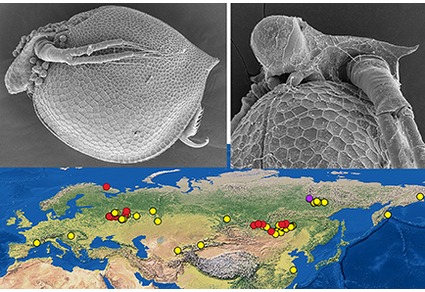
Representatives of the genus Ceriodaphnia Dana, 1853 (Cladocera: Daphniidae) are widely distributed worldwide, they are very common in the plankton of many freshwater bodies of different types in temperate and tropical latitudes. However, their taxonomy remains intricate, especially as compared to the genus Daphnia O.F. Müller, 1785. The aim of this study is to redescribe the morphology of Eurasian taxa having a specific (high and triangular) postabdomen, namely C. rotunda (Straus, 1820) and C. laticaudata P.E. Müller, 1867 and list the differences between these two taxa. A population from Republic of Sakha (Yakutia, Asian Russia) is identified as C. cf. laticaudata, and its exact taxonomic status could not be resolved to date due to a limited material and absence of gamogenetic specimens in our collection. Also, we analyse the morphological characters used for identification of common Eurasian taxa with special attention to limb II. All Ceriodaphnia species could be subdivided into four groups according to the size of anterior setae on the inner-distal portion of limb II: the pulchella-group with a single rudimentary seta on endite 4 and no seta on endite 3, the quadrangula group with short setae on endites 3 and 4, the dubia-turkestanica-reticulata-nikolaii group with a single very large seta on endite 4 and a shorter seta on endite 3, and the rotunda-laticaudata group with large setae on endites 4 and 3. Four aforementioned groups could be formed according to ecological preferences rather than their phylogenetic position. A further step-by-step revision of Ceriodaphnia is needed based on morphological and full-genome data for adequate understanding of the genus diversity.
References
- Adamowicz, S.J., Petrusek, A., Colbourne, J.K., Hebert, P.D.N. & Witt, J.D.S. (2009) The scale of divergence: a phylogenetic appraisal of intercontinental allopatric speciation in a passively dispersed freshwater zooplankton genus. Molecular Phylogenetics and Evolution, 50 (3), 423–436. https://doi.org/10.1016/j.ympev.2008.11.026
- Alonso, M. (1996) Crustacea: Branchiopoda. Fauna Iberica 7. Consejo Superior de Investigaciones Cientificas, Madrid.
- Alonso, M., Neretina, A.N. & Ventura, M. (2021) Ceriodaphnia smirnovi (Crustacea: Cladocera), a new species from the Mediterranean Region, and a phylogenetic analysis of the commonest species. Zootaxa, 4974 (1), 1–46. https://doi.org/10.11646/zootaxa.4974.1.1
- Arévalo, C. (1916) Introduccion al estudio de los Cladóceros del plankton de la Albufera de Valencia. Anales del Instituto General у Téchnico de Valencia, 1, 1–67.
- Baird, W. (1850) The natural history of the British Entomostraca. The Ray Society, London.
- Begum, M., Noor, P., Ahmed, K.N., Mohanta, C., Sultana, N., Hasan & Uddin, M.N. (2014) Assessment of four different media for the mass culture of Ceriodaphnia reticulata (Jurine) as a live fish feed. Journal of the Asiatic Society of Bangladesh, Science, 39 (2), 129–138. https://doi.org/10.3329/jasbs.v39i2.17849
- Behning, A.L. (1941) Kladotsera Kavkaza - The Cladocerans of the Caucasus. Gruzmedgiz Publishing, Tbilisi, 1–384.
- Bekker, E.I., Karabanov, D.P., Galimov, Y.R., Haag, C.R., Neretina, T.V. & Kotov, A.A. (2018) Phylogeography of Daphnia magna Straus (Crustacea: Cladocera) in Northern Eurasia: Evidence for a deep longitudinal split between mitochondrial lineages. PLoS One, 13 (3), e0194045. https://doi.org/10.1371/journal.pone.0194045
- Berner, D.B. (1982) Key to the Cladocera of Par Pond on the Savannah River Plant. A publication of the Savannah River Plant National Environmental Research Park program. United States Department of Energy, Savannah River Ecology Laboratory, Aiken.
- Berner, D.B. (1985) Morphological differentiation among species in the Ceriodaphnia cornuta complex (Crustacea, Cladocera), 22 (5), 3099–3103. https://doi.org/10.1080/03680770.1983.11897839
- Berner, D.B. (1986) Taxonomy of Ceriodaphnia (Crustacea: Cladocera) in U.S. Environmental Protection agency Cultures. Center for Environ. Res. Informat., Cincinnati, 34 pp.
- Berner, D.B. (1987) Significance of head and carapace pores in Ceriodaphnia (Crustacea,Cladocera). Hydrobiologia, 145, 75–84. https://doi.org/10.1007/978-94-009-4039-0_9
- Berner, D.B. & Rakhmatullaeva, G. (2001) A new species of Ceriodaphnia from Uzbekistan and Kazakhstan. Hydrobiologia, 442 (1/3), 29–39. https://doi.org/10.1023/A:1017586106850
- Bledzki, L.A. & Rybak, J.I. (2016) Freshwater Crustacean Zooplankton of Europe. Springer International Publishing, Cham, 918 pp.
- Campagna-Fernandes, A.F., Silva, A.C.A., Costa-Segundo, H.P., Cintra, M.E. & Henry-Silva, G.G. (2025) On the viability of using Ceriodaphnia cornuta Sars (1885) as a test organism cultivated under environmental conditions of a neotropical semiarid region (temperature, pH, hardness and luminosity). Brazilian Journal of Biology = Revista brasleira de biologia, 85, e297160. https://doi.org/10.1590/1519-6984.297160
- Carvalho, V.V., Elmoor-Loureiro, L.M. & Sousa, F.D.R. (2024) Cladocera (Crustacea; Branchiopoda) from the Brazilian Cerrado – the richness and species composition for Goiás State. International Journal of Limnology, 60, 3. https://doi.org/10.1051/limn/2024003
- Cornetti, L., Fields, P.D., Van Damme, K. & Ebert, D. (2019) A fossil-calibrated phylogenomic analysis of Daphnia and the Daphniidae. Molecular Phylogenetics and Evolution, 137, 250–262. https://doi.org/10.1016/j.ympev.2019.05.018
- Cortez-Silva, E.E., Santos, G.d.S., Leite, M.G.P. & Eskinazi-Sant’Anna, E.M. (2020) Response of cladoceran assemblages to restoration of riparian vegetation: A case study in a tropical reservoir of Brazil. Limnologica, 85, 125822. https://doi.org/10.1016/j.limno.2020.125822
- Da Silva, L.R., Da Silva, L.C.M., Da Silva Pinto, T.J., Espíndola, E.L.G. & Ogura, A.P. (2025) The use of Ceriodaphnia silvestrii Daday, 1902 (Crustacea, Cladocera) as a test organism in ecotoxicological studies in neotropical environments. Ecotoxicology (London, England), 34 (9), 1932–1945. https://doi.org/10.1007/s10646-025-02951-3
- Dadykin, I.A. & Pereboev, D.D. (2025) Revision of Lathonura rectirostris (O.F. Müller, 1785) (Anomopoda, Macrothricidae) leads to translocation of East Asian populations to a separate species, Lathonura bekkerae sp. nov. ZooKeys, 1249, 147–192. https://doi.org/10.3897/zookeys.1249.154922
- Dana, J. (1853) Crustacea. Pt. 2. United States Exploring expedition during the years 1838–1842 under the command of Charles Wilkes, 14, 691–1618. https://doi.org/10.5962/bhl.title.23237
- Deng, Z., Yao, Y., Blair, D., Hu, W. & Yin, M. (2022) Ceriodaphnia (Cladocera: Daphniidae) in China: Lineage diversity, phylogeography and possible interspecific hybridization. Molecular phylogenetics and evolution, 175, 107586. https://doi.org/10.1016/j.ympev.2022.107586
- Dlouha, S., Thielsch, A., Kraus, R.H.S., Seda, J., Schwenk, K. & Petrusek, A. (2010) Identifying hybridizing taxa within the Daphnia longispina species complex: a comparison of genetic methods and phenotypic approaches. Hydrobiologia, 643 (1), 107–122. https://doi.org/10.1007/s10750-010-0128-8
- Ebert, D. (2022) Daphnia as a versatile model system in ecology and evolution. EvoDevo, 13 (1), 16. https://doi.org/10.1186/s13227-022-00199-0
- Elías-Gutiérrez, M., Martinez Jeronimo, F., Ivanova, N.V., Valdez-Moreno, M. & Hebert, P.D.N. (2008) DNA barcodes for Cladocera and Copepoda from Mexico and Guatemala, highlights and new discoveries. Zootaxa, 1839, 1–42. https://doi.org/10.11646/zootaxa.1839.1.1
- Elmoor-Loureiro, L.M.A. (1997) Manual de identificação de cladóceros límnicos do Brasil. Editora Universa, Brasilia.
- Elmoor-Loureiro, L.M.A. & Sousa, F.D.R. (2024) So much with so little: new records of Cladocera and Cyclestherida (Branchiopoda) for Alagoas State, Brazil. Nauplius, 32. https://doi.org/10.1590/2358-2936e20240504
- Flössner, D. (1972) Krebstiere, Crustacea (Kiemen- und Blattfüßer, Branchiopoda, Fischläuse, Branchiura). Die Tierwelt Deutschlands. 60, 1–499.
- Flössner, D. (2000) Die Haplopoda und Cladocera (ohne Bosminidae) Mitteleuropas. Backhuys, Leyden.
- Frey, D.G. (1982) Questions concerning cosmopolitanism in Cladocera. Archiv für Hydrobiologie, 93 (4), 484–502.
- Frey, D.G. (1986) Cladocera analysis. In: Berglund, B.E. & Ralska-Jasiewiczowa, M. (Eds.), Handbook of the holocene palaeoecology and palaeohydrology. J. Wiley & Sons Ltd., Caldwell N.J., pp. 667–692.
- Frey, D.G. (1987) The taxonomy and biogeography of the Cladocera. Hydrobiologia, 145 (1), 5–17. https://doi.org/10.1007/BF02530260
- Fryer, G. (1991) Functional morphology and the adaptive radiation of the Daphniidae (Branchiopoda: Anomopoda). Philosophical Transactions of the Royal Society of London. Series B: Biological Sciences, 331 (1259), 1–99. https://doi.org/10.1098/rstb.1991.0001
- Garibian, P.G., Andreeva, L.V. & Kotov, A.A. (2023) A new species of the genus Ceriodaphnia Dana, 1853 (Cladocera: Daphnidae) from Eastern Siberia (Russia) that combines morphological features of two species groups. Zootaxa, 5284 (2), 247–270. https://doi.org/10.11646/zootaxa.5284.2.2
- Hudec, I. (2000) Subgeneric differentiation within Kurzia (Crustacea: Anomopoda: Chydoridae) and a new species from Central America. Hydrobiologia, 421, 165–178. https://doi.org/10.1023/a:1003919712255
- Hudec, I. (2010) Anomopoda, Ctenopoda, Haplopoda, Onychopoda. (Crustacea Branchiopoda). VEDA vydavatel̕stvo Slovenskej akadémie vied, Bratislava, 496 pp.
- Jeong, H., Kotov, A.A. & Lee, W. (2014) Checklist of the freshwater Cladocera (Crustacea: Branchiopoda) of South Korea. Proceedings of the Biological Society of Washington, 127 (1), 216–228. https://doi.org/10.2988/0006-324X-127.1.216
- Ji, G.-H., Xiang, X.-F., Chen, S.-Z., Yu, G.-L., Kotov, A.A. & Dumont, H.J. (2015) Annotated checklist of Chinese Cladocera (Crustacea: Branchiopoda). Part II. Order Anomopoda (families Macrotrichidae, Eurycercidae and Chydoridae). Zootaxa, 4044 (2), 241–269. https://doi.org/10.11646/zootaxa.4044.2.4
- Kim, K., Kotov, A.A. & Taylor, D.J. (2006) Hormonal induction of undescribed males resolves cryptic species of cladocerans. Proceedings. Biological Sciences, 273 (1583), 141–147. https://doi.org/10.1098/rspb.2005.3299
- Kořínek, V. (2002) Cladocera. In: Fernando, C.H. (Ed.), A guide to tropical freshwater zooplankton. Backhuys Publishers, Leiden, pp. 69–122.
- Korovchinsky, N.M. (1997) On the history of studies on cladoceran taxonomy and morphology, with emphasis on early work and causes of insufficient knowledge of the diversity of the group. Hydrobiologia, 360 (1–3), 1–11. https://doi.org/10.1023/A:1003156802800
- Korovchinsky, N.M. (2000) Trends in Cladocera and Copepoda taxonomy. Arthropoda Selecta, 9 (3), 153–158.
- Korovchinsky, N.M. (2024) Partial revision of the genus Cercopagis Sars, 1897 (Crustacea: Cladocera: Onychopoda), with the redescription of two species and comments on morphology, taxonomy, reproduction, species richness, zoogeography, and origin. Arthropoda Selecta, 33 (4), 453–479. https://doi.org/10.15298/arthsel.33.4.04
- Korovchinsky, N.M., Kotov, A.A., Sinev, A.Y., Neretina, A.N. & Garibian, P.G. (2021) Water fleas (Crustacea: Cladocera) of North Eurasia. Vol. 2. KMK Press, Moscow.
- Kotov, A.A. (2013) Morphology and phylogeny of the Anomopoda (Crustacea: Cladocera). KMK Scientific press Ltd., Moscow, 637 pp.
- Kotov, A.A., Garibian, P.G., Bekker, E.I., Taylor, D.J. & Karabanov, D.P. (2021) A new species group from the Daphnia curvirostris species complex (Cladocera: Anomopoda) from the eastern Palaearctic: taxonomy, phylogeny and phylogeography. Zoological Journal of the Linnean Society, 191 (3), 772–822. https://doi.org/10.1093/zoolinnean/zlaa046
- Kotov, A.A., Ibragimova, A.G. & Neretina, A.N. (2018) Identification of Ceriodaphnia Dana, 1853 (Crustacea: Cladocera) taxa from European Russia based on ephippial morphology. Zootaxa, 4527 (1), 105–123. https://doi.org/10.11646/zootaxa.4527.1.9
- Kotov, A.A., Korovchinsky, N.M., Sinev, A.Y. & Smirnov, N.N. (2011) Cladocera (Crustacea, Branchiopoda) of the Zeya basin (Amurskaya Area, Russian Federation). 3. Systematic-faunistic and zoogeographic analysis. Zoologicheskii zhurnal, 90 (4), 402–411.
- Kotov, A.A., Sinev, A.Y., Glagolev, S.M. & Smirnov, N.N. (2010) Water fleas (Cladocera). In: Alexeev, V.R. & Tsalolokhin, S.Y. (Eds.), Key book for zooplankton and zoobenthos of fresh waters of European Russia. Vol. 1. KMK Press, Moscow.
- Laforsch, C. & Tollrian, R. (2000) A new preparation technique of daphnids for scanning electron microscopy using hexamethyldisilazane. Fundamental and Applied Limnology, 149 (4), 587–596. https://doi.org/10.1127/archiv-hydrobiol/149/2000/587
- Lampert, W. (2006) Daphnia: Model herbivore, predator and prey. Polish Journal of Ecology, 54, 607–620.
- Lilljeborg, W. (1901) Cladocera Sueciae. Nova acta regiae societatis scientatis scientiarum upsaleinsis, seriei tertiae, 19, 1–701.
- López‐Blanco, C., Sahuquillo, M., Vicente, E., García‐Alix, A. & Epp, L.S. (2024) Notes on the ecology and distribution of a water flea complex (Anomopoda, Daphniidae) revealed by new DNA barcodes in the Iberian Peninsula. Zoologica Scripta, 53 (1), 98–112. https://doi.org/10.1111/zsc.12630
- Ma, X., Petrusek, A., Wolinska, J., Gieβler, S., Zhong, Y., Yang, Z., Hu, W. & Yin, M. (2015) Diversity of the Daphnia longispina species complex in Chinese lakes: a DNA taxonomy approach. Journal of Plankton Research, 37 (1), 56–65. https://doi.org/10.1093/plankt/fbu091
- Manujlova, E.F. (1964) The cladocerans of fauna of the USSR. Nauka, Moscow & Leningrad, 327 pp.
- Manujlova, E.F. (1972) Cladocera of the ground waters of Middle Asia. Trudy Zoologicheskogo Instituta, 51, 71–77.
- Margaritora, F.G. (1985) Cladocera. Fauna d’ltalia 23. Edizioni Calderini, Bologna, 399 pp.
- Matile, P. (1890) Die Cladocera der Umgegend von Moscou. Bulletin de la Société Impériale des naturalistes de Moscou, 1, 1–67.
- Müller, P. (1867) Danmarks Cladocera. Naturhistorisk Tidskrift, 3 (5), 53–240.
- Negrea, S. (1983) Cladocera. Fauna Republicii Socialiste România, Crustacea, 4 (12), 1–399.
- Neretina, A.N., Alonso, M. & Kotov, A.A. (2024) Investigation of the distribution patterns in moinids (Crustacea: Cladocera: Moinidae) forming ephippia with two resting eggs. Zootaxa, 5512 (4), 451–490. https://doi.org/10.11646/zootaxa.5512.4.1
- Olmstead, A.W. & Leblanc, G.A. (2002) Juvenoid hormone methyl farnesoate is a sex determinant in the crustacean Daphnia magna. The Journal of Experimental Zoology, 293 (7), 736–739. https://doi.org/10.1002/jez.10162
- Paggi, J.C. (1986) Aportes al conocimiento de la fauna Argentina de cladoceros, V: Ceriodaphnia laticaudata P.E. Müller 1867 y C. pulchella Sars, 1862. Revista de la Asociacion de Ciencias Naturales del Litoral, 17 (1), 39–49.
- Pereboev, D.D., Karabanov, D.P., Efeykin, B.D. & Kotov, A.A. (2024) The complete mitogenome of Podonevadne trigona (Sars, 1897) (Cladocera: Onychopoda: Podonidae) sheds light on the age of podonid differentiation. Arthropoda Selecta, 33 (1), 14–24. https://doi.org/10.15298/arthsel.33.1.02
- Pereboev, D.D., Neretina, A.N., Garibian, P.G., Efeykin, B.D., Waais, I.O. & Kotov, A.A. (2025) Contrasting fauna in two neighboring territories of the African Horn: a case of the genus Moina Baird, 1850 (Cladocera: Moinidae). Water, 17 (22), 3312. https://doi.org/10.3390/w17223312
- Puillandre, N., Lambert, A., Brouillet, S. & Achaz, G. (2012) ABGD, Automatic Barcode Gap Discovery for primary species delimitation. Molecular Ecology, 21 (8), 1864–1877. https://doi.org/10.1111/j.1365-294X.2011.05239.x
- Quattrini, A.M., Wu, T., Soong, K., Jeng, M.-S., Benayahu, Y. & McFadden, C.S. (2019) A next generation approach to species delimitation reveals the role of hybridization in a cryptic species complex of corals. BMC Evolutionary Biology, 19 (1), 116. https://doi.org/10.1186/s12862-019-1427-y
- Rogers, D.C., Kotov, A.A., Sinev, A.Y., Glagolev, S.M., Korovchinsky, N.M., Smirnov, N.N. & Bekker, E.I. (2019) Chapter 16.2. Arthropoda: Class Branchiopoda. Academic Press, London etc. https://doi.org/10.1016/b978-0-12-385024-9.00018-6
- Sars, G.O. (1862) Hr. Studios medic. G.O. Sars fortsatte sit foredrag over de af ham i Omegnen af Christiania iagttagne Crustacea cladocera. Forhandlinger i Videnskabs–Selskabet i Christiania, 1882, 250–302.
- Sars, G.O. (1885) On some Australian Cladocera, raised from dried mud. Forhandlinger i Videnskabs–Selskabet i Christiania, 1885 (8), 1–46.
- Sars, G.O. (1916) The fresh-water Entomostraca of the Cape Province (Union of South Africa). Part 1: Cladocera. Annals of the South African Museum, 15, 303–351. https://doi.org/10.5962/bhl.part.22197
- Sars, G.O. (1993 (1861)) On the freshwater Crustacea occurring in the vicinity of Christiania. University Publishing, Bergen.
- Schaack, S. (2008) Daphnia comes of age: an ecological model in the genomic era. Molecular Ecology, 17 (7), 1634–1635. https://doi.org/10.1111/j.1365-294X.2008.03698.x
- Sharma, P. & Kotov, A.A. (2013) Molecular approach to identify sibling species of the Ceriodaphnia cornuta complex (Cladocera: Daphniidae) from Australia with notes on the continental endemism of this group. Zootaxa, 3702 (1), 79–89. https://doi.org/10.11646/zootaxa.3702.1.5
- Silva, L.C.M., Moreira, R.A., Pinto, T.J.S., Vanderlei, M.R., Athayde, D.B., Lopes, L.F.P., Ogura, A.P., Yoshii, M.P.C., Freitas, J.S., Montagner, C.C., Goulart, B.V., Schiesari, L., Daam, M.A. & Espíndola, E.L.G. (2021) Lethal and sublethal toxicity of pesticides and vinasse used in sugarcane cultivation to Ceriodaphnia silvestrii (Crustacea: Cladocera). Aquatic Toxicology (Amsterdam, Netherlands), 241, 106017. https://doi.org/10.1016/j.aquatox.2021.106017
- Sinev, A.Y. & Sanoamuang, L.-O. (2011) Hormonal induction of males as a method for studying tropical cladocerans: description of males of four chydorid species (Cladocera: Anomopoda: Chydoridae). Zootaxa, 2826 (1). https://doi.org/10.11646/zootaxa.2826.1.2
- Sinev, A.Y., Sousa, F.D.R. & Elmoor-Loureiro, L.M.A. (2023) Revision of the guttata-group of Alona s. lato leads to its translocation to Prendalona Sousa, Elmoor-Loureiro & Santos, 2018 (Cladocera: Anomopoda: Chydoridae). Zootaxa, 5293 (1), 95–121. https://doi.org/10.11646/zootaxa.5293.1.4
- Sleptzova, L.P., Andreeva, L.V. & Zuykova, E.I. (2025) High genetic differentiation of Daphnia pulex s.lat. (Cladocera: Anomopoda) in northern Eurasia: evidence from an analysis of the mitochondrial 12S rRNA gene. Arthropoda Selecta, 34 (4), 480–494. https://doi.org/10.15298/arthsel.34.4.03
- Sousa, F.D.R., Elmoor-Loureiro, L.M.A., Freiry, R.F., Álvarez-Silva, J.P., Stenert, C., Maltchik, L., Lopes, P.M. & Bozelli, R.L. (2022) A new species of Acantholeberis (Crustacea, Branchiopoda) suggests an ancient geographic distribution of the genus in South America. European Journal of Taxonomy, 821, 40–56. https://doi.org/10.5852/ejt.2022.821.1797
- Sperfeld, E., Nilssen, J.P., Rinehart, S., Schwenk, K. & Hessen, D.O. (2020) Ecology of predator-induced morphological defense traits in Daphnia longispina (Cladocera, Arthropoda). Oecologia, 192 (3), 687–698. https://doi.org/10.1007/s00442-019-04588-6
- Šrámek-Hušek, R., Strašcraba, M. & Brtek, J. (1962) Lupenonožci-Branchiopoda. Fauna ČSSR, 16, 1–472.
- Straus, H.E. (1820) Mémoire sur les Daphnia de la classe des Crustacés (seconde partie). Memoires Du Museum D’Histoire Naturelle, 6, 149–162.
- Van Damme, K. & Dumont, H.J. (2008) A new species of Moina Baird, 1950 (Crustacea: Anomopoda) from Socotra Island, Yemen. Zootaxa, 1721, 24–34. https://doi.org/10.5281/zenodo.181130
- Van Damme, K. & Dumont, H.J. (2010) Cladocera of the Lençóis Maranhenses (NE–Brazil): faunal composition and a reappraisal of Sars’ Method. Brazilian Journal of Biology = Revista brasileira de biologia, 70 (3 Suppl), 755–779. https://doi.org/10.1590/s1519-69842010000400008
- Van Damme, K. & Sinev, A.Y. (2011) A new genus of cave-dwelling microcrustaceans from the Dinaric Region (south-east Europe): adaptations of true stygobitic Cladocera (Crustacea: Branchiopoda). Zoological Journal of the Linnean Society, 161 (1), 31–52. https://doi.org/10.1111/j.1096-3642.2010.00639.x
- Van Damme, K., Sinev, A.Y. & Dumont, H.J. (2011) Separation of Anthalona gen.n. from Alona Baird, 1843 (Branchiopoda: Cladocera: Anomopoda): morphology and evolution of scraping stenothermic alonines. Zootaxa, 2875 (1), 1–64. https://doi.org/10.11646/zootaxa.2875.1.1
- Zuykova, E.I., Bochkarev, N.A., Taylor, D.J. & Kotov, A.A. (2019) Unexpected endemism in the Daphnia longispina complex (Crustacea: Cladocera) in Southern Siberia. PLoS One, 14 (9), e0221527. https://doi.org/10.1371/journal.pone.0221527