

Abstract
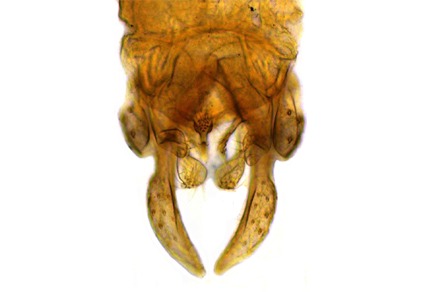
A new species, Tanytarsus binduensis of the ‘triangularis’ species group of the genus Tanytarsus van der Wulp, 1874 is described based on the adult males from the Himalaya Biodiversity Hotspot, West Bengal, India. This is the first record of this species group from the Oriental region. We also present a redescription of Tanytarsus tamakutibasi Sasa, 1983, along with its COI barcode, first record of this species from India. A world keys to the known adult males of both species groups are also provided. Based on known adult males, a tentative cladistic relationship and a molecular phylogeny using available COI sequences of all species of the ‘triangularis’ and ‘tamakutibasi’ species groups are also provided. The newly described species Tanytarsus binduensis (‘triangularis’ group) exhibits a minimum interspecific distance of 14.82% with Tanytarsus aboensis (‘triangularis’ group) (AM398774).
References
- Breil, J.M. (2017) Microtendipes morii sp. n., Polypedilum (Polypedilum) mercantourus sp. n., and Virgatanytarsus rossaroi sp. n., three new Tyrrhenian species from cold mountain streams and lakes in Corsica and the Maritime Alps (Diptera, Chironomidae). Euroasian Entomological Journal, 16 (3), 213–227.
- Conservation International & CEPE. (2005) Ecosystem Profile: Eastern Himalayan Region. Critical Ecosystem Partnership Fund, Washington, DC, 102 pp.
- Cranston, P.S. & Armitage, P.D. (1988) The Canary Islands Chironomidae described by T. BECKER and by SANTOS ABREU (Diptera, Chironomidae). Deutsche Entomologische Zeitschrift Neue Folge, 35, 341–354. https://doi.org/10.1002/mmnd.19880350426
- Cranston, P.S. & Judd, D.D. (1989) Diptera: Fam. Chironomidae of the Arabian Peninsula. Fauna of Saudi Arabia, 10, 236–289.
- Dantas, G.P.S., Amat, G., Hamada, N. & Giłka, W. (2022) Towards the systematics and diversity of Neotropical Tanytarsus van der Wulp (Diptera: Chironomidae): news from Colombia. Zootaxa, 5129 (4), 505–529. https://doi.org/10.11646/zootaxa.5129.4.2
- Dantas, G.P.S., Hamada, N. & Giłka, W. (2023) Tanytarsus van der Wulp (Chironomidae, Diptera): New species from the western Amazon region in Peru and Brazil, new records from the Neotropics, and remarks on the taxonomy of the genus. Zootaxa, 5271 (1), 115–139. https://doi.org/10.11646/zootaxa.5271.1.4
- Datta, T., Majumdar, A. & Chaudhuri, P.K. (1992) Taxonomic studies on Tanytarsus v. d. Wulp (Diptera: Chironomidae) in India. Oriental Insects, 26, 39–66. https://doi.org/10.1080/00305316.1992.10432239
- Edgar, R.C. (2004) MUSCLE: Multiple sequence alignment with high accuracy and high throughput. Nucleic Acids Research, 32 (5), 1792–1797. https://doi.org/10.1093/nar/gkh340
- Edwards, F.W. (1929) British non-biting midges (Diptera, Chironomidae). Transactions of the Royal Entomological Society of London, 77, 279–431. https://doi.org/10.1111/j.1365-2311.1929.tb00692.x
- Folmer, O., Black, M., Hoeh, W., Lutz, R. & Vrijenhoek, R. (1994) DNA primers for amplification of mitochondrial cytochrome C oxidase subunit I from diverse metazoan invertebrates. Molecular Marine Biology and Biotechnology, 3 (5), 294–299. https://doi.org/10.1371/journal.pone.0013102
- Freeman, P. (1958) A study of the Chironomidae (Diptera) of Africa south of the Sahara, Part IV. Bulletin of the British Museum (Natural History), Entomology, 6, 261–363. https://doi.org/10.5962/bhl.part.17110
- Gilka, W., Dantas, G.P.S., Andersen, T. & Armitage, B.J. (2024) Tanytarsus deimos group (Chironomidae, Diptera) for two distinctive species from the Neotropics. Zootaxa, 5428 (4), 589–596. https://doi.org/10.11646/zootaxa.5428.4.7
- Goloboff, P. & Catalano, S. (2016) TNT version 1.5, including a full implementation of phylogenetic morphometrics. Cladistics, 32, 221–238. https://doi.org/10.1111/cla.12160
- Harrison, A.D. (2004) A contribution to the taxonomy of Tanytarsini (Diptera: Chironomidae) of Sub-Saharan Africa, with a description of a new genus (Afrozavrelia) and five new species from other genera. Annals of the Eastern Cape Museums, 3, 1–15.
- Harrup, L.E. (2018) The Pirbright Institute DNA Barcoding Protocols Version 3. The Pirbright Institute, Woking, 38 pp. https://doi.org/10.13140/RG.2.2.14879.41129
- Kalyaanamoorthy, S., Minh, B., Wong, T., Haeseler, A. & Jermiin, L. (2017) ModelFinder: fast model selection for accurate phylogenetic estimates. Nature Methods, 14, 587–589. https://doi.org/10.1038/nmeth.4285
- Kapli, P., Lutteropp, S., Zhang, J., Kobert, K., Pavlidis, P., Stamatakis, A. & Flouri, T. (2017) Multi-rate Poisson tree processes for single-locus species delimitation under maximum likelihood and Markov chain Monte Carlo. Bioinformatics (Oxford, England), 33 (11), 1630–1638. https://doi.org/10.1093/bioinformatics/btx025
- Kugler, V.J. & Reiss, F. (1973) Die Triangularis-Gruppe der Gattung Tanytarsus v.d.W. (Chironomidae, Diptera). Entomologisk Tidskrift, 94, 59–82.
- Kimura, M. (1980) A simple method for estimating evolutionary rates of base substitutions through comparative studies of nucleotide sequences. Journal of Molecular Evolution, 16 (2), 111–120. https://doi.org/10.1007/BF01731581
- Letunic, I. & Bork, P. (2021) Interactive Tree Of Life (iTOL) v5: An online tool for phylogenetic tree display and annotation. Nucleic Acids Research, 49 (W1), W293–W296. https://doi.org/10.1093/nar/gkab301
- Lin, X., Stur, E. & Ekrem, T. (2015) Exploring genetic divergence in a species-rich insect genus using 2790 DNA barcodes. PLOS ONE, 10 (9), e0138993. https://doi.org/10.1371/journal.pone.0138993
- Lin, X-L., Stur, E. & Ekrem, T. (2018a) Molecular phylogeny and temporal diversification of Tanytarsus van der Wulp (Diptera: Chironomidae) support generic synonymies, a new classification and centre of origin. Systematic Entomology, 43 (4), 659–677. https://doi.org/10.1111/syen.12292
- Lin, X., Stur, E. & Ekrem, T. (2018b) DNA barcodes and morphology reveal unrecognized species in Chironomidae (Diptera). Insect Systematics & Evolution, 49 (4), 329–398. https://doi.org/10.1163/1876312X-00002172
- Lin, X-L., Mo, L., Bu, W-J. & Wang, X-H. (2021) The first comprehensive DNA barcode reference library of Chinese Tanytarsus (Diptera: Chironomidae) for environmental DNA metabarcoding. Diversity and Distributions, 27, 1932–1941. https://doi.org/10.1111/ddi.13209
- Maddison, W.P. (1993) Missing data versus missing characters in phylogenetic analysis. Systematic Biology, 42, 576–581. https://doi.org/10.1093/sysbio/42.4.576
- Maddison, W.P. & Maddison, D.R. (2017) Mesquite: A modular system for evolutionary analysis. Version 3.2. Available from: http://mesquiteproject.org (accessed 20 November 2025)
- Mani, M.S. (1974) Ecology and biogeography in India. In: Illies, J. (Ed.), Monographiae Biologicae. Vol. 23. W. Junk b. v. Publishers, The Hague, pp. XIX + 1–773. https://doi.org/10.1007/978-94-010-2331-3_1
- Pinder, L.C.V. (1982) Virgatanytarsus new genus – for the “triangularis” group of the genus Tanytarsus van der Wulp (Diptera: Chironomidae). Spixiana, 5 (1), 31–34.
- Proulx, I., Martin, J., Carew, M. & Hare, L. (2013) Using various lines of evidence to identify Chironomus species (Diptera: Chironomidae) in eastern Canadian lakes. Zootaxa, 3741 (4), 401–458. https://doi.org/10.11646/zootaxa.3741.4.1
- Puillandre, N., Lambert, A., Brouillet, S. & Achaz, G. (2012) ABGD, Automatic Barcode Gap Discovery for primary species delimitation. Molecular Ecology, 21 (8), 1864–1877. https://doi.org/10.1111/j.1365-294X.2011.05239.x
- Puillandre, N., Brouillet, S. & Achaz, G. (2021) ASAP: Assemble species by automatic partitioning. Molecular Ecology Resources, 21, 609–620. https://doi.org/10.1111/1755-0998.13281
- Reiss, F. & Fittkau, E.J. (1971) Taxonomie und Ökologie europäisch verbreiteter Tanytarsus-Arten (Chironomidae, Diptera). Archiv für Hydrobiologie, Supplement, 40, 75–200.
- Reiss, V.F. & Schürch, M. (1984) Virgatanytarsus ansatus n. sp. aus Mitteleuropa und Nordafrika (Diptera, Chironomidae). Spixiana, 7 (3), 319–322.
- Ronquist, F., Teslenko, M., van der Mark, P., Ayres, D.L., Darling, A., Höhna, S., Larget, B., Liu, L., Suchard, M.A. & Huelsenbeck, J.P. (2012) MrBayes 3.2: Efficient Bayesian phylogenetic inference and model choice across a large model space. Systematic Biology, 61 (3), 539–542. https://doi.org/10.1093/sysbio/sys029
- Sasa, M. & Suzuki, H. (1999) Studies on the chironomid midges of Tsushima and Iki Islands, Western Japan Part 1. Species of Chironominae collected on Tsushima. Tropical Medicine, 41 (1), 1–53.
- Sasa, M., Suzuki, H. & Sakai, T. (1998) Studies on the chironomid midges collected on the shore of Shimanto River in April, 1998. Part 1. Description of species of the subfamily Chironominae. Tropical Medicine, 40 (2), 47–89.
- Sæther, O.A. (1980) Glossary of chironomid morphology terminology (Diptera: Chironomidae). Entomologica Scandinavica, Supplement, 14, 1–51.
- Tamura, K., Stecher, G. & Kumar, S. (2021) MEGA 11: Molecular Evolutionary Genetics Analysis Version 11. Molecular Biology and Evolution, 38 (7), 3022–3027. https://doi.org/10.1093/molbev/msab120
- Wirth, W.W. & Marston, N. (1968) A method for mounting small insects on microscope slides in Canada Balsam. Annals of the Entomological Society of America, 61, 783–784. https://doi.org/10.1093/aesa/61.3.783
- Zhang, D., Gao, F., Jakovlić, I., Zou, H., Zhang, J., Li, W.X. & Wang, G.T. (2020) PhyloSuite: An integrated and scalable desktop platform for streamlined molecular sequence data management and evolutionary phylogenetics studies. Molecular Ecology Resources, 20 (1), 348–355. https://doi.org/10.1111/1755-0998.13096