
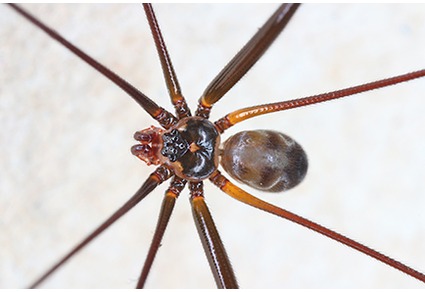

Abstract
The genus Psilochorus Simon has long been suspected to be an exclusively North American genus, with only one exception: the synanthropic and widely distributed Psilochorus simoni (Berland, 1911). All Old World species and most South American species originally assigned to Psilochorus have been transferred to other genera in the last 25 years. Here we deal with the remaining South American species of “Psilochorus”. Three species from the Brazilian Atlantic Forest are moved to the new genus Lyleka Huber gen. nov.: L. itaguyrussu (Huber, Rheims & Brescovit, 2005) comb. nov. (of which the female is newly described); L. ybytyriguara (Huber, Rheims & Brescovit, 2005) comb. nov.; and L. bromelicola (Huber, 2019) comb. nov.. Two new species from the Colombian Andes are also assigned to this new genus: L. combeima Huber sp. nov., and L. copachi Huber sp. nov. This implies an extremely disjunct distribution of the genus. Based on similar distributions in other taxa, we hypothesize a relatively recent (Miocene) origin of this split, with the Andean uplift as the main driving force. We also document and discuss the unusual conservative evolution of male genitalia in Lyleka: while females have species-specific genitalia, male genitalia tend to be near identical among close relatives. Studies on the sexual biology of Lyleka will be necessary to explain this unusual pattern. Other South American “Psilochorus” are moved to Mesabolivar González-Sponga [M. bruneocyaneus (Mello-Leitão, 1941) comb. nov.; M. sectus (Mello-Leitão, 1939) comb. nov.], to Carapoia González-Sponga [Ca. taperae (Mello-Leitão, 1929) comb. nov.], and to Chibchea Huber [Ch. minima (Schmidt, 1956) comb. nov.]. The latter species was previously known from a single female specimen collected in Hamburg from a shipment of bananas from Ecuador; we redescribe this species based on males and females newly collected in Ecuador. Finally, we present the first records of the synanthropic Psilochorus simoni from South America and Sub-Saharan Africa.
References
- Almeida-Silva, D., Servino, L.M., Pontes-Nogueira, M. & Sawaya, R.J. (2024) Marine introgressions and Andean uplift have driven diversification in neotropical Monkey tree frogs (Anura, Phyllomedusinae). PeerJ, 12, e17232. https://doi.org/10.7717/peerj.17232
- Astrin, J.J., Huber, B.A., Misof, B. & Kluetsch, C.F.C. (2006) Molecular taxonomy in pholcid spiders (Pholcidae, Araneae): evaluation of species identification methods using CO1 and 16S rRNA. Zoologica Scripta, 35, 441–457. https://doi.org/10.1111/j.1463-6409.2006.00239.x
- Batalha-Filho, H., Fjeldså, J., Fabre, P.H. & Miyaki, C.Y. (2013) Connections between the Atlantic and the Amazonian forest avifaunas represent distinct historical events. Journal of Ornithology, 154, 41–50. https://doi.org/10.1007/s10336-012-0866-7
- Berland, L. (1911) Sur deux araignées recueillies à la Sorbonne: Physocyclus simoni n. sp. et Macrargus dentichelis E. Simon. Archives de Zoologie Expérimentale et Générale, Series 5, 6 (3), 110–115.
- Bruvo-Mađarić, B., Huber, B.A., Steinacher, A. & Pass, G. (2005) Phylogeny of pholcid spiders (Araneae: Pholcidae): Combined analysis using morphology and molecules. Molecular Phylogenetics and Evolution, 37, 661–673. https://doi.org/10.1016/j.ympev.2005.08.016
- Capocasale, R.M. & Pereira, A. (2003) Diversidad de la biota uruguaya. Araneae. Anales Museo Nacional de Historia Natural y Antropología, 10 (5), 1–32.
- Caramaschi, U. (2008) Taxonomic status of Leptodactylus ochraceus, a forgotten species (Anura: Leptodactylidae). Revista Brasileira de Zoologia, 25 (3), 523–528. https://doi.org/10.1590/S0101-81752008000300020
- Chamberlin, R.V. & Ivie, W. (1942) A hundred new species of American spiders. Bulletin of the University of Utah, 32 (13), 1–117.
- Deeleman-Reinhold, C.L. (1995) Redescription of Holocneminus multiguttatus Simon and description of two new species of pholcid spiders from Australia (Arachnida: Araneae: Pholcidae). Beiträge zur Araneologie, 4, 31–41.
- Dimitrov, D., Astrin, J.J. & Huber, B.A. (2013) Pholcid spider molecular systematics revisited, with new insights into the biogeography and the evolution of the group. Cladistics, 29, 132–146. https://doi.org/10.1111/j.1096-0031.2012.00419.x
- Eberhard, W.G. (1985) Sexual Selection and Animal Genitalia. Harvard University Press, Cambridge, Massachusetts, 244 pp. https://doi.org/10.4159/harvard.9780674330702
- Eberhard, W.G., Huber, B.A., Rodriguez, R.L., Briceño, R.D., Salas, I. & Rodriguez, V. (1998) One size fits all? Relationships between the size and degree of variation in genitalia and other body parts in twenty species of insects and spiders. Evolution, 52 (2), 415–431. https://doi.org/10.1111/j.1558-5646.1998.tb01642.x
- Eberle, J., Dimitrov, D., Valdez-Mondragón, A. & Huber, B.A. (2018) Microhabitat change drives diversification in pholcid spiders. BMC Evolutionary Biology, 18, 141. https://doi.org/10.1186/s12862-018-1244-8
- Fürst, P.A. & Blandenier, G. (1993) Psilochorus simoni (Berland, 1911) (Araneae, Pholcidae): Découvertes de nouvelles stations suisses et discussion de son écologie. Bulletin de la Société Neuchâteloise des Sciences Naturelles, 116, 75–85.
- Garzione, C.N., Hoke, G.D., Libarkin, J.C., Withers, S., MacFadden, B., Eiler, J., Ghosh, P. & Mulch, A. (2008) Rise of the Andes. Science, 320, 1304–1307. https://doi.org/10.1126/science.1148615
- Gregory-Wodzicki, K.M. (2000) Uplift history of the Central and Northern Andes: A review. Geological Society of America, Bulletin, 112, 1091–1105. https://doi.org/10.1130/0016-7606(2000)112%3C1091:UHOTCA%3E2.0.CO;2
- Gould, S.J. (1985) Treasures in a taxonomic wastebasket. Natural History, 94, 22–33.
- Hoorn, C., Guerrero, J., Sarmiento, G.A. & Lorente, M.A. (1995) Andean tectonics as a cause of changing drainage patterns in Miocene northern South America. Geology, 23, 237–240. https://doi.org/10.1130/0091-7613(1995)023%3C0237:ATAACF%3E2.3.CO;2
- Huber, B.A. (1998) Genital mechanics in some neotropical pholcid spiders (Araneae: Pholcidae), with implications for systematics. Journal of Zoology, London, 244, 587–599. https://doi.org/10.1111/j.1469-7998.1998.tb00063.x
- Huber, B.A. (1999) Sexual selection in pholcid spiders (Araneae, Pholcidae): artful chelicerae and forceful genitalia. Journal of Arachnology, 27 (1), 135–141.
- Huber, B.A. (2000) New World pholcid spiders (Araneae: Pholcidae): a revision at generic level. Bulletin of the American Museum of Natural History, 254, 1–348. https://doi.org/10.1206/0003-0090(2000)254<0001:NWPSAP>2.0.CO;2
- Huber, B.A. (2001) The pholcids of Australia (Araneae; Pholcidae): taxonomy, biogeography, and relationships. Bulletin of the American Museum of Natural History, 260, 1–144. https://doi.org/10.1206/0003-0090(2001)260<0001:TPOAAP>2.0.CO;2
- Huber, B.A. (2003a) Cladistic analysis of Malagasy pholcid spiders reveals generic level endemism: Revision of Zatavua n. gen. and Paramicromerys Millot (Pholcidae, Araneae). Zoological Journal of the Linnean Society, 137, 261–318. https://doi.org/10.1046/j.1096-3642.2003.00046.x
- Huber, B.A. (2003b) High species diversity in one of the dominant groups of spiders in East African montane forests (Araneae: Pholcidae: Buitinga n. gen., Spermophora Hentz). Zoological Journal of the Linnean Society, 137, 555–619. https://doi.org/10.1046/j.1096-3642.2003.00053.x
- Huber, B.A. (2003c) Southern African pholcid spiders: revision and cladistic analysis of Quamtana gen. nov. and Spermophora Hentz (Araneae: Pholcidae), with notes on male-female covariation. Zoological Journal of the Linnean Society, 139, 477–527. https://doi.org/10.1046/j.0024-4082.2003.00082.x
- Huber, B.A. (2011) Revision and cladistic analysis of Pholcus and closely related taxa (Araneae, Pholcidae). Bonner zoologische Monographien, 58, 1–509.
- Huber, B.A. (2018) The South American spider genera Mesabolivar and Carapoia (Araneae, Pholcidae): new species and a framework for redrawing generic limits. Zootaxa, 4395 (1), 1–178. https://doi.org/10.11646/zootaxa.4395.1.1
- Huber, B.A. & Carvalho, L.S. (2019) Filling the gaps: descriptions of unnamed species included in the latest molecular phylogeny of Pholcidae (Araneae). Zootaxa, 4546 (1), 1–96. https://doi.org/10.11646/zootaxa.4546.1.1
- Huber, B.A. & Herrera, M.G. (2021) The pholcid spiders of Ecuador – a preliminary report. [http://www.pholcidae.de/Ecuador-Pholcidae-2021.pdf]
- Huber, B.A. & Meng, G. (2025) Like grains of sand: Ninetis spiders on the Arabian Peninsula (Araneae, Pholcidae). Zootaxa, 5563 (1), 290–335. https://doi.org/10.11646/zootaxa.5563.1.19
- Huber, B.A. & Villarreal, O. (2020) On Venezuelan pholcid spiders (Araneae, Pholcidae). European Journal of Taxonomy, 718, 1–317. https://doi.org/10.5852/ejt.2020.718.1101
- Huber, B.A., Rheims, C.A. & Brescovit, A.D. (2005) Speciation without changes in genital shape: A case study on Brazilian pholcid spiders (Araneae: Pholcidae). Zoologischer Anzeiger, 243, 273–279. https://doi.org/10.1016/j.jcz.2004.12.001
- Huber, B.A., Eberle, J. & Dimitrov, D. (2018) The phylogeny of pholcid spiders: a critical evaluation of relationships suggested by molecular data (Araneae, Pholcidae). ZooKeys, 789, 51–101. https://doi.org/10.3897/zookeys.789.22781
- Huber, B.A., Meng, G., Dupérré, N., Herrera, M., Inclán, D.J. & Wipfler, B. (2023a) Humpback spiders from Ecuador: relationships, prosoma ‘inflation’, and genital asymmetry (Araneae: Pholcidae: Mecolaesthus). Invertebrate Systematics, 37, 117–151. https://doi.org/10.1071/IS22052
- Huber, B.A., Meng, G., Král, J., Ávila Herrera, I.M. & Izquierdo, M.A. (2023b) Revision of the South American Ninetinae genus Guaranita (Araneae, Pholcidae). European Journal of Taxonomy, 900, 32–80. https://doi.org/10.5852/ejt.2023.900.2301
- Huber, B.A., Meng, G., Dederichs, T.M., Michalik, P., Forman, M. & Král, J. (2024a) Castaways: the Leeward Antilles endemic spider genus Papiamenta (Araneae: Pholcidae). Invertebrate Systematics, 38, IS23052. https://doi.org/10.1071/IS23052
- Huber, B.A., Szymański, H. & Bennett-West, A. (2024b) Progress or burden? Formal description of every apparently new species available in collections is neither necessary nor useful. ZooKeys, 1214, 77–90. https://doi.org/10.3897/zookeys.1214.130592
- Johnson, M.M., Young, M.T. & Brusatte, S.L. (2020) Emptying the wastebasket: a historical and taxonomic revision of the Jurassic crocodylomorph Steneosaurus. Zoological Journal of the Linnean Society, 189, 428–448. https://doi.org/10.1093/zoolinnean/zlaa027
- Kimura, M. (1980) A simple method for estimating evolutionary rate of base substitutions through comparative studies of nucleotide sequences. Journal of Molecular Evolution, 16, 111–120. https://doi.org/10.1007/bf01731581
- Locket, G.H., Millidge, A.F. & Merrett, P. (1974) British Spiders. Vol. III. Ray Society, London, 315 pp.
- Luebert, F., Lörch, M., Acuña, R., Mello-Silva, R., Weigend, M. & Mutke, J. (2020) Clade-specific biogeographic history and climatic niche shifts of the Southern Andean-Southern Brazilian disjunction in plants. In: Rull, V. & Carnaval, A. (Eds.), Neotropical Diversification: Patterns and Processes. Fascinating Life Sciences. Springer, Cham, pp. 661–682. https://doi.org/10.1007/978-3-030-31167-4_24
- Magalhaes, I.L.F. (2025) A new large violin spider from Argentina, with a discussion on the homology and evolution of female genital structures in Loxosceles (Araneae: Sicariidae). Invertebrate Systematics, 39, IS24079. https://doi.org/10.1071/IS24079
- Marquínez, X., Lohmann, L.G., Salatino, M.L., Salatino, A. & González, F. (2009) Generic relationships and dating of lineages in Winteraceae based on nuclear (ITS) and plastid (rpS16 and psbA-trnH) sequence data. Molecular Phylogenetics and Evolution, 53 (2), 435–449. https://doi.org/10.1016/j.ympev.2009.07.001
- Mello-Leitão, C.F. de (1929) Aranhas do Pernambuco, colhidas por D. Bento Pickel. Anais da Academia Brasileira de Ciências, 1, 91–112.
- Mello-Leitão, C.F. de (1939) Algunos aracnidos de Sudamerica. Revista Chilena de Historia Natural, 43, 169–176. https://doi.org/10.5962/bhl.part.117928
- Mello-Leitão, C.F. de (1941) Notas sobre a sistematica das aranhas com descrição de algumas novas especies Sul Americanas. Anais da Academia Brasileira de Ciências, 13, 103–127.
- Meng, G., Podsiadlowski, L., Dimitrov, D. & Huber, B.A. (2025) The complex interplay between evolutionary flexibility and diversification in a family of spiders. Systematic Biology, syaf070. [published online] https://doi.org/10.1093/sysbio/syaf070
- Minelli, A. (1994) Biological Systematics. The State of the Art. Chapman & Hall, London, 387 pp. https://doi.org/10.1007/978-94-011-9643-7
- Moreira-Muñoz, A., Scherson, R., Luebert, F., Román, M.J., Monge, M., Diazgranados, M. & Silva, H. (2020) Biogeography, phylogenetic relationships and morphological analyses of the South American genus Mutisia L.f. (Asteraceae) shows early connections of two disjunct biodiversity hotspots. Organisms Diversity and Evolution, 20, 639–656. https://doi.org/10.1007/s13127-020-00454-z
- Nentwig, W., Blick, T., Bosmans, R., Gloor, D., Hänggi, A. & Kropf, C. (2025) Spiders of Europe. Version 11.2025. Available from: https://www.araneae.nmbe.ch (accessed 5 November 2025) https://doi.org/10.24436/1
- Orbach, D.N. (2022) Gender bias in the study of genital evolution: females continue to receive less attention than males. Integrative and Comparative Biology, 62, 533–541. https://doi.org/10.1093/icb/icac012
- Pavlicev, M., Herdina, A.N. & Wagner, G. (2022) Female genital variation far exceeds that of male genitalia: a review of comparative anatomy of clitoris and the female lower reproductive tract in theria. Integrative and Comparative Biology, 62, 581–601. https://doi.org/10.1093/icb/icac026
- Percequillo, A.R., Weksler, M. & Costa, L.P. (2011) A new genus and species of rodent from the Brazilian Atlantic Forest (Rodentia: Cricetidae: Sigmodontinae: Oryzomyini), with comments on oryzomyine biogeography. Zoological Journal of the Linnean Society, 161, 357–390. https://doi.org/10.1111/j.1096-3642.2010.00643.x
- Pickard-Cambridge, O. (1898) Arachnida. Araneida. Vol. 1. In: Biologia Centrali-Americana: Zoology, Botany and Archaeology. Vol. 1. Published for the editors by R. H. Porter, London, pp. 233–288, pls. 29–39. https://doi.org/10.5962/bhl.title.730
- Pickard-Cambridge, F.O. (1902) Arachnida - Araneida and Opiliones. Vol. 2. In: Biologia Centrali-Americana: Zoology, Botany and Archaeology. Published for the editors by R. H. Porter, London, pp. 313–424.
- Plotnick, R.E. & Wagner, P.J. (2006) Round up the usual suspects: common genera in the fossil record and the nature of wastebasket taxa. Paleobiology, 32 (1), 126–146. https://doi.org/10.1666/04056.1
- Prates, I., Melo-Sampaio, P.R., de Oliveira, D.L., Teixeira, M., Rodrigues, M.T. & Carnaval, A.C. (2017) Biogeographic links between southern Atlantic Forest and western South America: Rediscovery, re-description, and phylogenetic relationships of two rare montane anole lizards from Brazil. Molecular Phylogenetics and Evolution, 113, 49–58. https://doi.org/10.1016/j.ympev.2017.05.009
- Puniamoorthy, N., Kotrba, M. & Meier, R. (2010) Unlocking the “Black box”: internal female genitalia in Sepsidae (Diptera) evolve fast and are species specific. BMC Evolutionary Biology, 10, 275. https://doi.org/10.1186/1471-2148-10-275
- Schmidt, G. (1956) Genus- und Speziesdiagnosen neuer, mit Bananen eingeschleppter Spinnen nebst Mitteilung über das Auffinden der Männchen zweier Spinnenarten. Zoologischer Anzeiger, 157, 24–31.
- Schulte, J.A., Macey, J.R., Larson, A. & Papenfuss, T.J. (1998) Molecular tests of phylogenetic taxonomies: a general procedure and example using four subfamilies of the lizard family Iguanidae. Molecular Phylogenetics and Evolution, 10, 367–376. https://doi.org/10.1006/mpev.1998.0541
- Silva, D. & Coddington, J.A. (1996) Spiders of Pakitza (Madre de Dios, Perú): species richness and notes on community structure. In: Wilson, D.E. & Sandoval, A. (Eds.), The Biodiversity of Southeastern Perú. Smithsonian Institution, Washington, D.C., pp. 253–311.
- Silva Moreira, T., Baptista, R.L.C., Kury, A.B., Giupponi, A.P.L., Buckup, E.H. & Brescovit, A.D. (2010) Annotated check list of Arachnida type specimens deposited in the Museu Nacional, Rio de Janeiro. II–Araneae. Zootaxa, 2588 (1), 1–91. https://doi.org/10.11646/zootaxa.2588.1.1
- Simmons, L.W. & Fitzpatrick, J.L. (2019) Female genitalia can evolve more rapidly and divergently than male genitalia. Nature Communications, 10, 1312. https://doi.org/10.1038/s41467-019-09353-0
- Sloan, N.S. & Simmons, L.W. (2019) The evolution of female genitalia. Journal of Evolutionary Biology, 32 (9), 882–899. https://doi.org/10.1111/jeb.13503
- Sloan, N.S., Harvey, M.S., Huey, J.A. & Simmons, L.W. (2024) Rapid divergent evolution of internal female genitalia and the coevolution of male genital morphology revealed by micro-computed tomography. Proceedings of the Royal Society B, 291, 20232883. https://doi.org/10.1098/rspb.2023.2883
- Slowik, J. (2009) A review of the cellar spider genus Psilochorus Simon 1893 in America north of Mexico (Araneae: Pholcidae). Zootaxa, 2144 (1), 1–53. https://doi.org/10.11646/zootaxa.2144.1.1
- Tamura, K., Stecher, G. & Kumar, S. (2021) MEGA11: Molecular Evolutionary Genetics Analysis Version 11. Molecular Biology and Evolution, 38, 3022–3027. https://doi.org/10.1093/molbev/msab120
- Trujillo-Arias, N., Calderón, L., Santos, F.R., Miyaki, C.Y., Aleixo, A., Witt, C.C., Tubaro, P.L. & Cabanne, G.S. (2018) Forest corridors between the central Andes and the southern Atlantic Forest enabled dispersal and peripatric diversification without niche divergence in a passerine. Molecular Phylogenetics and Evolution, 128, 221–232. https://doi.org/10.1016/j.ympev.2018.08.005
- Valdez-Mondragón, A. (2010) Revisión taxonómica de Physocyclus Simon, 1893 (Araneae: Pholcidae), con la descripción de especies nuevas de México. Revista Iberica de Aracnología, 18, 3–80.
- WSC (2025) World Spider Catalog. Version 26. Natural History Museum Bern, Bern. Available from: http://wsc.nmbe.ch (accessed 5 November 2025) https://doi.org/10.24436/2