

Abstract
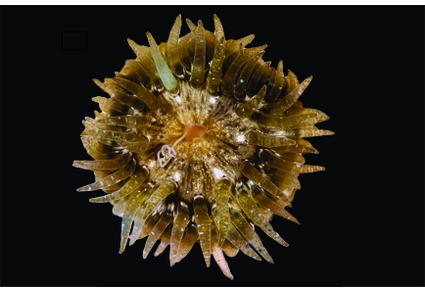
Inconspicuous and cryptic invertebrates are often overlooked due to taxonomic challenges associated with identifying them. This is true of an alien sea anemone known from South Africa. Originally identified as Sagartia (now Cylista) ornata (Holdsworth, 1855), the anemone was first documented in Langebaan Lagoon Marine Protected Area in 2001 and has since spread within the lagoon. In recent years, questions have been raised about the validity of the species determination. We used a combination of histology, cnidom assays, specimen dissections, and molecular analyses to evaluate the identity of specimens previously identified as C. ornata and determined that they represent a population of the European daisy anemone, Cereus pedunculatus (Pennant, 1777). This marks the first documented occurrence of C. pedunculatus outside its native range.
References
- Acuña, F.H., Excoffon, A.C. & Griffiths, C.L. (2004) First record and redescription of the introduced sea anemone Sagartia ornata (Holdsworth, 1855) (Cnidaria: Actiniaria: Sagartiidae) from South Africa. African Zoology, 39, 314–318. https://doi.org/10.1080/15627020.2004.11657228
- Acuña, F.H., Excoffon, A.C. & Ricci, L. (2007) Composition, biometry and statistical relationships between the cnidom and body size in the sea anemone Oulactis muscosa (Cnidaria: Actiniaria). Journal of the Marine Biological Association of the United Kingdom, 87, 415–419. https://doi.org/10.1017/S0025315407055087
- Altschul, S.F., Madden, T.L., Schäffer, A.A., Zhang, J., Zhang, Z., Miller, W. & Lipman, D.L. (1997) Gapped BLAST and PSI-BLAST: A new generation of protein database search programs. Nucleic Acids Research, 25, 3389–3402. https://doi.org/10.1093/nar/25.17.3389
- Badreddine, A. (2022) First record of four species of sea anemones (Cnidaria: Actiniaria) for the Lebanese coast, Eastern Mediterranean Sea. Journal of Fisheries and Livestock Production, 10, 333. https://doi.org/10.4172/2332-2608.1000333
- Bancroft, J.D. & Layton, C. (2013) The hematoxylins and eosin. In: Suvarna, S.K., Layton, C. & Bancroft, J.D. (Eds.), Bancroft’s Theory and Practice of Histological Techniques 7th ed. Churchill Livingstone, London, pp. 173–186. https://doi.org/10.1016/b978-0-7020-4226-3.00010-x
- Barnard, K.H. (1964) Two new genera of Erycinacea (Bivalvia) from South Africa. Journal of Molluscan Studies, 36, 33–37. https://doi.org/10.1093/oxfordjournals.mollus.a064934
- Beneti, J.S., Stampar, S.N., Maronna, M.M., Morandini, A.C. & Silveira, F.L.D. (2015) A new species of Diadumene (Actiniaria: Diadumenidae) from the subtropical coast of Brazil. Zootaxa, 4021 (1), 156. https://doi.org/10.11646/zootaxa.4021.1.6
- Blanchet, H., de Montaudouin, X., Lucas, A. & Chardy, P. (2004) Heterogeneity of macrozoobenthic assemblages within a Zostera noltii seagrass bed: Diversity, abundance, biomass and structuring factors. Estuarine, Coastal and Shelf Science, 61, 111–123. https://doi.org/10.1016/j.ecss.2004.04.008
- Bocharova, E.S. & Kozevich, I.A. (2011) Modes of reproduction in sea anemones (Cnidaria, Anthozoa). Biology Bulletin, 38, 849–860. https://doi.org/10.1134/S1062359011090020
- Branch, G.M. & Pringle, A. (1987) The impact of the sand prawn Callianassa kraussi Stebbing on sediment turnover and on bacteria, meiofauna, and benthic microflora. Journal of Experimental Marine Biology and Ecology, 107, 219–235. https://doi.org/10.1016/0022-0981(87)90039-6
- Carlgren, O. (1949) A survey of the Ptychodactiaria, Corallimorpharia and Actiniaria. Kungliga Svenska Vetenskapsakademiens Handlingar, 1, 1–121.
- Christie, N.D. & Moldan, A. (1977) Distribution of benthic macrofauna in Langebaan Lagoon. Transactions of the Royal Society of South Africa, 42, 273–284. https://doi.org/10.1080/00359197709519917
- Çinar, M., Yokeş, M., Çinar, Ş. & Bakir, A. (2014) Checklist of Cnidaria and Ctenophora from the coasts of Turkey. Turkish Journal of Zoology, 38, 677–697. https://doi.org/10.3906/zoo-1405-68
- Daly, M., Gusmão, L.C., Reft, A.J. & Rodríguez, E. (2010) Phylogenetic signal in mitochondrial and nuclear markers in sea anemones (Cnidaria, Actiniaria). Integrative and Comparative Biology, 50, 371–388. https://doi.org/10.1093/icb/icq081
- Davy, S.K., Lucas, I.N. & Turner, J.R. (1997) Uptake and persistence of homologous and heterologous zooxanthellae in the temperate sea anemone Cereus pedunculatus (Pennant). The Biological Bulletin, 192, 208–216. https://doi.org/10.2307/1542715
- Day, J.H. (1959) The biology of Langebaan Lagoon: A study of the effect of shelter from wave action. Transactions of the Royal Society of South Africa, 35, 475–547. https://doi.org/10.1080/00359195909519025
- Delgado, A., Larson, P., Sheridan, N. & Daly, M. (2023) Bellactis lux n. sp. (Cnidaria: Anthozoa: Actiniaria: Aiptasiidae), a new sea anemone from the Gulf of Mexico. Zootaxa, 5353, 379–392. https://doi.org/10.11646/zootaxa.5353.4.5
- Den Hartog, J.C. & Ates, R.M.L. (2011) Actiniaria from Ria de Arosa, Galicia, northwestern Spain, in the Netherlands Centre for Biodiversity Naturalis, Leiden. Zoologische Mededelingen, 85, 11–53.
- Doumenc, D., Chintiroglou, C. & Koukouras, A. (1985) Actinians from the Aegean Sea: Methods used for identification, zoogeography. Bulletin du Muséum National d’Histoire Naturelle. Section A, Zoologie, Biologie et Écologie Animales, 7, 497–529. https://doi.org/10.5962/p.285861
- Fautin, D.G. (2009) Structural diversity, systematics, and evolution of cnidae. Toxicon, 54, 1054–1064. https://doi.org/10.1016/j.toxicon.2009.02.024
- Fautin, D.G. (2016) Catalog to families, genera, and species of orders Actiniaria and Corallimorpharia (Cnidaria: Anthozoa). Zootaxa, 4145 (1), 14–49. https://doi.org/10.11646/zootaxa.4145.1.1
- Folmer, O., Black, M., Hoeh, W., Lutz, R. & Vrijenhoek, R. (1994) DNA primers for amplification of mitochondrial cytochrome c oxidase subunit I from diverse metazoan invertebrates. Molecular Marine Biology and Biotechnology, 3, 294–299.
- Geller, J., Meyer, C., Parker, M. & Hawk, H. (2013) Redesign of PCR primers for mitochondrial cytochrome c oxidase subunit I for marine invertebrates and application in all-taxa biotic surveys. Molecular Ecology Resources, 13, 851–861. https://doi.org/10.1111/1755-0998.12138
- Gibson, R., Hextall, B. & Rogers, A. (2001) Photographic guide to the sea and shore life of Britain and Northwest Europe. Oxford University Press, New York, 436 pp.
- Gimenez, L. & Brante, A. (2021) Do non-native sea anemones (Cnidaria: Actiniaria) share a common invasion pattern? – A systematic review. Aquatic Invasions, 16, 365–390. https://doi.org/10.3391/ai.2021.16.3.01
- Glon, H., Daly, M., Carlton, J.T., Flenniken, M.M. & Currimjee, Z. (2020) Mediators of invasions in the sea: Life history strategies and dispersal vectors facilitating global sea anemone introductions. Biological Invasions, 22, 3195–3222. https://doi.org/10.1007/s10530-020-02321-6
- Gonzalez-Duarte, M., Megina, C., López-González, P. & Galil, B. (2016) Cnidarian Alien Species in Expansion. In: Goffredo, S. & Dubinsky, Z. (Eds.), The Cnidaria, Past, Present and Future. Springer International Publishing Switzerland, Cham, pp. 139–160.
- Grajales, A. & Rodríguez, E. (2014) Morphological revision of the genus Aiptasia and the family Aiptasiidae (Cnidaria, Actiniaria, Metridioidea). Zootaxa, 3826, 55. https://doi.org/10.11646/zootaxa.3826.1.2
- Grajales, A. & Rodríguez, E. (2016) Elucidating the evolutionary relationships of the Aiptasiidae, a widespread cnidarian–dinoflagellate model system (Cnidaria: Anthozoa: Actiniaria: Metridioidea). Molecular Phylogenetics and Evolution, 94, 252–263. https://doi.org/10.1016/j.ympev.2015.09.004
- Grebelnyi, S.D. & Kovtun, O.A. (2013) A species of sea anemone Sagartia elegans (Dalyell, 1848) (Anthozoa, Actiniaria, Sagartiidae) that is new for the Black Sea and is capable of clonal reproduction. Russian Journal of Marine Biology, 39, 30–37. https://doi.org/10.1134/S1063074013010021
- Gusmão, L., Grajales, A. & Rodriguez, E. (2018) Sea anemones through X-Rays: Visualization of two species of Diadumene (Cnidaria, Actiniaria) Using Micro-CT. American Museum Novitates, 3907, 1–47. https://doi.org/10.1206/3907.1
- Hall, T.A. (1999) BioEdit: A user-friendly biological sequence alignment editor and analysis program for Windows 95/98/NT. Nucleic Acids Symposium Series, 41, 95–98. [https://api.semanticscholar.org/CorpusID:82421255]
- Haupt, T.M., Griffiths, C.L., Robinson, T.B. & Tonin, A.F.G. (2010) Oysters as vectors of marine aliens, with notes on four introduced species associated with oyster farming in South Africa. African Zoology, 45, 52–62. https://doi.org/10.1080/15627020.2010.11657254
- Häussermann, V. (2004) Identification and taxonomy of soft-bodied hexacorals exemplified by Chilean sea anemones; including guidelines for sampling, preservation and examination. Journal of the Marine Biological Association of the United Kingdom, 84, 931–936. https://doi.org/10.1017/S0025315404010215h
- Hoffmann, R.J. (1986) Variation in contributions of asexual reproduction to the genetic structure of populations of the sea anemone Metridium senile. Evolution, 40, 357–365. https://doi.org/10.1111/j.1558-5646.1986.tb00477.x
- Laird, M.C. (2013) Taxonomy, systematics and biogeography of South African Actiniaria and Corallimorpharia. Doctoral Thesis. University of Cape Town, Cape Town, 368 pp.
- Laird, M.C. & Griffiths, C.L. (2016) Additions to the South African sea anemone (Cnidaria, Actiniaria) fauna, with expanded distributional ranges for known species. African Invertebrates, 57, 15–37. https://doi.org/10.3897/afrinvertebr.57.8459
- Lawrence, C.M. (2024) Quantifying direct and indirect linkages between seagrasses, environment and associated macrofauna in a temperate lagoon. Marine Ecology, 45, 12804. https://doi.org/10.1111/maec.12804
- Manuel, R.L. (1981) British Anthozoa: Keys and notes for the identification of species Vol. 18. Linnean Society of London and the Estuarine and Brackish-water Sciences Association, London, 241 pp.
- Moiseeva, E., Rabinowitz, C., Paz, G. & Rinkevich, B. (2017) Histological study on maturation, fertilization and the state of gonadal region following spawning in the model sea anemone, Nematostella vectensis. PLoS ONE, 12, 0182677. https://doi.org/10.1371/journal.pone.0182677
- Molinet, C., Häussermann, V., Astorga, M., Barahona, N., Espinoza, K., Diaz, M., Díaz, P., Henríquez, J., Matamala, T. & Soto, D. (2022) Population expansion of the invasive sea anemone Metridium senile in the spatial mesoscale of a sea urchin bed in north-western Patagonia. Biological Invasions, 25, 1101–1181. https://doi.org/10.1007/s10530-022-02965-6
- Ocaña, O. (1994) Anémonas (Actiniaria y Corallimorpharia) de la Macaronesia Central: Canarias y Madeira. Doctoral Thesis, Universidad de La Laguna, San Cristóbal de La Laguna, 484 pp.
- Pen, I.A.M., Benedict, C., Broe, M.B., Delgado, A., Glon, H., Zhang, M. & Daly, M. (2025) Resolving Acuticulata (Metridioidea: Enthemonae: Actiniaria), a clade containing many invasive species of sea anemones. PLoS ONE, 20, e0328544. https://doi.org/10.1371/journal.pone.0328544
- Pereira, A.M., Silva, M.M. & Mateus, O. (2022) First record of Phymactis papillosa (Lesson, 1830), a Pacific south sea anemone in European shores. Journal of the Marine Biological Association of the United Kingdom, 102, 350–353. https://doi.org/10.1017/S0025315422000571
- Puttick, G. (1977) Spatial and temporal variations in inter-tidal animal distribution at Langebaan lagoon, South Africa. Transactions of The Royal Society of South Africa, 42, 403–440. https://doi.org/10.1080/00359197709519925
- Rambaut, A. (2014) FigTree v1.4.4: Tree figure drawing tool. Institute of Evolutionary Biology, University of Edinburgh. Available from: http://tree.bio.ed.ac.uk/software/figtree/ (accessed 5 November 2024)
- Ratnasingham, S. & Hebert, P.D.N. (2007) BOLD: The Barcode of Life Data System (http://www.barcodinglife.org). Molecular Ecology Notes, 7, 355–364. https://doi.org/10.1111/j.1471-8286.2007.01678.x
- Rees, O.M. (1915) Contributions to the comparative anatomy of some British Actiniae. Journal of the Marine Biological Association of the United Kingdom, 10, 521–554. https://doi.org/10.1017/S0025315400009152
- Riedel, B., Stachowitsch, M. & Zuschin, M. (2008) Sea anemones and brittle stars: Unexpected predatory interactions during induced in situ oxygen crises. Marine Biology, 153, 1075–1085. https://doi.org/10.1007/s00227-007-0880-0
- Robinson, T.B., Griffiths, C.L. & Kruger, N. (2004) Distribution and status of marine invasive species in and bordering the West Coast National Park. Koedoe, 47, 79–87. https://doi.org/10.4102/koedoe.v47i1.73
- Robinson, T.B. & Swart, C. (2015) Distribution and impact of the alien anemone Sagartia ornata in the West Coast National Park. Koedoe, 57, 1246. https://doi.org/10.4102/koedoe.v57i1.1246
- Rodríguez, E., Barbeitos, M., Daly, M., Gusmão, L.C. & Häussermann, V. (2012) Toward a natural classification: Phylogeny of acontiate sea anemones (Cnidaria, Anthozoa, Actiniaria). Cladistics, 28, 375–392. https://doi.org/10.1111/j.1096-0031.2012.00391.x
- Rodríguez, E., Barbeitos, M.S., Brugler, M.R., Crowley, L.M., Grajales, A., Gusmão, L., Häussermann, V., Reft, A. & Daly, M. (2014) Hidden among sea anemones: The first comprehensive phylogenetic reconstruction of the Order Actiniaria (Cnidaria, Anthozoa, Hexacorallia) reveals a novel group of Hexacorals. PLoS ONE, 9, 96998. https://doi.org/10.1371/journal.pone.0096998
- Rodríguez, E., Fautin, D. & Daly, M. (2025) World List of Actiniaria. Cereus pedunculatus (Pennant, 1777). Available from: World Register of Marine Species at https://www.marinespecies.org/aphia.php?p=taxdetails&id=100987 (accessed 5 June 2025)
- Rossi, L. (1975) Sexual races in Cereus pedunculatus (Boad.). Pubblicazioni della Stazione Zoologica di Napoli, 39, 462–470.
- Rozas, J., Ferrer-Mata, A., Sánchez-DelBarrio, J.C., Guirao-Rico, S., Librado, P., Ramos-Onsins, S.E. & Sánchez-Gracia, A. (2017) DnaSP 6: DNA sequence polymorphism analysis of large data sets. Molecular Biology and Evolution, 34, 3299–3302. https://doi.org/10.1093/molbev/msx248
- Sanamyan, K.E. & Sanamyan, N.P. (2020) Comments on the nomenclatural status and validity of several family-series nomina in Actiniaria (Cnidaria, Anthozoa). Bionomina, 19, 100–109. https://doi.org/10.11646/bionomina.19.1.6
- Sanamyan, N.P., Sanamyan, K.E., Kukhlevskiy, A.D., Morozov, T.B., Galkin, S.V., Kiyashko, S.I. & Mordukhovich, V.V. (2023) Sagartiidae (Cnidaria: Actiniaria) from hydrothermal vents and methane seeps in the Bering Sea. Deep Sea Research Part II: Topical Studies in Oceanography, 207, 105246. https://doi.org/10.1016/j.dsr2.2022.105246
- Schmidt, H. (1972) Prodromus zu einer Monographie der mediterranen Aktinien. Zoologica, 42, 51–54.
- Schoch, C.L., Ciufo, S., Domrachev, M., Hotton, C.L., Kannan, S., Khovanskaya, R., Leipe, D., Mcveigh, R., O’Neill, K., Robbertse, B., Sharma, S., Soussov, V., Sullivan, J.P., Sun, L., Turner, S. & Karsch-Mizrachi, I. (2020) NCBI Taxonomy: A comprehensive update on curation, resources and tools. The Journal of Biological Databases and Curation, 2020, baaa062. https://doi.org/10.1093/database/baaa062
- Shaw, P.W., Beardmore, J.A. & Ryland, J.S. (1987) Sagartia troglodytes (Anthozoa: Actiniaria) consists of two species. Marine Ecology Progress Series, 41, 21–28. https://doi.org/10.3354/meps041021
- Shick, J.M., Hoffman, R.J. & Lamb, A.N. (1979) Asexual reproduction, population structure, and genotype-environment interactions in sea anemones. American Zoologist, 19, 699–713. https://doi.org/10.1093/icb/19.3.699
- Shick, J.M. (1991) A functional biology of sea anemones. Springer, Dordrecht, 395 pp.
- Spano, C. & Flores, V. (2013) Staining protocol for the histological study of sea anemones (Anthozoa: Actiniaria) with recommendations for anesthesia and fixation of specimens. Latin American Journal of Aquatic Research, 41, 1019–1024. https://doi.org/10.3856/vol41-issue5-fulltext-23
- Stephenson, T.A. (1929) On methods of reproduction as specific characters. Journal of the Marine Biological Association of the United Kingdom, 16, 131–172. https://doi.org/10.1017/S0025315400029751
- Stephenson, T.A. (1935) The British sea anemones Vol. 2. Ray Society, London, 426 pp.
- Tamura, K., Stecher, G. & Kumar, S. (2021) MEGA11: Molecular Evolutionary Genetics Analysis version 11. Molecular Biology and Evolution, 38, 3022–3027. https://doi.org/10.1093/molbev/msab120
- Williams, R. (1998) Measurements of cnidae from sea anemones (Cnidaria: Actiniaria), II: further studies of differences amongst sample means and their taxonomic relevance. Scientia Marina, 62, 361–372. https://doi.org/10.3989/scimar.1998.62n4361
- Wirtz, P., Ocaña, O. & Molodtsova, T. (2003) Actiniaria and Ceriantharia of the Azores (Cnidaria Anthozoa). Helgoland Marine Research, 57, 114–117. https://doi.org/10.1007/s10152-003-0146-2
- Wynberg, R.P. & Branch, G.M. (1991) An assessment of baitcollecting for Callianassa kraussi stebbing in Langebaan Lagoon, Western Cape, and of associated avian predation. South African Journal of Marine Science, 11 (1), 141–152. https://doi.org/10.2989/025776191784287592