

Abstract
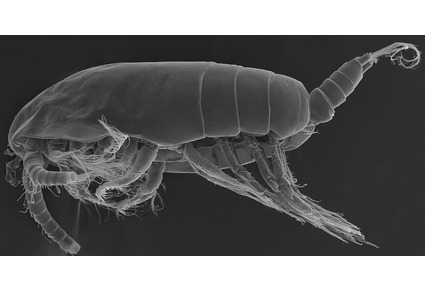
In the present study, we re-evaluated the presence of a row of denticles on the posterior margin of the genital double-somite as one of the morphological diagnostic characters used to distinguish Paracalanus indicus Wolfenden, 1906, from P. tropicus Andronov, 1977. The results demonstrated that these denticles are present in both dorsal and lateral margins in these two species. Consequently, the previously reported absence of denticles from the dorsal surface of P. indicus can no longer be regarded as a reliable diagnostic character to separate Paracalanus indicus from P. tropicus. Molecular analyses further confirmed that the specimens collected from Chabahar Bay, Iran, belong to P. indicus. In this species, the row of denticles along the posterior margin of the genital double-somite is arranged in a clustered pattern, with the lateral denticles being larger and more distinct than the dorsal ones. In contrast, P. tropicus exhibits a continuous row of relatively larger denticles. Therefore, the distribution pattern of the denticles along the posterior margin of the genital somite is considered a reliable diagnostic character to recognize these two species, but it can hardly be observed with light microscopy. A key to the females of Paracalanus species reported from off the Iranian coasts is also provided
References
- Andronov, V.N. (1977) Paracalanus tropicus sp. n. (Copepoda, Paracalanidae) from south-east Atlantic. Zoologicheskii Zhurnal, 56, 154–156. [In Russian with English summary]
- Benedetti, F., Vogt, M., Righetti, D., Guilhaumon, F. & Ayata, S.D. (2018) Do functional groups of planktonic copepods differ in their ecological niches? Journal of Biogeography, 45 (3), 604–616. https://doi.org/10.1111/jbi.13166
- Boeck, A. (1865) Oversigt over de ved Norges Kyster jagttagne Copepoder henhorende til Calanidernes, Cyclopidernes og Harpactidernes Familier. [Overview of the Copepods hunted on the coast of Norway belonging to the families Calanoida, Cyclopoida and Harpacticoida.] Forhandlinger i Videnskabs-Selskabet i Christiania, 1864, 226–282.
- Bowman, T.E. (1971) The distribution of calanoid copepods off the southeastern United States between Cape Hatteras and southern Florida. Smithsonian Contributions to Zoology, 96, 1–58. https://doi.org/10.5479/si.00810282.96
- Bradford, J.M. (1978) Paracalanus indicus Wolfenden and Corycaeus aucklandicus Kraemer, two neritic pelagic copepods from New Zealand. Journal of the Royal Society of New Zealand, 8 (2), 133–141. https://doi.org/10.1080/03036758.1978.10429386
- Cornils, A. & Blanco-Bercial, L. (2013) Phylogeny of the Paracalanidae Giesbrecht, 1888 (Crustacea: Copepoda: Calanoida). Molecular Phylogenetics and Evolution, 69, 861–872. https://doi.org/10.1016/j.ympev.2013.06.018
- Estoup, A., Largiader, C.R., Perrot, E. & Chourrout, D. (1996) Rapid one-tube DNA extraction for reliable PCR detection of fish polymorphic markers and transgenes. Molecular Marine Biology and Biotechnology, 5 (4), 295–298.
- Hartmann, V.L., Pereira, E., Mercado‐Salas, N.F., Lörz, A.N., Svavarsson, J. & Brix, S. (2024) Filter feeders living on suspension feeders: new insights into the lifestyle and distribution of Arcturidae Dana, 1849 (Crustacea: Isopoda) around Iceland. Marine Ecology, e12826. https://doi.org/10.1111/maec.12826
- Kasapidis, P., Siokou, I., Khelifi-Touhami, M., Mazzocchi, M.G., Matthaiaki, M., Christou, E., Fernandez De Puelles, M.L., Gubanova, A., Di Capua, I., Batziakas, S. & Frangoulis, C. (2018) Revising the taxonomic status and distribution of the Paracalanus parvus species complex (Copepoda, Calanoida) in the Mediterranean and Black Seas through an integrated analysis of morphology and molecular taxonomy. Journal of Plankton Research, 40 (5), 595–605. https://doi.org/10.1093/plankt/fby036
- Khelifi-Touhami, M. & Ounissi, M. (2023) Paracalanus Boeck, 1865. ICES Identification Leaflets for Plankton, 199, 22. https://doi.org/10.17895/ices.pub.21724394
- Khelifi-Touhami, M., Semroud, R., Hamdi, E.H., Ounissi, M., Haridi, A., Nejib Daly, M. & Aissa, P. (2007) The planktonic copepod communities from the southern Mediterranean Sea (Algeria, Tunisia) with a re-description of Paracalanus indicus Wolfenden 1905 (Copepoda: Calanoida). Cahiers De Biologie Marine, 48, 327–337.
- Prusova, I., Smith, S.L. & Popova, E. (2012) Calanoid copepods of the Arabian Sea region. Sultan Qaboos University, Academic Publication Board, Muscat, 240 pp.
- Sewell, R.B.S. (1929) The Copepoda of Indian Seas. Calanoida. Memoirs of the Indian Museum, Calcutta, 10, 1–221.
- Wolfenden, R.N. (1906) Notes on the collection of Copepoda. In: Stanley Gardiner, J. (Ed.), The Fauna and Geography of the Maldive and Laccadive Archipelagoes. Cambridge University Press, suppl. 1, pp. 989–1040.
- WoRMS. Title of the Document or Webpage. World Register of Marine Species. Available from: http://marinespecies.org/ (accessed 7 September 2025)