

Abstract
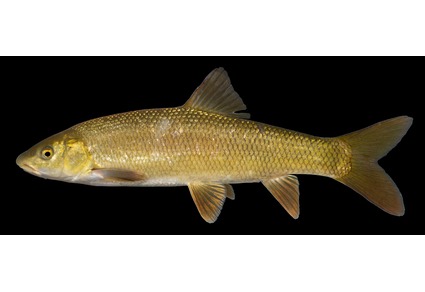
The distribution of Luciobarbus albanicus is almost completely restricted to the Ionian Freshwater Ecoregion of western Greece, and exhibits a marked north–south phylogeographic split. We examined 27 COI sequences (635 bp) from different populations in the northern (Kalamas, Louros, Arachthos) and southern (Acheloos, Trichonis, Pinios) sections of the ecoregion to see if these groups represent distinct species. Maximum Likelihood analysis recovered two well-supported clades that matched the geographic groups. However, the average K2P genetic distance between them was only 1.36%, while the distances within each group were substantially low, i.e., 0.02% for the northern and 0.07% for the southern populations. A detailed comparison of morphometric and meristic data, including the number of lateral-line scales, circumpeduncular scales, fin-ray counts, colour patterns, and lip shapes, revealed considerable overlaps, and no clear or consistent differences. Even though the mitochondrial divergence hints at some level of population structure, the lack of consistent morphological differences suggests that the northern and southern populations of L. albanicus are best considered conspecific.
References
- Barbieri, R., Zogaris, S., Kalogianni, E., Stoumboudi, M.T., Chatzinikolaou, Y., Giakoumi, S., Kapakos, Y., Kommatas, D., Koutsikos, N., Tachos, V., Vardakas, L. & Economou, A.N. (2015) Freshwater fishes and lampreys of Greece. An annotated checklist. Monographs on Marine Sciences 8. Hellenic Centre for Marine Research, Athens, 1–129. FINALMARCH2015FreshwaterFishlist-1.pdf
- Brahimi, A., Freyhof, J., Henrard, A. & Libois, R. (2017) Luciobarbus chelifensis and L. mascarensis, two new species from Algeria (Teleostei: Cyprinidae). Zootaxa, 4277 (1), 32–50. https://doi.org/10.11646/zootaxa.4277.1.3
- Brahimi, A., Libois, R., Henrard, A. & Freyhof, J. (2018) Luciobarbus lanigarensis and L. numidiensis, two new species of barbels from the Mediterranean Sea basin in North Africa (Teostei [sic Teleostei]: Cyprinidae). Zootaxa, 4433 (3), 542–560. https://doi.org/10.11646/zootaxa.4433.3.9
- Buj, I., Šanda, R., Zogaris, S., Freyhof, J., Geiger, M.F. & Vukić, J. (2019) Cryptic diversity in Telestes pleurobipunctatus (Actinopterygii; Leuciscidae) as a consequence of historical biogeography in the Ionian Freshwater Ecoregion (Greece, Albania). Hydrobiologia, 835, 147–163. https://doi.org/10.1007/s10750-019-3935-6
- Casal-Lopez, M., Perea, S., Yahyaoui, A. & Doadrio, I. (2015) Taxonomic review of the genus Luciobarbus Heckel, 1843 (Actinopterygii, Cyprinidae) from northwestern Morocco with the description of three new species. Graellsia, 71 (2), (art. e027), 1–24. https://doi.org/10.3989/graellsia.2015.v71.135
- Doadrio, I., Casal-López, M., Perea, S. & Yahyaoui, A. (2016) Taxonomy of rheophilic Luciobarbus Heckel, 1842 [sic] (Actinopterygii, Cyprinidae) from Morocco with the description of two new species. Graellsia, 72 (1, e039), 1–17. https://doi.org/10.3989/graellsia.2016.v72.153
- Freyhof, J. & Ford, M. (2022a) Luciobarbus antinorii. The IUCN Red List of Threatened Species 2022, e.T60731A137272558. https://doi.org/10.2305/IUCN.UK.2022-1.RLTS.T60731A137272558.en.
- Freyhof, J. & Ford, M. (2022b) Luciobarbus nasus. The IUCN Red List of Threatened Species 2022, e.T217675561A13727680b8. https://doi.org/10.2305/IUCN.UK.2022-1.RLTS.T217675561A137276808.en.
- Freyhof, J., Kärst, H. & Geiger, M.F. (2014) Valencia robertae, a new killifish from southern Greece (Cyprinodontiformes: Valenciidae). Ichthyological Exploration of Freshwaters, 24 (4), 289–298.
- Freyhof, J., Geiger, M.F. & Zogaris, S. (2026) Economidichthys mornosensis, a new freshwater sand-goby from Greece (Teleostei: Oxudercidae). Zootaxa, 5759 (1), 26–40. https://doi.org/10.11646/zootaxa.5759.1.2
- Freyhof, J., Kaya, C. & Geiger, M.F. (2022) A practical approach to revise the Oxynoemacheilus bergianus species group (Teleostei: Nemacheilidae). Zootaxa, 5128 (2), 151–194. https://doi.org/10.11646/zootaxa.5128.2.1
- Freyhof, J., Yoðurtçuoðlu, B., Jouladeh-Roudbar, A. & Kaya, C. (2025a) Handbook of freshwater fishes of West Asia. De Gruyter, Berlin and Boston, i–xiv + 904 pp. https://doi.org/10.1515/9783111677811
- Freyhof, J., Segherloo, I.H., Vatandoust, S., Abdollahi-Mousavi, S.E., Normandeau, E., Geiger, M.F. & Yoðurtçuoðlu, B. (2025b) Resolving a 182-year-old taxonomic puzzle: Luciobarbus in the Persian Gulf basin (Teleostei: Cyprinidae). Zootaxa, 5620 (1), 29–71. https://doi.org/10.11646/zootaxa.5620.1.3
- Geiger, M.F., Herder, F., Monaghan, M.T., Almada, V., Barbieri, R., Bariche, M., Berrebi, P., Bohlen, J., Casal-Lopez, M., Delmastro, G.B., Denys, G.P.J., Dettai, A., Doadrio, I., Kalogianni, E., Kärst, H., Kottelat, M., Kovacic, M., Laporte, M., Lorenzoni, M., Marcic, Z., Özuluð, M., Perdices, A., Perea, S., Persat, H., Porcelotti, S., Puzzi, C., Robalo, J., Šanda, R., Schneider, M., Šlechtová, V., Stoumboudi, M., Walter, S. & Freyhof, J. (2014) Spatial heterogeneity in the Mediterranean biodiversity hotspot affects barcoding accuracy of its freshwater fishes. Molecular Ecology Resources, 14, 1210–1221. https://doi.org/10.1111/1755-0998.12257
- Hebert, P.D., Cywinska, A., Ball, S.L. & DeWaard, J.R. (2003) Biological identifications through DNA barcodes. Proceedings of the Royal Society of London. Series B: Biological Sciences, 270 (1512), 313–321. https://doi.org/10.1098/rspb.2002.2218
- Ivanova, N.V., Zemlak, T.S., Hanner, R.H. & Hebert, P.D.N. (2007) Universal primer cocktails for fish DNA barcoding. Molecular Ecology Notes, 7, 544–548. https://doi.org/10.1111/j.1471-8286.2007.01748.x
- Kimura, M. (1980) A simple method for estimating evolutionary rates of base substitutions through comparative studies of nucleotide sequences. Journal of Molecular Evolution, 16 (2), 111–20. https://doi.org/10.1007/BF01731581
- Kottelat, M. (1997) European freshwater fishes. A heuristic checklist of the freshwater fishes of Europe (exclusive of former USSR), with an introduction for non-systematists and comments on nomenclature and conservation. Biologia, Bratislava, Section Zoology, 52 (Supplement 5), 1–271.
- Kottelat, M. & Freyhof, J. (2007) Handbook of European freshwater fishes. Kottelat, Cornol and Freyhof, Berlin, xiv + 646 pp.
- Koutsikos, N., Vavalidis, T., Perdikaris, C., Zogaris, S. & Vardakas, L. (2025) Anthropogenic influences reshape lentic fish diversity: Patterns of homogenization and differentiation across a Mediterranean biodiversity hotspot. Science of the Total Environment, 973, 179154. https://doi.org/10.1016/j.scitotenv.2025.179154
- Kumar, S., Stecher, G. & Tamura, K. (2016) MEGA7: molecular evolutionary genetics analysis version 7.0 for bigger datasets. Molecular Biology and Evolution, 33 (7), 1870–1874. https://doi.org/10.1093/molbev/msw054
- Meulenbroek, P., Shumka, S. & Schiemer, F. (2018) First reconnaissance of habitat partitioning and fish diversity in the alluvial zone of the river Vjosa, Albania. Acta ZooBot Austria, 155, 177–186.
- Montero‐Pau, J., Gómez, A. & Muñoz, J. (2008) Application of an inexpensive and high‐throughput genomic DNA extraction method for the molecular ecology of zooplanktonic diapausing eggs. Limnology and Oceanography: Methods, 6 (6), 218–222. https://doi.org/10.4319/lom.2008.6.218
- Nguyen, L.T., Schmidt, H.A., Von Haeseler, A. & Minh, B.Q. (2015) IQ-TREE: a fast and effective stochastic algorithm for estimating maximum-likelihood phylogenies. Molecular Biology and Evolution, 32 (1), 268–274. https://doi.org/10.1093/molbev/msu300
- Oikonomou, A., Leprieur, F. & Leonardos, I.D. (2014) Biogeography of freshwater fishes of the Balkan Peninsula. Hydrobiologia, 738 (1), 205–220. https://doi.org/10.1007/s10750-014-1930-5
- QGIS Development Team. (2016) QGIS Geographic Information System. Open Source Geospatial Foundation Project. Available from: http://qgis.osgeo.org (accessed February 2026)
- Rodríguez, N.V., Šanda, R., Zogaris, S. & Vukić, J. (2020) Distribution and genetic diversity of two species of Pelasgus minnows (Leuciscidae) in southern Greece. Knowledge and Management of Aquatic Ecosystems, 421, 27. https://doi.org/10.1051/kmae/2020019
- Shumka, S., Meulenbroek, P., Schiemer, F. & Šanda, R. (2018) Fishes of River Vjosa–an annotated checklist. Acta ZooBot Austria, 155 (1), 163–176.
- Srivathsan, A., Feng, V., Suárez, D., Emerson, B. & Meier, R. (2024) ONTbarcoder 2.0: rapid species discovery and identification with real‐time barcoding facilitated by Oxford Nanopore R10. 4. Cladistics, 40 (2), 192–203. https://doi.org/10.1111/cla.12566
- Steindachner, F. (1870) Ichthyologische Notizen (X). (Schluss). Sitzungsberichte der Kaiserlichen Akademie der Wissenschaften. Mathematisch-Naturwissenschaftliche Classe, 6 (1. Abth.), 623–642, Pls. 1–5. https://www.biodiversitylibrary.org/page/35520888
- Tsigenopoulos, C.S., Durand, J.D., Ünlu, E. & Berrebi, P. (2003) Rapid radiation of the Mediterranean Barbus species (Cyprinidae) after the Messinian Salinity Crisis of the Mediterranean Sea, inferred from mitochondrial phylogenetic analysis. Biological Journal of the Linnean Society, 80 (2), 207–222. http://dx.doi.org/10.1046/j.1095-8312.2003.00237.x
- Vavalidis, T., Zogaris, S., Economou, A.N., Kallimanis, A.S. & Bobori, D.C. (2019) Changes in fish taxonomy affect freshwater biogeographical regionalisations: insights from Greece. Water, 11 (9), 1743. https://doi.org/10.3390/w11091743
- Vardakas, L., Koutsikos, N., Perdikaris, C., Petriki, O., Bobori, D., Zogaris, S., Giakoumi, S., Fitoka, E., Tompoulidou, M., Tsiaoussi, V., Kommatas, D., Konstantinidis, E. & Economou, A.N. (2021) Τhe fish fauna in lentic ecosystems of Greece. Mediterranean Marine Science, 23 (1), 223–265. https://doi.org/10.12681/mms.28526
- Vogiatzi, E., Kalogianni, E., Zimmerman, B., Giakoumi, S., Barbieri, R., Paschou, P., Magoulas, A., Tsaparis, D., Poulakakis, N. & Tsigenopoulos, C.S. (2014) Reduced genetic variation and strong genetic population structure in the freshwater killifish Valencia letourneuxi (Valenciidae) based on nuclear and mitochondrial markers. Biological Journal of the Linnean Society, 111, 334–349. https://doi.org/10.1111/bij.12206
- Ward, R., Zemlak, T., Innes, B., Last, P. & Hebert, P. (2005) DNA barcoding Australia’s fish species. Philosophical Transactions of the Royal Society of London. Series B. Biological Sciences, 360, 1847–1857. https://doi.org/10.1098/rstb.2005.1716
- Yeates, D.K., Seago, A., Nelson, L., Cameron, S.L., Joseph, L. & Trueman, J.W.H. (2011) Integrative taxonomy, or iterative taxonomy? Systematic Entomology, 36, 209–217. https://doi.org/10.1111/j.1365-3113.2010.00558.x
- Zogaris, S., Economou, A.N. & Dimopoulos, P. (2009) Ecoregions in the southern Balkans: should their boundaries be revised? Environmental Management, 43 (4), 682–697. https://doi.org/10.1007/s00267-008-9243-y
- Zogaris, S. & Economou, A.N. (2017) The biogeographic characteristics of the river basins of Greece. In: Skoulikidis, N., Dimitriou, E. & Karaouzas, I. (Eds.), The Rivers of Greece: Evolution, current status and perspectives. Springer Berlin Heidelberg, Berlin, Heidelberg, pp. 53–95. https://doi.org/10.1007/698_2017_475
- Zogaris, S., Tachos, V., Economou, A.N., Chatzinikolaou, Y., Koutsikos, N. & Schmutz, S. (2018) A model-based fish bioassessment index for Eastern Mediterranean rivers: Application in a biogeographically diverse area. Science of the Total Environment, 622, 676–689. https://doi.org/10.1016/j.scitotenv.2017.11.293