

Abstract
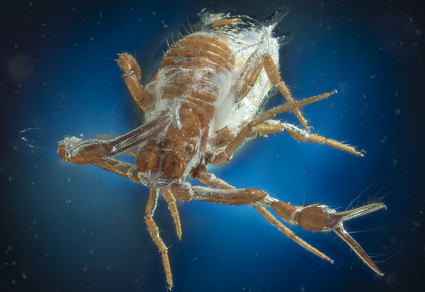
Here we describe two new fossil species and one new genus of pseudoscorpions, found in the late Eocene Baltic amber. Baltochthonius andrushchenkoi gen. et sp. nov. and Heterolophus eridanus sp. nov. are assigned to the subfamily Tridenchthoniinae (Pseudoscorpiones: Chthoniidae). We present an updated diagnostic key for the tribes, genera and subgenera of Tridenchthoniinae. The biogeographic, paleohabitat and ecological features of new species are presented and compared to the related extinct and extant species of the subfamily Tridenchthoniinae.
References
- Agnihotri, P., Singh, H., Subramanian, K.A., Vishwanathan, J. & Sahni, A. (2024) A new genus and species of fossil pseudoscorpion (Arachnida: Pseudoscorpiones) from the Eocene amber of Western India. Palaeontologia Electronica, 27 (2), a26. https://doi.org/10.26879/1276
- Ahrens, J., Harms, D., Dunlop, J.A. & Kotthoff, U. (2019) Pseudoscorpions in Bitterfeld Amber – a survey. Mauritiana, Altenburg, 3, 113–147.
- Akiyama, M. & Ueshima, R. (2025) Description of a new species of Ditha (Pseudoscorpiones: Chthoniidae) from Japan. Acta Arachnologica, 74 (1), 19–25. https://doi.org/10.2476/asjaa.74.19
- Alekseev, V.I. (2017) Coleoptera from the middle-upper Eocene European ambers: generic composition, zoogeography and climatic implications. Zootaxa, 4290 (3), 401–443. https://doi.org/10.11646/zootaxa.4290.3.1
- Balzan, L. (1887) Chernetidae nonnullae Sud-Americanae. I. Privately published, Asuncion. [no pagination]
- Balzan, L. (1890) Revisione dei Pseudoscorpioni del Bacino dei Fiumi Paranà e Paraguay nell'America meridionale. Annali del Museo Civico di Storia Naturale di Genova, Series 2ª, 9, 401–454.
- Baranov, V., Andersen, T. & Hagenlund, L.K. (2015) A new species of Bryophaenocladius Thienemann, 1934 (Diptera, Chironomidae, Orthocladiinae) from Baltic amber. Norwegian Journal of Entomology, 62, 53–56.
- Bauer, A.M., Böhme, W. & Weitschat, W. (2005) An Early Eocene gecko from Baltic amber and its implications for the evolution of gecko adhesion. Journal of Zoology, 265 (4), 327–332. https://doi.org/10.1017/S0952836904006259
- Beier, M. (1932) Pseudoscorpionidea I. Subord. Chthoniinea et Neobisiinea. Das Tierreich, 57, 1–258. https://doi.org/10.1515/9783111435107.1
- Beier, M. (1937) Pseudoscorpione aus dem baltischen Bernstein. Festschrift zum 60. Geburtstage von Professor Dr. Embrik Strand. Vol. 2. Izdevniecîba “Latvija”, Riga, pp. 302–316.
- Beier, M. (1944) Über Pseudoscorpioniden aus Ostafrika. Eos, Madrid, 20, 173–212.
- Beier, M. (1947) Pseudoskorpione im Baltischen Bernstein und die Untersuchung von Bernstein-Einschlüssen. Mikroscopie, 1, 188–199.
- Beier, M. (1955a) Pseudoscorpionidea. Exploration du Parc National de l'Upemba. I. Mission G.F. de Witte. Institut des Parcs Nationaux du Congo Belge, Bruxelles, 32 (1), 3–19.
- Beier, M. (1955b) Pseudoscorpione im baltischen Bernstein aus dem Geologischen Staatsinstitut in Hamburg. Mitteilungen aus dem Mineralogisch-Geologischen Staatsinstitut in Hamburg, 24, 48–54.
- Beier, M. (1959) Pseudoscorpione aus dem Belgischen Congo gesammelt von Herrn N. Leleup. Annales du Musée du Congo Belge, Sciences Zoologiques, 72, 5–69.
- Beier, M. (1964) Weiteres zur Kenntnis der Pseudoscorpioniden-Fauna des südlichen Afrika. Annals of the Natal Museum, 16, 30–90.
- Beier, M. (1967) Die Pseudoscorpione der Noona Dan Expedition nach den Philippinen und Bismarck Inseln. Entomologiske Meddelelser, 35, 315–324.
- Beier, M. (1969) Neue Pseudoskorpione aus Australien. Annalen des Naturhistorischen Museums in Wien, 73, 171–187.
- Benavides, L.R., Cosgrove, J.G., Harvey, M.S. & Giribet, G. (2019) Phylogenomic interrogation resolves the backbone of the Pseudoscorpiones tree of life. Molecular Phylogenetics and Evolution, 139, 106509. https://doi.org/10.1016/j.ympev.2019.05.023
- Benedict, E.M. & Malcolm, D.R. (1978) The family Pseudogarypidae (Pseudoscorpionida) in North America with comments on the genus Neopseudogarypus Morris from Tasmania. Journal of Arachnology, 6, 81–104.
- Caporiacco, L.di (1951) Studi sugli Aracnidi del Venezuela raccolti dalla Sezione di Biologia (Universitá Centrale del Venezuela). 1 Parte: Scorpiones, Opiliones, Solifuga y Chernetes. Acta Biologica Venezuelica, 1, 1–46.
- Chamberlin, J.C. (1929) A synoptic classification of the false scorpions or chela spinners, with a report on a cosmopolitan collection of the same. Part 1. The Heterosphyronida (Chthoniidae) (Arachnida-Chelonetida). Annals and Magazine of Natural History, Series 10, 4 (19), 50–80. https://doi.org/10.1080/00222932908673028
- Chamberlin, J.C. (1931) The arachnid order Chelonethida. Stanford University Publications, University Series, Biological sciences, 7, 1–284.
- Chamberlin, J.C. & Chamberlin, R.V. (1945) The genera and species of the Tridenchthoniidae (Dithidae). A family of the arachnid order Chelonethida. Bulletin of the University of Utah, Biological Series, 9, 1–67.
- Córdova-Tabares, V., Riquelme, F., Villegas-Guzmán, G., Víctor, J. & Estrada-Ruiz, E. (2024) A phoretic pseudoscorpion (Pseudoscorpiones: Cheliferidae: Hysterochelifer) from the Mexican amber. Historical Biology, 37 (4), 818–826. https://doi.org/10.1080/08912963.2024.2336980
- Costa, E., Garcés, M., Sáez, A., Cabrera, L. & López-Blanco, M. (2011) The age of the “Grande Coupure” mammal turnover: New constraints from the Eocene–Oligocene record of the Eastern Ebro Basin (NE Spain). Palaeogeography, Palaeoclimatology, Palaeoecology, 301 (1–4), 97–107. https://doi.org/10.1016/j.palaeo.2011.01.005
- Dashdamirov, S. (2005) Pseudoscorpions from the mountains of northern Pakistan (Arachnida: Pseudoscorpiones). Arthropoda Selecta, 13 (4), 225–261.
- Dashdamirov, S. (2008) A new species of false scorpion from Baltic amber with a redescription of Electrochelifer balticus Beier, 1955 and remarks on some fossil Cheliferidae (Arachnida: Chelonethida). Acta Biologica Benrodis, 14, 1–13.
- Dashdamirov, S. & Judson, M.L. (2004) A new genus of the pseudoscorpion family Tridenchthoniidae from Pakistan, with notes on the South American genus Cryptoditha Chamberlin & Chamberlin, 1945 (Arachnida: Pseudoscorpiones). Arthropoda Selecta, 13 (1–2), 45–50.
- Di Pasquale, G., Saracino, A., Bosso, L., Russo, D., Moroni, A., Bonanomi, G. & Allevato, E. (2020) Coastal pine-oak glacial refugia in the Mediterranean basin: a biogeographic approach based on charcoal analysis and spatial modelling. Forests, 11 (6), 673. https://doi.org/10.3390/f11060673
- Dunlop, J.A., Erdek, M. & Bartel, C. (2023) A new species of camel spider (Arachnida: Solifugae) in Baltic amber. Arachnology, 19 (4), 772–776. https://doi.org/10.13156/arac.2023.19.4.772
- Dunlop, J.A., Kotthoff, U., Hammel, J.U., Ahrens, J. & Harms, D. (2018) Arachnids in Bitterfeld amber: a unique fauna of fossils from the heart of Europe or simply old friends? Evolutionary Systematics, 2, 31–44. https://doi.org/10.3897/evolsyst.2.22581
- Dunlop, J.A., Vlaskin, A.P. & Marusik, Y.U. (2019) Comparing arachnids in Rovno Amber with the Baltic and Bitterfeld deposits. Paleontological Journal, 53 (10), 92–101. https://doi.org/10.1134/S0031030119100034
- Enghoff, H. (1995) Historical biogeography of the Holarctic: area relationships, ancestral areas, and dispersal of non-marine animals. Cladistics, 11 (3), 223–226. https://doi.org/10.1111/j.1096-0031.1995.tb00088.x
- Eskov, K.Yu. (1987) A new archaeid spider (Chelicerata: Araneae) from the Jurassic of Kazakhstan, with notes on the so-called “Gondwanan” ranges of recent taxa. Neues Jahrbuch für Geologie und Paläontologie, Abhandlungen, 175 (1), 81–106. https://doi.org/10.1127/njgpa/175/1987/81
- Eskov, K.Yu. (1992) Archaeid spiders from Eocene Baltic Amber (Chelicerata: Araneae: Archaeidae) with remarks on the so-called “Gondwanan” ranges of recent taxa. Neues Jahrbuch für Geologie und Paläontologie, Abhandlungen, 185 (3), 311–328. https://doi.org/10.1127/njgpa/185/1992/311
- Feng, C., Guo, X., Zhuang, Y., Zhang, Q., Jouault, C., Jarzembowski, A.E. & Liu, Y. (2025) The first Cheliferidae (Pseudoscorpiones: Cheliferoidea) from mid‐Cretaceous Kachin amber. Journal of Systematics and Evolution, 64 (2), 344–353. https://doi.org/10.1111/jse.70018
- Feio, J.L. de Araújo (1945) Novos pseudoscorpiões de região neotropical (com a descriçao de uma subfamilia, dois géneros e sete espécies). Boletim do Museu Nacional Rio de Janeiro, n.s. Zoologia, 44, 1–47.
- Geißler, C., Kotthoff, U., Hammel, J.U., Harvey, M.S. & Harms, D. (2022) The first fossil of the pseudoscorpion family Ideoroncidae (Arachnida: Pseudoscorpiones): A new taxon from the mid-Cretaceous of northern Myanmar. Cretaceous Research, 130, 105030. https://doi.org/10.1016/j.cretres.2021.105030
- Guo, X. & Zhang, F. (2016) Notes on two species of the genus Microcreagris Balzan, 1892 (Pseudoscorpiones: Neobisiidae) from China. Ecologica Montenegrina, 7, 394–404. https://doi.org/10.37828/em.2016.7.13
- Hagen, M., Kotthoff, U., Harms, D. & Loria S.F. (2025) New species of Lechytia Balzan, 1892 (Arachnida: Pseudoscorpiones) from Burmese amber highlights 99 million years of morphological stasis. Cretaceous Research, 172, 106120. https://doi.org/10.1016/j.cretres.2025.106120
- Harms, D. & Dunlop, J.A. (2017) The fossil history of pseudoscorpions (Arachnida: Pseudoscorpiones). Fossil Record, 20 (2), 215–238. https://doi.org/10.5194/fr-20-215-2017
- Harvey, M.S. (1992) The phylogeny and classification of the Pseudoscorpionida (Chelicerata: Arachnida). Invertebrate Systematics, 6 (6), 1373–1435. https://doi.org/10.1071/IT9921373
- Harvey, M.S. (2025) All genera of the world: Order Pseudoscorpiones (Animalia: Arthropoda: Arachnida). Megataxa, 18 (2), 349–391. https://doi.org/10.11646/megataxa.18.2.1
- Harvey, M.S. & Harms, D. (2022) The pseudoscorpion genus Centrochthonius (Pseudoscorpiones: Pseudotyrannochthoniidae) from central Asia and description of a new species from Nepal. Journal of Arachnology, 50, 158–174. https://doi.org/10.1636/JoA-S-21-033
- Harvey, M.S., Cosgrove, J.G., Harms, D., Selden, P.A., Shih, C. & Wang, C.-C. (2018) The oldest chthonioid pseudoscorpion Arachnida: Pseudoscorpiones: Chthonioidea: Chthoniidae: A new genus and species from mid-Cretaceous Burmese amber. Zoologischer Anzeiger, 273, 102–111. https://doi.org/10.1016/j.jcz.2017.12.009
- Harvey, M.S., Ratnaweera, P.B., Udagama, P.V. & Wijesinghe, M.R. (2012) A new species of the pseudoscorpion genus Megachernes (Pseudoscorpiones: Chernetidae) associated with a threatened Sri Lankan rainforest rodent, with a review of host associations of Megachernes. Journal of Natural History, 46, 2519–2535. https://doi.org/10.1080/00222933.2012.707251
- Henderickx, H. (2005) A new Geogarypus from Baltic amber (Pseudoscorpiones: Geogarypidae). Phegea, 33 (3), 87–92.
- Henderickx, H. & Boone, M. (2014) The first fossil Feaella Ellingsen, 1906, representing an unexpected pseudoscorpion family in Baltic amber (Pseudoscorpiones, Feaellidae). Entomo-Info, 25, 5–11.
- Henderickx, H., Cnudde, V., Masschaele, B., Dierick, M., Vlassenbroeck, J. & Van Hoorebeke, L. (2006) Description of a new fossil Pseudogarypus (Pseudoscorpiones: Pseudogarypidae) with the use of X-ray micro-CT to penetrate opaque amber. Zootaxa, 1305 (1), 41–50. https://doi.org/10.11646/zootaxa.1305.1.4
- Henderickx, H. & Perkovsky, E.E. (2012) The first geogarypid (Pseudoscorpiones, Geogarypidae) in Rovno amber (Ukraine). Vestnik zoologii, 46 (3), e-33–e-36. https://doi.org/10.2478/v10058-012-0022-0
- Henderickx, H., Perkovsky, E.E., Van Hoorebeke, L. & Boone, M. (2013) The first pseudogarypid in Rovno amber (Ukraine) (Pseudoscorpiones: Pseudogarypidae). Phegea, 41 (4), 90–92. https://doi.org/10.2478/v10058-012-0022-0
- Hewitt, G.M. (1999) Post-glacial re-colonization of European biota. Biological Journal of the Linnean Society, 68 (1–2), 87–112. https://doi.org/10.1111/j.1095-8312.1999.tb01160.x
- Hooker, J.J., Collinson, M.E. & Sille, N.P. (2004) Eocene–Oligocene mammalian faunal turnover in the Hampshire Basin, UK: calibration to the global time scale and the major cooling event. Journal of the Geological Society, 161 (2), 161–172. https://doi.org/10.1144/0016-764903-091
- Ivany, L.C., Patterson, W.P. & Lohmann, K.C. (2000) Cooler winters as a possible cause of mass extinctions at the Eocene/Oligocene boundary. Nature, 407 (6806), 887–890. https://doi.org/10.1038/35038044
- Jeong, K.-H., Harms, D. & Johnson, J. (2024) A new species of Ditha (Pseudoscorpiones, Chthoniidae, Tridenchthoniinae) from the Western Ghats of India, with an identification key for the genus. Zoosystematics and Evolution, 100 (1), 1–8. https://doi.org/10.3897/zse.100.110020
- Johnson, J., Loria, S.F., Kotthoff, U., Hammel, J.U., Joseph, M.M. & Harms, D. (2023) First record of the pseudoscorpion tribe Tyrannochthoniini Chamberlin, 1962 from mid-Cretaceous Burmese amber of northern Myanmar (Pseudoscorpiones: Chthoniidae: Chthoniinae). Cretaceous Research, 144, 105459. https://doi.org/10.1016/j.cretres.2022.105459
- Judson, M.L.I. (2003) Baltic amber pseudoscorpions (Arachnida, Chelonethi): a new species of Neobisium (Neobisiidae) and the status of Obisium rathkii Koch & Berendt. Geodiversitas, 25 (3), 445–450.
- Judson, M.L.I. (2005) Baltic amber fossil of Garypinus electri Beier provides first evidence of phoresy in the pseudoscorpion family Garypinidae (Arachnida: Chelonethi). In: Logunov, D. & Penney, D. (Eds.), Proceedings of the 21st European Colloquium of Arachnology, St. Petersburg, Russia, 4–9 August 2003, pp. 127–131.
- Judson, M.L.I. (2007) A new and endangered species of the pseudoscorpion genus Lagynochthonius from a cave in Vietnam, with notes on chelal morphology and the composition of the Tyrannochthoniini (Arachnida, Chelonethi, Chthoniidae). Zootaxa, 1627 (1), 53–68. https://doi.org/10.11646/zootaxa.1627.1.4
- Judson, M.L.I. (2010) Redescription of Chelifer eucarpus Dalman (Arachnida, Chelonethi, Withiidae) and first records of pseudoscorpions in copal from Madagascar and Colombia. Palaeodiversity, 3, 33–42.
- Judson, M.L.I. (2012) Reinterpretation of Dracochela deprehendor (Arachnida: Pseudoscorpiones) as a stem-group pseudoscorpion. Palaeontology, 55 (2), 261–283. https://doi.org/10.1111/j.1475-4983.2012.01134.x
- Judson, M.L.I. (2016) Pseudoscorpions (Arachnida, Chelonethi) in Mexican amber, with a list of extant species associated with mangrove and Hymenaea trees in Chiapas. Boletín de la Sociedad Geológica Mexicana, 68 (1), 57–79. https://doi.org/10.18268/BSGM2016v68n1a8
- Kolesnikov, V.B., Mikhailov, K.G. & Turbanov I.S. (2023) A new species of the genus Centrochthonius Beier, 1931 (Pseudoscorpiones: Pseudotyrannochthoniidae) from Kyrgyzstan. Arthropoda Selecta, 32 (4), 444–454. https://doi.org/10.15298/arthsel.32.4.08
- Kolesnikov, V.B., Turbanov, I.S., Eskov, K.Y., Propistsova, E.A. & Bashkuev, A.S. (2022) First non-amber Mesozoic pseudoscorpion from Upper Triassic deposits of eastern Europe, with a description of two new fossil subfamilies (Arachnida, Pseudoscorpiones, Feaellidae). Papers in Palaeontology, 8 (5), e1466. https://doi.org/10.1002/spp2.1466
- Kuzmina, O.B., Iakovleva, A.I. & Mychko, E.V. (2023) The age and depositional settings of the Upper Paleogene–Lower Neogene Kurshskaya Formation in its stratotype section (Kaliningrad Oblast) based on palynological data. Stratigraphy and Geological Correlation, 31 (6), 657–675. https://doi.org/10.1134/S0869593823060072
- Lawrence P.N. (1985) Ten species of Collembola from Baltic amber. Prace Muzeum Ziemi, 37, 101–104.
- Lear, C.H., Bailey, T.R., Pearson, P.N., Coxall, H.K. & Rosenthal, Y. (2008) Cooling and ice growth across the Eocene-Oligocene transition. Geology, 36 (3), 251–254. https://doi.org/10.1130/G24584A.1
- Lin, H.Y., Harms, D., Cheng, R.-C. & Chang, C.-H. (2025) A temperate group living in the subtropics: evolutionary history and integrative taxonomy of the pseudoscorpion genus Allochthonius Chamberlin, 1929 (Pseudoscorpiones: Pseudotyrannochthoniidae) in Taiwan. Organisms Diversity & Evolution. https://doi.org/10.1007/s13127-025-00691-0
- Mänd, K., Muehlenbachs, K., McKellar, R.C., Wolfe, A.P. & Konhauser, K. (2018) Distinct origins for Rovno and Baltic ambers: evidence from carbon and hydrogen stable isotopes. Palaeogeography, Palaeoclimatology, Palaeoecology, 55, 265–273. https://doi.org/10.1016/j.palaeo.2018.06.004
- Médail, F. & Diadema, K. (2009) Glacial refugia influence plant diversity patterns in the Mediterranean Basin. Journal of Biogeography, 36 (7), 1333–1345. https://doi.org/10.1111/j.1365-2699.2008.02051.x
- Menge, A. (1854) Footnotes in Koch, C.L. & Berendt, G.C. Die im Bernstein befindlichen Myriapoden, Arachniden und Apteren der Vorwelt. In: Berendt, G.C. (Ed.), Die in Bernstein befindlichen organischen Reste der Vorwelt gesammelt in Verbindung mit mehreren bearbeitetet und herausgegeben. 1 (2). Nicolai, Berlin, pp. 1–124.
- Menge, A. (1855) Ueber die Scheerenspinnen, Chernetidae. Neueste Schriften der Naturforschenden Gesellschaft, 5 (2), 1–43.
- Morgan, G.S. & Emslie, S.D. (2010) Tropical and western influences in vertebrate faunas from the Pliocene and Pleistocene of Florida. Quaternary International, 217 (1–2), 143–158. https://doi.org/10.1016/j.quaint.2009.11.030
- Muchmore, W.B. (1973) Ecology of pseudoscorpions - a review. In: Dindal, D.L. (Ed.), Proceedings of the First Soil Microcommunities Conference, Syracuse, New York. U.S. Atomic Energy Commission, Technical Information Center, Springfield, Virginia, pp. 121–127.
- Muchmore, W.B. (1981) Cavernicolous species of Larca, Archeolarca and Pseudogarypus with notes on the genera, (Pseudoscorpionida, Garypidae and Pseudogarypidae). Journal of Arachnology, 9, 47–60.
- Murthy, V.A. & Ananthakrishnan, T.N. (1977) Indian Chelonethi. Oriental Insects Monograph, 4, 1–210.
- Novák, J., Lorenz, M. & Harms, D. (2020) Feaella (Tetrafeaella) obscura sp. nov. – a new pseudoscorpion species from the Maldives (Arachnida, Pseudoscorpiones), and an updated identification key to the subgenus Feaella (Tetrafeaella). Zoosystematics and Evolution, 96 (2), 769–779. https://doi.org/10.3897/zse.96.56885
- Novák, J., Harvey, M.S., Szabó, M., Hammel, J.U., Harms, D., Kotthoff, U., Hörweg, C., Brazidec, M. & Ősi, A. (2024) A new Mesozoic record of the pseudoscorpion family Garypinidae from Upper Cretaceous (Santonian) Ajkaite amber, Ajka area, Hungary. Cretaceous Research, 153, 105709. https://doi.org/10.1016/j.cretres.2023.105709
- Perkovsky, E.E., Rasnitsyn, A.P., Vlaskin, A.P. & Taraschuk, M.V. (2007) A comparative analysis of the Baltic and Rovno amber arthropod faunas: representative samples. African Invertebrates, 48 (1), 229–245.
- Poinar, G.O. Jr., Ćurčić, B.P.M. & Cokendolpher, J.C. (1998) Arthropod phoresy involving pseudoscorpions in the past and present. Acta Arachnologica, 47 (2), 79–96. https://doi.org/10.2476/asjaa.47.79
- Popescu, S.-M., Biltekin, D., Winter, H., Suc, J.-P., Melinte-Dobrinescu, M.C., Klotz, S., Rabineau, M., Combourieu-Nebout, N., Clauzon, G. & Deaconu, F. (2010) Pliocene and Lower Pleistocene vegetation and climate changes at the European scale: Long pollen records and climatostratigraphy. Quaternary International, 219, 152–167. https://doi.org/10.1016/j.quaint.2010.03.013
- Porta, A.O., Michalik, P., Franchi, E. & Proud, D.N. (2020) The first fossil pycnocheiridiine pseudoscorpion (Pseudoscorpiones: Cheiridiidae: Procheiridium gen. nov.) from Cretaceous Burmese amber. Zootaxa, 4801 (1), 142–150. https://doi.org/10.11646/zootaxa.4801.1.6
- Röschmann, L.M., Harvey, M.S., Hou, Y., Harms, D., Kotthoff, U., Hammel, J.U., Ren, D. & Loria, S.M. (2024) First fossil species of family Hyidae (Arachnida: Pseudoscorpiones) confirms 99 million years of ecological stasis in a Gondwanan lineage. PeerJ, 12, e17515. https://doi.org/10.7717/peerj.17515
- Sadowski, E.-M., Schmidt, A.R., Seyfullah, L.J., Kunzmann, L. (2017) Conifers of the ‘Baltic amber forest’ and their palaeoecological significance. Stapfia, 106, 1–73.
- Sadowski, E.-M., Seyfullah, L.J., Regalado, L., Skadell, L.E., Gehler, A., Gröhn, C., Hoffeins, C., Hoffeins, H.W., Neumann, C., Schneider, H. & Schmidt, A.R. (2019) How diverse were ferns in the Baltic amber forest? Journal of Systematics and Evolution, 57 (4), 305–328. https://doi.org/10.1111/jse.12501
- Sadowski, E.-M., Schmidt, A.R. & Denk, T. (2020) Staminate inflorescences with in situ pollen from Eocene Baltic amber reveal high diversity in Fagaceae (oak family). Willdenowia, 50, 405–517. https://doi.org/10.3372/wi.50.50303
- Sánchez-García, A., Palencia, L., Delclòs, X. & Peñalver, E. (2024) False scorpions (Arachnida, Pseudoscorpiones) from Lower Cretaceous Spanish amber. Papers in Palaeontology, 10 (6), e1608. https://doi.org/10.1002/spp2.1608
- Sanmartín, I., Enghoff, H., & Ronquist, F. (2001) Patterns of animal dispersal, vicariance and diversification in the Holarctic. Biological Journal of the Linnean Society, 73 (4), 345–390. https://doi.org/10.1006/bijl.2001.0542
- Sidorchuk, E.A. & Vorontsov, D.D. (2018) Preparation of small-sized 3D amber samples: state of the technique. Palaeoentomology, 1, 80–90. https://doi.org/10.11646/palaeoentomology.1.1.10
- Schaefer, I. & Caruso T. (2019) Oribatid mites show that soil food web complexity and close aboveground-belowground linkages emerged in the early Paleozoic. Communications Biology, 2 (1), 387. https://doi.org/10.1038/s42003-019-0628-7
- Schmitt, T. (2007) Molecular biogeography of Europe: Pleistocene cycles and postglacial trends. Frontiers in Zoology, 4 (1), 11. https://doi.org/10.1186/1742-9994-4-11
- Schmitt, T. & Varga, Z. (2012) Extra-Mediterranean refugia: the rule and not the exception? Frontiers in Zoology, 9 (1), 1–12. https://doi.org/10.1186/1742-9994-9-22
- Schawaller, W. (1978) Neue Pseudoskorpione aus dem Baltischen Bernstein der Stuttgarter Bernsteinsammlung (Arachnida: Pseudoscorpionidea). Stuttgarter Beiträge zur Naturkunde, Serie B (Geologie und Paläontologie), 42, 1–21.
- Schawaller, W. (1980) Fossile Chthoniidae in Dominikanischem Bernstein, mit phylogenetischen Anmerkungen (Stuttgarter Bernsteinsammlung: Arachnida, Pseudoscorpionidea). Stuttgarter Beiträge zur Naturkunde, Serie B (Geologie und Paläontologie), 63, 1–19.
- Schawaller, W., Shear, W.A. & Bonamo, P.M. (1991) The first Paleozoic pseudoscorpions (Arachnida, Pseudoscorpionida). American Museum Novitates, 3009, 1–17.
- Schwarze, D., Harms, D., Hammel, J.U. & Kotthoff, U. (2022) The first fossils of the most basal pseudoscorpion family (Arachnida: Pseudoscorpiones: Pseudotyrannochthoniidae): evidence for major biogeographical shifts in the European paleofauna. Paläontologische Zeitschrift, 96 (1), 11–27. https://doi.org/10.1007/s12542-021-00565-8
- Sommer, R.S. & Zachos, F.E. (2009) Fossil evidence and phylogeography of temperate species: ‘glacial refugia’ and post-glacial recolonization. Journal of Biogeography, 36 (11), 2013–2020. https://doi.org/10.1111/j.1365-2699.2009.02187.x
- Sontag, E. & Szadziewski, R. (2011) Biting midges (Diptera: Ceratopogonidae) in Eocene Baltic amber from the Rovno region (Ukraine). Polish Journal of Entomology, 80 (4), 779–800. https://doi.org/10.2478/v10200-011-0058-4
- Stanczak, N., Harvey, M.S., Harms, D., Hammel, J.U., Kotthoff, U. & Loria, S.F. (2023) A new pseudoscorpion genus (Garypinoidea: Garypinidae) from the Eocene supports extinction and range contraction in the European paleobiota. PeerJ, 11, e15989. https://doi.org/10.7717/peerj.15989
- Stehlen, H.G. (1910) Remarques sur les faunules de Mammifères des couches eocenes et oligocenes du Bassin de Paris. Bulletin de la Société Géologique de France, 4 (9), 488–520.
- Stewart, J.R. & Lister, A.M. (2001) Cryptic northern refugia and the origins of the modern biota. Trends in Ecology & Evolution, 16 (11), 608–613. https://doi.org/10.1016/S0169-5347(01)02338-2
- Tömösváry, Ö. (1884) Adatok az álskorpiók ismeretéhez (Data ad cognitionem Pseudoscorpionum). Természetrajzi Füzetek, 8, 16–27.
- Tullgren, A. (1907) Chelonethiden aus Natal und Zululand. In: Wirén, A. (Ed.), Zoologiska studier tillägnade Professor T. Tullberg. Almquist and Wiksells, Uppsala, pp. 216–236.
- Turbanov, I.S., Kolesnikov, V.B., Vorontsov, D.D., Vasilenko, D.V. & Perkovsky, E.E. (2024) Chthonius marusiki sp. nov. – the first pseudoscorpion of the family Chthoniidae Daday, 1889 (Arachnida, Pseudoscorpiones) from the late Eocene Rovno amber. Historical Biology, 36 (12), 2557–2564. https://doi.org/10.1080/08912963.2023.2266821
- Turbanov, I.S., Kolesnikov, V.B., Vorontsov, D.D., Shadrin, D.S., Vasilenko, D.V. & Perkovsky E.E. (2025) Palaeochiridiinae subfam. nov. (Arachnida: Pseudoscorpiones: Pseudochiridiidae) from mid-Cretaceous Burmese amber, with a description of new genus and species. Zootaxa, 5686 (4), 536–554. https://doi.org/10.11646/zootaxa.5686.4.5
- Viana, A.C.M. & Ferreira, R.L. (2021) A new troglobitic species of Allochthonius (subgenus Urochthonius) (Pseudoscorpiones, Pseudotyrannochthoniidae) from Japan. Subterranean Biology, 37, 43–55. https://doi.org/10.3897/subtbiol.37.58580
- Wolfe, A.P., McKellar, R.C., Tappert, R., Sodhi, R.N.S. & Muehlenbachs, K. (2016) Bitterfeld amber is not Baltic amber: three geochemical tests and further constraints on the botanical affinities of succinite. Review of Palaeobotany and Palynology, 225, 21–32. https://doi.org/10.1016/j.revpalbo.2015.11.002
- World Pseudoscorpiones Catalog (2026) Natural History Museum Bern, Bern. Available from: https://wac.nmbe.ch/order/pseudoscorpiones/3 (accessed 25 January 2026)
- Wriedt, A.-L., Harvey, M.S., Hammel, J.U., Kotthoff, U. & Harms, D. (2021) The second chthonioid pseudoscorpion (Pseudoscorpiones: Chthoniidae) from mid-Cretaceous Burmese amber: a new genus with unique morphological features and potential Gondwanan affinities. Journal of Arachnology, 48 (3), 311–321. https://doi.org/10.1636/JoA-S-20-017
- Zachos, J., Pagani, M., Sloan, L., Thomas, E. & Billups, K. (2001) Trends, rhythms, and aberrations in global climate 65 Ma to present. Science, 292 (5517), 686–693. https://doi.org/10.1126/science.1059412
- Zaragoza, J.A. (2017) Revision of Ephippiochthonius complex in the Iberian Peninsula, Balearic Islands and Macaronesia, with proposed changes to the status of Chthonius subgenera (Pseudoscorpiones, Chthoniidae). Zootaxa, 4246 (1), 1–221. https://doi.org/10.11646/zootaxa.4246.1.1
- Zelentsov, N.I., Baranov, V.A., Perkovsky, E.E. & Shobanov, N.A. (2012) First records on non-biting midges (Diptera: Chironomidae) from the Rovno amber. Russian Entomological Journal, 21 (1), 79–87. https://doi.org/10.15298/rusentj.21.1.10