

Abstract
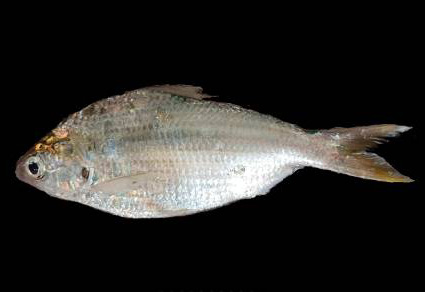
The present study provides an updated checklist and distributional analysis of clupeiform fishes from Indian waters based on published literature, online databases, and fish landing records. Clupeiform fishes are predominantly pelagic, schooling, and filter-feeding forms widely distributed in marine, estuarine, and freshwater ecosystems, and constitute an important component of global pelagic fishery resources. In India, this group contributes substantially to marine fish landings and supports major coastal fisheries, with several species subjected to intensive exploitation due to their high commercial and nutritional value. The present compilation includes a total of 97 valid species of the order Clupeiformes belonging to 26 genera and seven families recorded from Indian waters, representing approximately 21.1% of the global species diversity and 31.3% of the known genera of the order, which currently comprises ten families worldwide. Among the recorded families, Engraulidae and Dorosomatidae are the most species-rich, whereas Chirocentridae and Spratelloididae contain fewest species. The Bay of Bengal exhibits the highest species richness, followed by the Arabian Sea, while the Andaman & Nicobar Islands and Lakshadweep Islands are comparatively less diverse. Assessment based on the IUCN Red List indicates that 56 species are listed as Least Concern, 32 as Data Deficient, eight as Not Evaluated, and one species falls under vulnerable category. This compiled checklist serves as a foundational reference for future investigations into the taxonomy, biodiversity, and conservation of Indian clupeiform fishes.
References
- Alder, J., Campbell, B., Karpouzi, V., Kaschner, K. & Pauly, D. (2008) Forage Fish: From Ecosystems to Markets. Annual Review of Environment and Resources, 33, 153–166. https://doi.org/10.1146/annurev.environ.33.020807.143204
- Anthonipillai, A., Balasubramanian, T., Shanker, S. & Shyni, A. (2018) A manual on Taxonomical identification of Clupeiformes fishes of Southeast coast of India. LAP LAMBERT Academic publishing, Saarbrücken, pp. 27–164.
- Baliarsingh, S.K., Dash, B., Jena, A.K., Raulo, S., Samanta, A., Joseph, S., Nair, T.M.B., Srichandan, S. & Sureshkumar, S. (2024) Investigating Indian oil sardine aggregation events in coastal waters of the southeastern Arabian sea. Environmental Science and Pollution Research, 31, 34271–34281. https://doi.org/10.1007/s11356-024-33519-z
- Barman, R.P., Mishra, S.S., Kar, S., Mukherjee, P. & Saren, S.C. (2013) Marine and Estuarine Fishes. In: Venkataraman, K. (Ed.), Fauna of Karnataka. State Fauna Series 21. Zoological Survey of India, Kolkata, pp. 277–387.
- Bhaumik, U. & Sharma, A.P. (2011) The fishery of Indian Shad (Tenualosa ilisha) in the Bhagirathi- Hooghly river system. Fishing Chimes, 31 (8), 21–27.
- Birge, T.L., Ralph, G.M., Dario, F.D., Munroe, T.A., Bullock, R.W., Maxwell, S.M., Santos, M.D., Hata, H. & Carpenter, K.E. (2021) Global conservation status of the world's most prominent forage fishes (Teleostei: Clupeiformes). Biological Conservation, 253, 108903. https://doi.org/10.1016/j.biocon.2020.108903
- Bloom, D.D. & Egan, J. (2018) Systematics of Clupeiformes and testing for ecological limits on species richness in a trans-marine/freshwater clade. Neotropical Ichthyology, 16 (3), e180095. https://doi.org/10.1590/1982-0224-20180095
- Burma, B.N.S., Panda, R.P. & Biswal, N.C. (2023) Fish Faunal Diversity of Chilika Lake, Odisha, India. International Journal for Research Trends and Innovation, 8 (5), 16–29.
- Chatterjee, T.K., Ramakrishna., Talukdar, S. & Mukherjee, A.K. (2000) Fish and fisheries of Digha coast of West Bengal. Records of the Zoological Survey of India, Occasional Paper, No. 188, i–iv + 1–87.
- Chavda, Y., Chavda, V.M., Bhadarka, M., Rathod, K., Sikotariya, H. & Makwana, K. (2025) Assessment of Finfish Diversity along the Chorwad Coast, Gujarat, India. Uttar Pradesh Journal of Zoology, 46 (5), 206–217. https://doi.org/10.56557/upjoz/2025/v46i54836
- Das, M. (2018) Environmental impact of trawling on the continental shelf of Bay of Bengal. Sustainable Water Resources Management, 4, 1091–1104. https://doi.org/10.1007/s40899-018-0247-3
- Das, M.K. & Sivaperuman, C. (2023) First report of Gold spotted anchovy Coilia dussumieri Valenciennes, 1848 (Clupeiformes: Engraulidae) from Andaman and Nicobar Islands, India. Indian Journal of Geo-Marine Sciences, 52 (9), 445–447. https://doi.org/10.56042/ijms.v52i09.11268
- Day, F. (1865) The fishes of Malabar. Gyan Publishing House, New Delhi, 371 pp. [pp. 230–242] https://doi.org/10.5962/bhl.title.5549
- Esmaeili, H.R. & Echreshavi, S. (2023) An updated checklist of clupeiform fishes (Teleostei: Clupeiformes) in the North-Western Indian Ocean: Taxonomy, diversity, distribution, and conservation status. Taxa, 2 (ad23204), 31.
- FRAD (2016) Marine Fish Landings in India 2015. ICAR-Central Marine Fisheries Research Institute, Kochi, 2 pp.
- FRAD (2017) Marine Fish Landings in India 2016. ICAR-Central Marine Fisheries Research Institute, Kochi, 2 pp.
- FRAD (2018) Marine Fish Landings in India 2017. ICAR-Central Marine Fisheries Research Institute, Kochi, 2 pp.
- FRAD (2019) Marine Fish Landings in India 2018. ICAR-Central Marine Fisheries Research Institute, Kochi, 2 pp.
- FRAD (2020) Marine Fish Landings in India 2019. ICAR-Central Marine Fisheries Research Institute, Kochi, 2 pp.
- FRAD (2022a) Marine Fish Landings in India 2020. ICAR-Central Marine Fisheries Research Institute, Kochi, 6 pp.
- FRAD (2022b) Marine Fish Landings in India 2021. ICAR-Central Marine Fisheries Research Institute, Kochi, 6 pp.
- FRAEED (2023) Marine Fish Landings in India 2022. ICAR-Central Marine Fisheries Research Institute, Kochi, 6 pp.
- FRAEED (2024) Marine Fish Landings in India 2023. ICAR-Central Marine Fisheries Research Institute, Kochi, 6 pp.
- FRAEED (2025) Marine Fish Landings in India 2024. ICAR-Central Marine Fisheries Research Institute, Kochi, 6 pp.
- Fricke, R., Eschmeyer, W.N. & van der Laan, R. (2026) Eschmeyer’s Catalogue of Fish. California Academy of Sciences, San Francisco, California. Available from: https://www.calacademy.org/scientists/projects/eschmeyers-catalog-of-fishes (accessed 21 January 2026)
- Gangan, S.S., Kumar, R., Ramteke, K.K., Pavan, A. & Jaiswar, A.K. (2016a) Study of morphological variation discernible by multivariate analysis between the species of genus Setipinna (Teleostei: Clupeiformes). Ecology, Environment and Conservation, 22 (Supplement), 11–16.
- Gangan, S.S., Jaiswar, A.K., Pavan-Kumar, A. & Jahageerdar, S. (2016b) First record of Burma hairfin anchovy Setipinna wheeleri Wongratana, 1983 (Order Clupeiformes, Family Engraulidae) from Bay of Bengal, India. Journal of the Indian Fisheries Association, 43 (1), 1–10.
- Gopinath, A. & Abdussamad, E.M. (2024a) Phylogenetic analysis and redescription of the specimen of Thryssa stenosoma (Teleostei: Clupeiformes: Engraulidae) collected from Puri, Odisha, Bay of Bengal. International Education & Research Journal, 10 (11), 19–22.
- Gopinath, A., Abdussamad, E.M., Jeena, N.S. & Tomy, E. (2025) Taxonomic revision of six species of the genus Thryssa from Indian waters: A step towards diversity assessment. Journal of the Marine Biological Association of India, 67 (1), 45–53. https://doi.org/10.6024/jmbai.2025.67.1.2562-06
- Hameed, P.V.P.S., Muhsin, A.I., Pookoya, P. & Kutty, R. (2021) Length–weight analysis of ten species (Actinopterygii) supporting subsistence fishery in Lakshadweep waters, southern Arabian Sea. Acta Ichthyologica et Piscatoria, 51 (3), 257–261. https://doi.org/10.3897/aiep.51.e64632
- Hamilton, F. (1822) An account of the fishes found in the river Ganges and its branches. A. Constable and company, Edinburgh, vii + 405 pp., 39 pls. https://doi.org/10.5962/bhl.title.59540
- Hata, H., Lavoué, S. & Motomura, H. (2022a) A new species of the Bengal spined anchovy Stolephorus from the eastern Indian Ocean and redescription of Stolephorus dubiosus Wongratana, 1983, with comments on the evolution of prepelvic scute numbers within Stolephorus (Clupeiformes: Engraulidae). Zoological Studies, 61, e58. https://doi.org/10.6620/ZS.2022.61-58
- Hata, H., Lavoué, S. & Motomura, H. (2022b) Description of three new species previously identified as Stolephorus bengalensis (Dutt & Babu Rao, 1959) or Stolephorus insularis Hardenberg, 1933 and a redescription of S. bengalensis (Chordata, Osteichthyes, Clupeiformes, Engraulidae). ZooKeys, 1121 (8), 145–173. https://doi.org/10.3897/zookeys.1121.84171
- Hata, H. & Motomura, H. (2022) Redescription of Stolephorus ronquilloi Wongratana, 1983 and description of Stolephorus hindustanensis, a new anchovy from the western coast of India (Teleostei: Clupeiformes: Engraulidae). Taxonomy, 2 (1), 124–135. https://doi.org/10.3390/taxonomy2010010
- Hata, H., Lavoué, S., Chungthanawong, S. & Motomura, H. (2023) A new species of Thrissina from the Andaman Sea and re-assessment of the taxonomic status of Thrissina cuvierii (Swainson, 1839) and Thrissina malabarica (Bloch, 1795) (Teleostei: Clupeiformes: Engraulidae: Coiliinae). Ichthyology & Herpetology, 111 (4), 549–562. https://doi.org/10.1643/i2023001
- IUCN (2026) The IUCN Red List of Threatened Species. Available from: http://www.iucnredlist.org (accessed 2 January 2026)
- Jaleel, K.A., Mumthaz, T.M.V., Vinayan, T. & George, T. (2022) Icthyofaunal Diversity of Kavvayi Backwaters, Malabar Coast of India: A Preliminary Study. Asian Journal of Fisheries and Aquatic Research, 19 (2), 12–19. https://doi.org/10.9734/ajfar/2022/v19i230470
- Jesintha, N., Jayakumar, N., Karuppasamy, K., Ahilan, B., Manikandavelu, D., Uma, A. & Madhavi, K. (2022) An Annotated Checklist of Finfish and Shellfish Diversity of Pulicat Lake, Southeast Coast of India. Indian Journal of Animal Research, 56 (4), 468–475. https://doi.org/10.18805/IJAR.B-4740
- Khan, M. Z. (2003) Golden Anchovy. In: Joseph, M.M. & Jayaprakash, A.A. (Eds.), Status of Exploited Marine Fishery Resources of India. Central Marine Fisheries Research Institute (CMFRI), Kochi, pp. 40–44.
- Kosygin, L., Mohapatra, A., Bineesh, K.K., Sharma, I., Jadhav, S.S. & Khynriam, D. (2024) Pisces. In: Banerjee, D. (Ed.), Fauna of India Checklist. Zoological Survey of India, Kolkata, pp. 2–97.
- Kripa, V., Mohamed, K.S., Koya, K.P.S., Jeyabaskaran, R., Prema, D., Padua, S., Kuriakose, S., Anilkumar, P.S., Nair, P.G., Ambrose, T.V., Dhanya, A.M., Abhilash, K.S., Bose, J., Divya, N.D., Shara, A.S. & Vishnu, P.G. (2018) Overfishing and climate drives changes in biology and recruitment of the Indian oil sardine Sardinella longiceps in southeastern Arabian Sea. Frontiers in Marine Science, 5, 443. https://doi.org/10.3389/fmars.2018.00443
- Lavoué, S., Miya, M., Musikasinthorn, P., Chen, W.-J. & Nishida, M. (2013) Mitogenomic Evidence for an Indo-West Pacific Origin of the Clupeoidei (Teleostei: Clupeiformes). PLoS ONE, 8 (2), e56485. https://doi.org/10.1371/journal.pone.0056485
- Maji, D. & Tudu, A.K. (2025) Morphomeristic and length-weight relationship factors of economically significant pelagic fish, Anodontostoma chacunda (Hamilton, 1822), Chacunda gizzard shad from the West Bengal coastal water, India. International Journal of Fisheries and Aquatic Studies, 13 (2), 110–114. https://doi.org/10.22271/fish.2025.v13.i2b.3057
- Mogalekar, H.S., Canciyal, J., Jawahar, P., Patadiya, D.S., Sudhan, C., Pavinkumar, P., Prateek, Santhoshkumar, S. & Subburaj, A. (2017) Estuarine Fish Diversity of Tamil Nadu, India. Indian Journal of Geomarine Sciences, 46 (10), 1968–1985.
- Mogalekar, H.S., Canciyal, J., Patadia, D.S. & Sudhan, C. (2018) Marine and estuarine fish fauna of Tamil Nadu, India. Proceedings of the International Academy of Ecology and Environmental Sciences, 8 (4), 231–271.
- Mohapatra, A., Mishra, S.S., Bineesh, K.K., Rajendra, S., Ray, D., Mohanty, S.R. & Roy, S. (2020) Pisces. In: Chandra, K., Raghunathan, C. & Mondal, T. (Eds.), Faunal Diversity of Biogeographic Zones: Coasts of India. Zoological Survey of India, Kolkata, pp. 655–722.
- Mondal, S., Behera, S., Kumar, S., Nagesh, T.S., Talwar, N.A., Gogoi, R., Das, A. & Sarkar, S. (2015) Length-Weight Relationships And Condition Factors Of Big Eye Hilsa, Ilisha Megaloptera From Estuarine Region Of Diamond Harbour, West Bengal. International Journal of Innovative Science, Engineering & Technology, 2 (5), 217–228.
- Nair, R.V. (1953) Key for the Field Identification of the Common Clupeoid Fishes of India. Journal of the Zoological Society of India, 5 (1), 108–138.
- Nair, R.J. & Kumar, D. (2018) An Overview of the Fish Diversity of Indian Waters. In: Vijayagopal, P. & Peter, R. (Eds.), Training Manual in Molecular Biology and Biotechnology for Fisheries’ Professionals. Series No.15-2018. CMFRI, Kochi, pp. 44–45.
- Patadiya, D.S., Mogalekar, H.S., Sudhan, C., Jawahar, P., Jayakumar, N. & Pereira, J.J. (2021) Length weight relationship and biology of Thryssa setirostris (Broussonet 1782) from the coast of Thoothukudi, Tamil Nadu, India. Journal of the Marine Biological Association of India, 63 (1), 49–55.
- Pillai, N.G.K. & Rohit, P. (2003) Lesser Sardines. In: Mohan Joseph, M. & Jayaprakash, A. (Eds.), Status of Exploited Fishery Resources of India. CMFRI, Kochi, pp. 29.
- Prasad, K.S.K., Ramulu, K.N. & Benarjee, G. (2012) Icthyofauna Diversity and Its Abundance in East Godavari District, Andhra Pradesh. Nature Environment and Pollution Technology, 11 (4), 675–679.
- Qasim, S.Z. (2001) Indian Ocean: Ecology and Resources. Oxford & IBH Publishing Co. Pvt. Ltd., New Delhi, 421 pp.
- Rajan, P.T., Sreeraj, C.R. & Immanuel, T. (2013) Fishes of Andaman and Nicobar Islands: A Checklist. Journal of the Andaman Science Association, 26 (2), 95–130.
- Ray, A., Bayen, S., Das Gupta, S. & Das, B.K. (2021) A new size record of Big eye ilisha, Ilisha megaloptera (Clupeiformes: Pristigasteridae) with a note on its sexual maturity from Hooghly Estuary, India. Journal of the Inland Fisheries Society of India, 53 (3–4), 215–219.
- Sajina, A.M., Suresh, V.R., Sandhya, K.M., Mukherjee, J., Manna, R.K., Banik, S.K., Maity, T. & Samanta, R. (2020) Growth overfishing of hilsa shad in Hooghly-Bhagirathi river system, India: Assessment and management implications. Indian Journal of Fisheries, 67 (2), 1–7.
- Saren, S.C., Pillai, H.U., Dutta, S., Sengupta, A. & Barman, S. (2024) First record of two species of engraulids, Thrissina gautamiensis Babu Rao, 1971 and Stolephorus tamilensis Gangan, Pavan-Kumar, Jahageerdar & Jaiswar, 2020 (Engraulidae: Clupeiformes) from the west coast of India. Journal of Fisheries and Environment, 48 (1), 128–135. https://doi.org/10.34044/j.jfe.2024.48.1.11
- Shetye, S.R. & Gouveia, A.D. (1998) Coastal oceanography of the Indian shelf. Current Science, 75, 856–865.
- Siriskar, D.A., Khedkar, G.D. & Lior, D. (2013) Production of Salted and Pressed Anchovies (Stolephorus sp.) and It’s Quality Evaluation During Storage. Journal of Food Science and Technology, 50 (6), 1172–1178. https://doi.org/10.1007/s13197-011-0450-9
- Suresh, V.R., Mohanty, S.K., Manna, R.K., Bhatta, K.S., Mukherjee, M., Karna, S.K., Sharma, A.P., Das, B.K., Pattnaik, A.K., Nanda, S. & Lenka, S. (2018) Fish and shellfish diversity and its sustainable management in Chilika lake. ICAR- Central Inland Fisheries Research Institute, Barrackpore, Kolkata and Chilika Development Authority, Bhubaneswar, 5 pp.
- Suryawanshi, R., Khedkar, G.D., Kalyankar, A., Khangale, D. & Shitale, K. (2024) DNA Barcoding for the Assessment of the Taxonomy of Fish from Chilika Lagoon, India. Genetics of Aquatic Organisms, 8 (3), GA812. https://doi.org/10.22541/au.169338068.88142808/v1
- Tacon, A.G.J. & Metian, M. (2009) Fishing for feed or fishing for food: increasing global competition for small pelagic forage fish. AMBIO: A Journal of the Human Environment, 38, 294–302. https://doi.org/10.1579/08-a-574.1
- Talwar, P.K. & Kacker, R.K. (1984) Commercial Sea Fishes of India. Zoological Survey of India, Kolkata, 997 pp. [pp. 127–208]
- Vaithilingam, R., Jeacoumar, K., Srinivasan, N.M. and Udhyasuriyan, V. (2021) Checklist of commercially important fishes of Puducherry coastal waters, east coast of India. International Journal of Fisheries and Aquatic Studies, 9 (1), 159–166. https://doi.org/10.22271/fish.2021.v9.i1b.2400
- Vanmali, H.S., Jadhav, R.N. & Pimpliskar, M.R. (2015) Studies on Finfish diversity in Vaitarna estuary of district Palghar, Maharashtra. Indian Journal of Scientific Research & Technology, 3 (3), 17–21.
- Whitehead, P.J.P. (1972) A synopsis of the clupeoid fishes of India. Journal of the Marine Biological Association of India, 14 (1), 160–256.