

Abstract
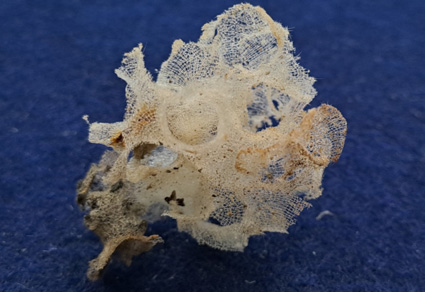
Glass sponges constitute an important component of benthic communities, forming structural habitats in the deep-sea. Currently, 146 species of hexactinellids are known to occur in the Atlantic Ocean, with the majority reported at higher latitudes in the North Atlantic. Without a comprehensive understanding of their biodiversity across the entire Atlantic, conservation programs aimed at protecting these important organisms are limited in their effectiveness. To fill-in this knowledge gap, our research focuses on the examination of the glass sponge fauna inhabiting several seamounts (Carter, Gramberg, Knipovich, Vayda) and the Vema fracture zone, all located in Areas Beyond National Jurisdiction across the tropical Atlantic. This study identified 19 glass sponge species from 15 genera and 6 families, using an integrative taxonomic approach. Of these, 13 species are new to science and are herein described and illustrated. Phylogenetic reconstructions of partial mtDNA (COI and 16S rDNA) and nuclear rDNA (28S) markers confirm our taxonomic identifications and support previous studies on the phylogenetic status of these families. In the present work, we increased the number of known species for the Atlantic from 146 to 159. Many of these new species are from rarely studied genera, such as Caulophacella, Tabachnickia, Heterorete, Lonchiphora and Scyphidium. The discovery of such a high number of new species highlights the limited exploration and research in the tropical Atlantic area, where the diversity of deep-sea organisms is yet to be unravelled. This relatively unexplored region contains a substantial diversity of deep-sea life that remains to be fully studied and understood. The discovery of these new species not only enhances our understanding of biodiversity in this region but also provides crucial insights into broad distribution patterns, which is vital for developing new policies to protect these critical habitats.
References
- Altschul, S.F., Gish, W., Miller, W., Myers, E.W. & Lipman, D.J. (1990) Basic local alignment search tool. Journal of Molecular Biology, 215 (3), 403–410. https://doi.org/10.1016/S0022-2836(05)80360-2
- Appeltans, W., Ahyong, S.T., Anderson, G., Angel, M.V., Artois, T., Bailly, N., Bamber, R., Barber, A., Bartsch, I., Berta, A., Błażewicz-Paszkowycz, M., Bock, P., Boxshall, G., Boyko, C.B., Brandão, S.N., Bray, R.A., Bruce, N.L., Cairns, S.D., Chan, T.Y., Cheng, L., Collins, A.G., Cribb, T., Curini-Galletti, M., Dahdouh-Guebas, F., Davie, P.J.F., Dawson, M.N., De Clerck, O., Decock, W., De Grave, S., de Voogd, N.J., Domning, D.P., Emig, C.C., Erséus, C., Eschmeyer, W., Fauchald, K., Fautin, D.G., Feist, S.W., Fransen, C.H.J.M., Furuya, H., Garcia-Alvarez, O., Gerken, S., Gibson, D., Gittenberger, A., Gofas, S., Gómez-Daglio, L., Gordon, D.P., Guiry, M.D., Hernandez, F., Hoeksema, B.W., Hopcroft, R.R., Jaume, D., Kirk, P., Koedam, N., Koenemann, S., Kolb, J.B., Kristensen, R.M., Kroh, A., Lambert, G., Lazarus, D.B., Lemaitre, R., Longshaw, M., Lowry, J., Macpherson, E., Madin, L.P., Mah, C., Mapstone, G., McLaughlin, P.A., Mees, J., Meland, K., Messing, C.G., Mills, C.E., Molodtsova, T.N., Mooi, R., Neuhaus, B., Ng, P.K.L., Nielsen, C., Norenburg, J., Opresko, D.M., Osawa, M., Paulay, G., Perrin, W., Pilger, J.F., Poore, G.C.B., Pugh, P., Read, G.B., Reimer, J.D., Rius, M., Rocha, R.M., Saiz-Salinas, J.I., Scarabino, V., Schierwater, B., Schmidt-Rhaesa, A., Schnabel, K.E., Schotte, M., Schuchert, P., Schwabe, E., Segers, H., Self-Sullivan, C., Shenkar, N., Siegel, V., Sterrer, W., Stöhr, S., Swalla, B., Tasker, M.L., Thuesen, E.V., Timm, T., Todaro, M.A., Turon, X., Tyler, S., Uetz, P., van der Land, J., Vanhoorne, B., van Ofwegen, L.P., van Soest, R.W.M., Vanaverbeke, J., Walker-Smith, G., Walter, T.C., Warren, A., Williams, G.C., Wilson, S.P. & Costello, M.J. (2012) The magnitude of global marine species diversity. Current Biology, 22, 2189–2202. https://doi.org/10.1016/j.cub.2012.09.036
- Arnesen, E. (1920[1932]) Spongia. Report on the Scientific Results of the “Michael Sars” North Atlantic Deep-Sea Expedition, 1910, 3 (II), 1–29.
- Ban, N., Bax, N., Gjerde, K., Devillers, R., Dunn, D.C., Dunstan, P.K., Hobday, A.J., Maxwell, S.M., Kaplan, D.M., Pressey, R.L., Ardron, J.A., Game, E.T. & Halpin, P.N. (2013) Systematic Conservation Planning: A Better Recipe for Managing the High Seas for Biodiversity Conservation and Sustainable Use. Conservation Letters, 7, 41–54. https://doi.org/10.1111/conl.12010
- Beazley, L.I., Kenchington, E.L., Murillo, F.J. & Sacau, M.M. (2013) Deep-sea sponge grounds enhance diversity and abundance of epibenthic megafauna in the Northwest Atlantic. ICES Journal of Marine Science, 70, 1471–1490. https://doi.org/10.1093/icesjms/fst124
- Bell, J.J., Mcgrath, E., Biggerstaff, A., Bates, T., Cárdenas, C.A. & Bennett, H. (2014) Global conservation status of sponges. Conservation Biology, 29, 42–53. https://doi.org/10.1111/cobi.12447
- Boury-Esnault, N. & Rutzler, K. (1997) Thesaurus of sponge morphology. Smithsonian Contributions to Zoology, 596, 1–55. https://doi.org/10.5479/si.00810282.596
- Boury-Esnault, N., Pansini, M. & Uriz, M.J. (1994) Spongiaires bathyaux de la mer d’Alboran et du golfe ibéro-marocain. Éditions du Muséum National d’Histoire naturelle, 160, 1–174.
- Boury-Esnault, N., Vacelet, J., Reiswig, H.M., Fourt, M., Aguilar, R. & Chevaldonné, P. (2015) Mediterranean hexactinellid sponges, with the description of a new Sympagella species (Porifera, Hexactinellida). Journal of the Marine Biological Association of the United Kingdom, 95, 1353–1364. https://doi.org/10.1017/s0025315414001891
- Boury-Esnault, N., Vacelet, J., Dubois, M., Goujard, A., Fourt, M., Pérez, T. & Chevaldonné, P. (2017) New hexactinellid sponges from deep Mediterranean canyons. Zootaxa, 4236 (1), 118–134.
- https://doi.org/10.11646/zootaxa.4236.1.6
- Burton, M. (1928) Hexactinellida. Danish Ingolf Expedition, 6 (4), 1–18.
- Burton, M. (1932) Sponges. Discovery Reports, 6, 237–392, pls. 48–57.
- https://doi.org/10.5962/bhl.part.24379
- Bridge, D., Cunningham, C.W., Schierwater, B. & DeSalle, R. (1992) Class-level relationships in the phylum Cnidaria: Evidence from mitochondrial genome structure. Proceedings of the National Academy of Sciences, 89, 8750–8753. https://doi.org/10.1073/pnas.89.18.8750
- Carballo, J.L. & Bell, J.J. (2017) Climate Change, Ocean Acidification and Sponges: Impacts Across Multiple Levels of Organization. Springer, Cham, 452 pp. https://doi.org/10.1007/978-3-319-59008-0
- Castello-Branco, C., Collins, A.G. & Hajdu, E. (2020) A collection of hexactinellids (Porifera) from the deep South Atlantic and North Pacific: New genus, new species and new records. PeerJ, 8, e9431 https://doi.org/10.7717/peerj.9431
- Costello, M.J., Coll, M., Danovaro, R., Halpin, P., Ojaveer, H. & Miloslavich, P. (2010) A census of marine biodiversity knowledge, resources, and future challenges. PLoS One, 5 (8), e12110. https://doi.org/10.1371/journal.pone.0012110
- de Voogd, N.J., Alvarez, B., Boury-Esnault, N., Cárdenas, P., Díaz, M.C., Dohrmann, M., Downey, R., Goodwin, C., Hajdu, E., Hooper, J.N.A., Kelly, M., Klautau, M., Lim, S.C., Manconi, R., Morrow, C., Pinheiro, U., Pisera, A.B., Ríos, P., Rützler, K., Schönberg, C., Turner, T., Vacelet, J., van Soest, R.W.M. & Xavier, J. (2025) World Porifera Database. Available from: http://www.marinespecies.org/porifera (accessed 31 March 2025)
- Dendy, A. (1922) Report on the Sigmatotetraxonida collected by H.M.S.’Sealark’ in the Indian Ocean. In: Reports of the Percy Sladen Trust Expedition to the Indian Ocean in 1905. Vol. 7. Transactions of the Linnean Society of London, 18 (1), 1–164, pls. 1–18. https://doi.org/10.1111/j.1096-3642.1922.tb00547.x
- Dendy, A. & Burton, M. (1926) Report on some deep-sea sponges from the Indian Museum collected by the R.I.M.S. “Investigator”. Part I. Hexactinellida and Tetractinellida (pars). Records of the Indian Museum, 28 (4), 225–248.
- https://doi.org/10.26515/rzsi/v28/i4/1926/163228
- Dohrmann, M. (2019) Progress in glass sponge phylogenetics: a comment on Kersken et al. (2018). Hydrobiologia, 843, 51–59. https://doi.org/10.1007/s10750-018-3708-7
- Dohrmann, M., Janussen, D., Reitner, J., Collins, A.G. & Wörheide, G. (2008) Phylogeny and evolution of glass sponges (Porifera, Hexactinellida). Systematic Biology, 57, 388–405. https://doi.org/10.1080/10635150802161088
- Dohrmann, M., Collins, A.G. & Wörheide, G. (2009) New insights into the phylogeny of glass sponges (Porifera, Hexactinellida): monophyly of Lyssacinosida and Euplectellinae, and the phylogenetic position of Euretidae. Molecular Phylogenetics and Evolution, 52, 257–262. https://doi.org/10.1016/j.ympev.2009.01.010
- Dohrmann, M., Göcke, C., Janussen, D., Reitner, J., Lüter, C. & Wörheide G. (2011) Systematics and spicule evolution in dictyonal sponges (Hexactinellida: Sceptrulophora) With description of two new species. Zoological Journal of the Linnean Society, 163, 1003–1025. https://doi.org/10.1111/j.1096-3642.2011.00753.x
- Dohrmann, M., Kelley, C., Kelly, M., Pisera, A., Hooper, J.N.A. & Reiswig, H.M. (2017) An integrative systematic framework helps to reconstruct skeletal evolution of glass sponges (Porifera, Hexactinellida). Frontiers in Zoology, 14, 1–31. https://doi.org/10.1186/s12983-017-0191-3
- Dohrmann, M., Reiswig, H., Kelly, M., Mills, V., Schätzle, S., Reverter, M., Niesse, N., Rohde, S. & Schupp, P. (2023) Expanded sampling of New Zealand glass sponges (Porifera: Hexactinellida) provides new insights into biodiversity, chemodiversity, and phylogeny of the class. PeerJ, 11, e15017. https://doi.org/10.7717/peerj.15017
- Domingos, C., Soares, A.S., Santín, A.M. & & Xavier, J. (2025) An expert-curated dataset of glass sponges (Porifera, Hexactinellida) distribution across the Atlantic and Arctic Oceans. Zenodo. [data set] https://doi.org/10.5281/zenodo.17580490
- Filhol, H.. (1885) La vie au fond des mers. Les explorations sous-marines et les voyages du Travailleur et du Talisman. G. Masson, Paris, viii + 303 pp., pls. 1–8.
- Fristedt, K. (1887) Sponges from the Atlantic and Arctic Oceans and the Behring Sea. In: Nordenskiöld, A.E. Vega-expeditionens vetenskapliga iakttagelser: bearbetade af deltagare i resan och andra forskare, 4, pp. 401–471, pls. 22–31.
- Fujikura, K., Yamanaka, T., Sumida, P.Y.G., Bernardino, A.F., Pereira, O.S., Kanehara, T., Nagano, Y., Nakayama, C.R., Nobrega, M., Pellizari, V.H., Shigeno, S., Yoshida, T., Zhang, J. & Kitazato, H. (2017) Discovery of asphalt seeps in the deep Southwest Atlantic off Brazil. Deep Sea Research Part II: Topical Studies in Oceanography, 146, 35–44. https://doi.org/10.1016/j.dsr2.2017.04.002
- Göcke, C. & Janussen, D. (2011) ANT XXIV/2 (SYSTCO) Hexactinellida (Porifera) and bathymetric traits of Antarctic glass sponges (incorporating ANDEEP-material); including an emendation of the rediscovered genus Lonchiphora. Deep Sea Research Part II: Topical Studies in Oceanography, 58, 2013–2021. https://doi.org/10.1016/j.dsr2.2011.01.006
- Gollner, S., Kaiser, S., Menzel, L., Jones, D.O.B., Brown, A., Mestre, N.C., Oevelen, D.V., Menot, L., Colaço, A., Canals, M., Cuvelier, D., Durden, J.M., Gebruk, A., Egho, G.A., Haeckel, M., Marcon, Y., Mevenkamp, L., Morato, T., Pham, C.K., Purser, A., Sanchez-Vidal, A., Vanreusel, A., Vink, A. & Arbizu, P.M. (2017) Resilience of benthic deep-sea fauna to mining activities. Marine Environmental Research, 129, 96–101. https://doi.org/10.1016/j.marenvres.2017.04.010
- Gong, L., Li, X. & Qiu, J.W. (2015) Two new species of Hexactinellida (Porifera) from the South China Sea. Zootaxa, 4034 (1), 182–192. https://doi.org/10.11646/zootaxa.4034.1.9
- Gong, L. & Li, X. (2020) A new species of Euplectellidae (Porifera: Hexactinellida: Lyssacinosida) from the northwestern Pacific Ocean. Bulletin of Marine Science, 96, 181–192. https://doi.org/10.5343/bms.2019.0048
- Gong, L., Yang, M., Janussen, D., Dohrmann, M. & Li, X. (2023) A new species of Caulophacus (Hexactinellida: Lyssacinosida: Rossellidae) from the western Pacific Ocean, with new insights into the mitochondrial genome characteristics of hexactinellid sponges. Frontiers in Marine Science, 10, 979912. https://doi.org/10.3389/fmars.2023.979912
- Hajdu, E., Castello-Branco, C., Lopes, D.A., Sumida, P.Y.G. & Perez, J.A.A. (2017) Deep-sea dives reveal an unexpected hexactinellid sponge garden on the Rio Grande Rise (SW Atlantic). A mimicking habitat? Deep Sea Research Part II: Topical Studies in Oceanography, 146, 93–100. https://doi.org/10.1016/j.dsr2.2017.11.009
- Hogg, M.M., Tendal, O.S., Conway, K.W., Pomponi, S.A., van Soest, R.W.M., Gutt, J., Krautter, M. & Roberts, J.M. (2010) Deep-Sea Sponge Grounds: Reservoirs of Biodiversity. UNEP-WCMC Biodiversity Series No. 32. UNEP-WCMC, Cambridge, 84 pp.
- Janussen, D. & Reiswig, H.M. (2009) Hexactinellida (Porifera) from the ANDEEP III expedition to the Weddell Sea, Antarctica. Zootaxa, 2136 (1), 1–20. https://doi.org/10.11646/zootaxa.2136.1.1
- Janussen, D., Tabachnick, K.R. & Tendal, O.S. (2004) Deep-sea Hexactinellida (Porifera) of the Weddell. Deep Sea Research Part II: Topical Studies in Oceanography, 51, 1857–1882. https://doi.org/10.1016/j.dsr2.2004.07.018
- Kalyaanamoorthy, S., Minh, B.Q., Wong, T.K.F., von Haeseler, A. & Jermiin, L.S. (2017) ModelFinder: Fast model selection for accurate phylogenetic estimates. Nature Methods, 14, 587–589. https://doi.org/10.1038/nmeth.4285
- Kenchington, E., Lirette, C., Cogswell, A., Archmbault, D., Archambault, P., Benoit, H., Bernier, D., Brodie, B., Fuller, S., Gilkinson, K., Lévesque, M., Power, D., Siferd, T., Treble, M. & Wareham, V. (2010) Delineating Coral and Sponge Concentrations in the Biogeographic Regions of the East Coast of Canada Using Spatial Analyses. DFO Canadian Science Advisory Secretariat Research Documents, 41, 202.
- Kent, W.S. (1870) On the “HEXACTINELLIDÆ”, or Hexradiate Spiculed Silicious Sponges taken in the ‘Norna’ Expedition off the coast of Spain and Portugal. With Description of New Species, and Revision of the Order. The Monthly Microscopical Journal, 4, 241–252. https://doi.org/10.1111/j.1365-2818.1870.tb01123.x
- Kersken, D., Kocot, K., Janussen, D., Schell, T., Pfenninger, M. & Arbizu, P.M. (2018) First insights into the phylogeny of deep-sea glass sponges (Hexactinellida) from polymetallic nodule fields in the Clarion-Clipperton Fracture Zone (CCFZ), northeastern Pacific. Hydrobiologia, 811, 283–293. https://doi.org/10.1007/s10750-017-3498-3
- Kersken, D., Janussen, D. & Arbizu,, P.M. (2018) Deep-sea glass sponges (Hexactinellida) from polymetallic nodule fields in the Clarion-Clipperton Fracture Zone (CCFZ), northeastern Pacific: Part II—Hexasterophora. Marine Biodiversity, 49, 947–987. https://doi.org/10.1007/s12526-018-0880-y
- Kirkpatrick, R. (1913) Note on the Occurrence of the Euplectellid Sponge Regadrella phoenix, O. Schmidt of the South African Coast. Annals of the South African Museum, 13, 63–64.
- Lendenfeld, R. Von (1915) The Sponges. 3. Hexactinellida Reports on the Scientific Results of the Expedition to the Eastern Tropical Pacific, in charge of Alexander Agassiz, by the U.S. Fish Commission Steamer ‘Albatross’, from October, 1904, to March, 1905, Lieut. Commander L.M. Garrett, U.S.N., Commanding, and of other expeditions of the ‘Albatross’, 1891–1899 (29). Memoirs of the Museum of Comparative Zoology at Harvard College, 42, 1–396.
- Levin, L. & Le Bris, N. (2015) The deep ocean under climate change. Science, 350, 766–768. https://doi.org/10.1126/science.aad0126
- Lopes, D.A., Hajdu, E. & Reiswig, H.M. (2005) Redescription of two Hexactinosida (Porifera, Hexactinellida) from the southwestern Atlantic, collected by Programme REVIZEE. Zootaxa, 1060 (1), 43–56. https://doi.org/10.11646/zootaxa.1066.1.2
- Lopes, D.A., Hajdu, E. & Reiswig, H.M. (2011) Taxonomy of Farrea (Porifera, Hexactinellida, Hexactinosida) from the southwestern Atlantic, with description of a new species and a discussion on the recognition of subspecies in Porifera. Canadian Journal of Zoology, 89, 169–189. https://doi.org/10.1139/z10-105
- Maldonado, M., Aguilar, R., Bannister, R.J., Bell, J.J., Conway, K.W., Dayton, P.K., Díaz, C., Gutt, J., Kelly, M., Kenchington, E.L.R., Leys, S.P., Pomponi, S.A., Rapp, H.T., Rützler, K., Tendal, O.S., Vacelet, J. & Young, C.M. (2016) Sponge grounds as key marine habitats: A synthetic review of types, structure, functional roles, and conservation concerns. In: Rossi, S. (Ed.), Marine Animal Forests. Springer International Publishing, Cham, pp. 1–26.
- https://doi.org/10.1007/978-3-319-17001-5_24-1
- Menshenina, L.L., Tabachnick, K.R., Lopes, D.A. & Hajdu, E. (2007) Revision of Calycosoma Schulze, 1899 and finding of Lophocalyx Schulze, 1887 (six new species) in the Atlantic Ocean (Hexactinellida, Rossellidae). In: Custódio, M.R., Lôbo-Hajdu, G., Hajdu, E. & Muricy, G. (Eds.), Porifera Research. Biodiversity, Innovation and Sustainability. Livros de Museu Nacional Série Livros. No. 28. Museu Nacional, Rio de Janeiro, pp. 449–465.
- Meyer, C., Geller, J. & Paulay, G. (2005) Fine scale endemism on coral reefs: Archipelagic differentiation in turbinid gastropods. Evolution, 59, 113–125. https://doi.org/10.1554/04-194
- Minh, B.Q., Schmidt, H.A., Chernomor, O., Schrempf, D., Woodhams, M.D., von Haeseler, A. & Lanfear, R. (2020) IQ-TREE 2: New Models and Efficient Methods for Phylogenetic Inference in the Genomic Era. Molecular Biology and Evolution, 37, 1530–1534. https://doi.org/10.1093/molbev/msaa015
- Mora, C., Wei, C.L., Rollo, A., Amaro, T., Baco, A.R., Billet, D., Bopp, L., Chen, Q., Collier, M., Danovaro, R., Gooday, A.J., Grupe, B.M., Halloran, P.R., Ingels, J., Jones, D.O.B., Levin, L.A., Nakano, H., Norling, K., Ramirez-Llodra, E., Rex, M., Ruhl, H.A., Smith, C.R., Sweetman, A.K., Thurber, A.R., Tjiputra, J.F., Usseglio, P., Watling, L., Wu, T. & Yasuhara, M. (2013) Biotic and Human Vulnerability to Projected Changes in Ocean Biogeochemistry over the 21st Century. PLoS Biology, 11 (10), e1001682. https://doi.org/10.1371/journal.pbio.1001682
- Mora, C., Tittensor, D., Adl, S., Simpson, A.G.B. & Worm, B. (2011) How Many Species Are There on Earth and in the Ocean? PLoS Biology, 9 (8), e1001127. https://doi.org/10.1371/journal.pbio.1001127
- Murillo, F.J., Tabachnick, K.R. & Menshenina, L.L. (2013) Glass Sponges off the Newfoundland (Northwest Atlantic): Description of a New Species of Dictyaulus (Porifera: Hexactinellida: Euplectellidae). Journal of Marine Biology, 2013, 1–5. https://doi.org/10.1155/2013/438485
- Nichols, S.A. (2005) An evaluation of support for order-level monophyly and interrelationships within the class Demospongiae using partial data from the large subunit rDNA and cytochrome oxidase subunit I. Molecular Phylogenetics and Evolution, 34, 81–96. https://doi.org/10.1016/j.ympev.2004.08.019
- Ramirez-Llodra, E., Tyler, P., Baker, M.C., Bergstad, O.A., Clark, M.R., Escobar, E., Levin, L.A., Manot, L., Rowden, A.A., Smith, C.R. & Van Dover, C.L. (2011) Man and the Last Great Wilderness: Human Impact on the Deep Sea. PLoS One, 6, e22588. https://doi.org/10.1371/journal.pone.0022588
- Ramiro-Sánchez, B., González-Irusta, J.M., Henry, L.A., Cleland, J., Yeo, I., Xavier, J.R., Carreiro-Silva, M., Sampaio, I., Spearman, J., Victorero, L., Messing, C.G., Kazanidis, G., Roberts, J.M. & Murton, B. (2019) Characterization and Mapping of a Deep-Sea Sponge Ground on the Tropic Seamount (Northeast Tropical Atlantic): Implications for Spatial Management in the High Seas. Frontiers in Marine Science, 6, 278. https://doi.org/10.3389/fmars.2019.00278
- Reiswig, H.M. (1999) New hexactinellid sponges from the Mendocino Ridge, northern California, USA. Memoirs of the Queensland Museum, 44, 499–508.
- Reiswig, H.M. (2002a) Family Aphrocallistidae Gray, 1867. In: Hooper, J.N.A. & van Soest, R.W.M. (Eds.), Systema Porifera: A Guide to the Classification of Sponges. Kluwer Academic/Plenum Publishers, New York, New York, pp. 1282–1286.
- https://doi.org/10.1007/978-1-4615-0747-5_131
- Reiswig, H.M. (2002b) Family Farreidae Gray, 1872. In: Hooper, J.N.A. & van Soest R.W.M. (Eds.), Systema Porifera: A Guide to the Classification of Sponges. Kluwer Academic/Plenum Publishers, New York, New York, pp. 1332–1340.
- https://doi.org/10.1007/978-1-4615-0747-5_136
- Reiswig, H.M. (2020) Report of Cladorhiza bathycrinoides Koltun (Demospongiae) from North America and a new species of Farrea (Hexactinellida) among sponges from Cordell Bank, California. Zootaxa, 4747 (3), 562–574.
- https://doi.org/10.11646/zootaxa.4747.3.9
- Reiswig, H.M. & Kelly, M. (2011) The Marine Fauna of New Zealand: Hexasterophoran Glass Sponges of New Zealand (Porifera: Hexactinellida: Hexasterophora): Orders Hexactinosida, Aulocalycoida and Lychniscosida. NIWA Biodiversity Memoir, 124, 1–176.
- Reiswig HM, Kelly M. 2017. Studies on Southwest Pacific Hexactinellida 2: two new hexactinosid glass sponges from the Norfolk Ridge (New Caledonia EEZ). Memoirs of the Queensland Museum–Nature, 60, 101–112. https://doi.org/10.17082/j.2204-1478.60.2017.2016-17
- Reiswig, H.M. & Kelly, M. (2018) The marine fauna of New Zealand. Euplectellid glass sponges (Hexactinellida, Lyssacinosida, Euplectellidae). NIWA Biodiversity Memoirs, 130, 1–170. https://doi.org/10.1016/0198-0254(87)90316-5
- Reiswig, H.M. & Stone, R.P. (2013) New glass sponges (Porifera: Hexactinellida) from deep waters of the central Aleutian Islands, Alaska. Zootaxa, 3628 (1), 1–64. https://doi.org/10.11646/zootaxa.3628.1.1
- Reiswig, H.M., Dohrmann, M., Kelly, M., Mills, S., Schupp, P.J. & Wörheide, G. (2021) Rossellid glass sponges (Porifera, Hexactinellida) from New Zealand waters, with description of one new genus and six new species. Zookeys, 1060, 33–84. https://doi.org/10.3897/zookeys.1060.63307
- Ríos, P., Cristobo, J. & Sánchez, F. (2017) Porifera del cañón de la Gaviera (sistemas de cañones de Avilés, mar Cantábrico). In: Cristobo, J. & Ríos, P. (Eds.), Avances en estudios de biología marina: contribuciones del XVIII SIEBM GIJÓN. Temas de Oceanografía. Temas de Oceanografía. No. 10. Instituto Español de Oceanografía, Madrid, pp. 123–133.
- Rice, J., Gjerde, K.M., Ardron, J., Arico, S., Cresswell, I., Escobar, E., Grant, S. & Vierros, M. (2012) Policy relevance of biogeographic classification for conservation and management of marine biodiversity beyond national jurisdiction, and the GOODS biogeographic classification. Ocean and Coastal Management, 54 (2), 110–122. https://doi.org/10.1016/j.ocecoaman.2010.10.010
- Ronquist, F., Teslenko, M., van der Mark, P., Ayres, D.L., Darling, A., Hohna, S., Larget, B., Liu, L., Suchard, M.A. & Huelsenbeck, J.P. (2012) Mrbayes 3.2: Efficient bayesian phylogenetic inference and model choice across a large model space. Systematic Biology, 61, 539–542. https://doi.org/10.1093/sysbio/sys029
- Ryan, W.B.F., Carbotte, S.M., Coplan, J., O’Hara, S., Melkonian, A., Arko, R., Weissel, R.A., Ferrini, V., Goodwillie, A., Nitsche, F., Bonczkowski, J. & Zemsky, R. (2009) Global Multi-Resolution Topography (GMRT) synthesis data set, Geochemistry, Geophysics, Geosystems, 10, Q03014. https://doi.org/10.1029/2008GC002332
- Saeedi, H., Reimer, J.D., Brandt, M.I., Dumais, P.O., Jażdżewska, A.M., Jeffery, N.W., Thielen, P.M. & Costello, M.J. (2019) Global marine biodiversity in the context of achieving the Aichi Targets: ways forward and addressing data gaps. PeerJ, 7, e7221. https://doi.org/10.7717/peerj.7221
- Schmidt, O. (1870) Grundzüge einer Spongien-Fauna des atlantischen Gebietes. Wilhelm Engelmann, Leipzig, 88 pp.
- Schmidt, O. (1880) Die Spongien des Meerbusen von Mexico (Und des caraibischen Meeres). Heft II. Abtheilung II. Hexactinelliden. Abtheilung III. Tetractinelliden. Monactinelliden und Anhang. Nachträge zu Abtheilung I (Lithistiden). In: Reports on the dredging under the supervision of Alexander Agassiz, in the Gulf of Mexico, by the USCSS ‘Blake’. Gustav Fischer, Jena, pp. 33–90, pls. V–X.
- Schulze, F.E. (1887) Report on the Hexactinellida collected by H.M.S. ‘Challenger’’ during the years 1873–76.’ In: Report on the Scientific Results of the Voyage of H.M.S. Challenger during the years 1873–76. Zoology. Vol. 21. Published by Order of Her Majesty’s Government; printed for Her Majesty’s Stationery Office (HMSO) by Neill and Company, London, pp. 1–514.
- Schulze, F.E. (1899) Amerikanische Hexactinelliden, nach dem Materiale der Albatross-Expedition. G. Fischer, Jena, 126 pp. https://doi.org/10.5962/bhl.title.85189
- Schulze, F.E. (1903) Caulophacus arcticus (Armauer Hansen) und Calycosoma gracile F.E. Sch. nov. spec. Abhandlungen der Koeniglichen Akademie der Wissenschaften zu Berlin, 22 pp., pls. I–II.
- Schulze, F.E. (1904) Hexactinellida. Wissenschaftliche Ergebnisse der Deutschen Tiefsee-Expedition auf dem Dampfer ”Valdivia” 1898-1899, 4, 1æ266, separated atlas: pls. I–LII, 1 map.
- Shen, C., Zhang, D., LU, B. & Wang, C. (2020) A new species of glass sponge (Hexactinellida: Sceptrulophora: Uncinateridae) from the Weijia Seamount in the northwestern Pacific Ocean. Zootaxa, 4878 (2), 322–334.
- https://doi.org/10.11646/zootaxa.4878.2.6
- Shen, C., Cheng, H., Zhang, D. & Wang, C. (2022) Two New Species and One New Genus of Glass Sponges (Hexactinellida: Euplectellidae and Euretidae), From a Transect on a Seamount in the Northwestern Pacific Ocean. Frontiers in Marine Science, 9, 852498.
- https://doi.org/10.3389/fmars.2022.852498
- Spalding, M., Fox, H., Allen, G., Davidson, N., Ferdaña, Z.A., Finlayson, M., Halpern, B.S., Jorge, M.A., Lombana, A., Lourie, S.A., Martin, K.D., McManus, E., Molnar, J., Recchia, C.A. & Robertson, J. (2007) Marine Ecoregions of the World: A Bioregionalization of Coastal and Shelf Areas. BioScience, 57, 573–583. https://doi.org/10.1641/B570707
- Stephens, J. (1915) Atlantic Sponges collected by the Scottish National Antarctic Expedition. Transactions of the Royal Society of Edinburgh, 50 (2), 423–467.
- https://doi.org/10.1017/S0080456800036012
- Tabachnick, K.R. (1988) Hexactinellid sponges from the West Pacific sea mountains. In: Shirshov, P.P. (Ed.), Structural and Functional Researches of the Marine Benthos. Academy of Sciences of the USSR, Moscow, pp. 49–64.
- Tabachnick, K.R. (1990) Hexactinellid sponges from the Nasca and Sala-y-Gomez. Trudi of the Institute of Oceanology Academy of Sciences of USSR, 124, 161–173.
- Tabachnick, K.R. (1994) Distribution of recent Hexactinellida. In: van Soest, R.W.M. & van Kempen, T.M.G. & Breakman, J.C. (Eds.), Sponges in time and space. Balkema A.A., Rotterdam, pp. 225–232.
- Tabachnick, K.R. (2002a) Family Euplectellidae Gray, 1867. In: Hooper, J.N.A. & van Soest, R.W.M. (Eds.), Systema Porifera: A Guide to the Classification of Sponges. Kluwer Academic/Plenum Publishers, New York, New York, pp. 1388–3434.
- https://doi.org/10.1007/978-1-4615-0747-5_146
- Tabachnick, K.R. (2002b) Family Rossellidae Schulze, 1885. In: Hooper, J.N.A. & van Soest, R.W.M. (Eds.), Systema Porifera: A Guide to the Classification of Sponges. Kluwer Academic/Plenum Publishers, New York, New York, pp. 1441–1505.
- https://doi.org/10.1007/978-1-4615-0747-5_148
- Tabachnick, K.R. & Collins, A.G. (2008) Glass sponges (Porifera, Hexactinellida) of the northern Mid-Atlantic Ridge. Marine Biology Research, 4, 25–47. https://doi.org/10.1080/17451000701847848
- Tabachnick, K.R. & Léevi, C. (1997) Amphidiscophoran Hexasterophora. Part 2. Berliner Geowissenschaftliche Abhandlungen, Reihe E (Paläobiologie), 20, 147–157.
- Tabachnick, K.R. & Menshenina, L.L. (2002a) Family Hyalonematidae Gray, 1857. In: Hooper, J.N.A. & van Soest, R.W.M. (Eds.), Systema Porifera: A Guide to the Classification of Sponges. Kluwer Academic/Plenum Publishers, New York, New York, pp. 1232–1263.
- https://doi.org/10.1007/978-1-4615-0747-5_127
- Tabachnick, K.R., Menshenina, L.L., Lopes, D. & Hajdu, E. (2009) Two new Hyalonema species (Hyalonematidae: Amphidiscosida) from eastern and south-eastern Brazil, and further Hexactinellida (Porifera) collected from seamounts off south-eastern Brazil by the RV Marion Dufresne MD55 expedition. Journal of the Marine Biological Association of the United Kingdom, 89 (6), 1243–1250. https://doi.org/10.1017/S0025315409000253
- Tabachnick, K.R., Fromont, J., Ehrlich, H. & Menshenina, L. (2019) Hexactinellida from the Perth Canyon, Eastern Indian Ocean, with descriptions of five new species. Zootaxa, 4664 (1), 47–82. https://doi.org/10.11646/zootaxa.4664.1.2
- Tabachnick, K.R., Menshenina, L.L. & Ehrlich, H. (2023) Rossellidae (Porifera: Hexactinellida) from the Bering Sea and off Bering Island. Invertebrate Zoology, 20, 57–89. https://doi.org/10.15298/invertzool.20.1.03
- Thomson, C.W. (1873) Notes from the “Challenger”. Nature, 8, 28–30 + 51–53 + 109–110 + 246–249 + 266–267 + 347–349 + 400–403.
- Thomson, C.W. (1877) The voyage of the “Challenger.” The Atlantic; a preliminary account of the general results of the exploring voyage of H.M.S. “Challenger” during the year 1873 and the early part of the year 1876. Vol. 1. Macmillan and Co., London, xxix + 424 pp.
- Thomson, C.W. (1878) The Voyage of the “Challenger”. The Atlantic. Vol. 2. Harper & Brothers, New York, New York, 340 pp.
- Topsent, E. (1892) Contribution à l’étude des Spongiaires de l’Atlantique Nord (Golfe de Gascogne, Terre-Neuve, Açores). Résultats des campagnes scientifiques accomplies par le Prince Albert I, Monaco, 2, 1–165, pls. I–XI.
- Topsent, E. (1896) Éponges [Sponges]. In: Koehler, R. (Ed.), Scientific results of the Caudan campaign in the Gulf of Biscay, August–September 1895. Annales de l’Université de Lyon, 1896, pp. 276–295, 7 pls.
- Topsent, E. (1904) Sarostegia oculata, Hexactinellide nouvelle des îles du Cap-Vert. Bulletin du Musée Océanographique de Monaco, 1904 (10), 1–8.
- Topsent, E. (1928) Spongiaires de l’Atlantique et de la Méditerranée provenant des croisières du Prince Albert ler de Monaco. Résultats des campagnes scientifiques accomplies par le Prince Albert I. Monaco, 74, 1–376, pls. I–XI.
- Trifinopoulos, J., Nguyen, L.T., von Haeseler, A. & Minh, B.Q. (2016) W-IQ-TREE: a fast online phylogenetic tool for maximum likelihood analysis. Nucleic Acids Research, 44 (W1), W232–W235. https://doi.org/10.1093/nar/gkw256
- UNEP (2007) Deep-sea biodiversity and ecosystems: a scoping report on their socio-economy, management and governance. UNEP-WCMC Biodiversity Series 28. UNEP World Conservation Monitoring Centre (UNEP-WCMC), Cambridge, 84 pp.
- UNESCO. (2009) Global Oceans and Deep Seabed e Biogeographic Classification. In: IOC Technical Series. Vol. 84. UNESCO-IOC, Paris, 87 pp.
- Watling, L., Guinotte, J., Clark, M.R. & Smith, C.R. (2013) A proposed biogeography of the deep ocean floor. Progress in Oceanography, 111 (4), 91–112. https://doi.org/10.1016/j.pocean.2012.11.003
- Wright, E.P. (1870) Notes on Sponges. 1, On Hyalonema mirabilis, Gray. 2, Aphrocallistes Bocagei sp. nov. 3, On a new Genus and Species of Deep Sea Sponge. Quarterly Journal of Microscopical Science, 10, 1–9, pls. I–III.
- https://doi.org/10.1242/jcs.s2-10.37.1
- Xavier, J.R., Tojeira, I. & van Soest, R.W.M. (2015) On a hexactinellid sponge aggregation at the Great Meteor seamount (North-east Atlantic). Journal of the Marine Biological Association of the United Kingdom, 95, 1389–1394. https://doi.org/10.1017/S0025315415000685