

Abstract
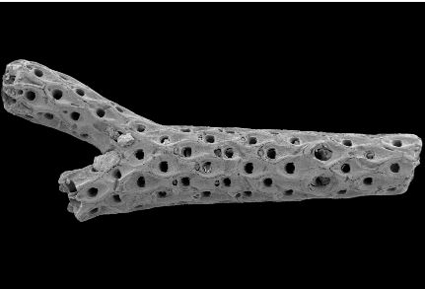
The genus Cellaria Ellis & Solander is characterized by erect, jointed, dichotomously branching colonies composed of cylindrical internodes, attached to the substrate by rhizoids. In Argentina, species of Cellaria have been documented from the Danian (Paleocene) to the present. We revised the Late Oligocene to Early–Middle Miocene material published by Ferdinand Canu from the San Julián, Chenque and Gaiman formations deposited in the Muséum national d’Histoire naturelle (Paris) and the Museo Argentino de Ciencias Naturales (Buenos Aires). Three new species, Cellaria fallax sp. nov., C. roborata sp. nov., and C. comodorensis sp. nov. are described, and the status of other three species, C. ramosa Canu, C. subsetigera Canu, and C. unguiculata Canu is confirmed. Cellaria crassicollis Canu, C. semiluna Canu, C. elongata Canu and the material assigned by Canu to C. rigida perampla Waters are regarded as junior synonyms of other species described by F. Canu. The extant Magellanic species C. malvinensis (Busk) and C. variabilis (Busk) were not represented in the Patagonian Miocene. After the revision of the type material of C. minima Canu and the internodes assigned by Ortmann to the European extant species C. fistulosa (Linnaeus), we conclude that these species should be regarded as unrecognizable. The genus Erinella Canu & Bassler, based on a single eroded internode assigned to E. patagonica Canu, is here regarded as a junior subjective synonym of Cellaria, resulting in the new combination C. patagonica comb. nov. New material from the Chenque and Monte León formations is described and illustrated. Cellaria is herein recorded for the first time in the Monte León Formation. This study adds to our knowledge of the Cenozoic bryozoans of the Atlantic coast of southern South America.
References
- Achilleos, K., Smith, A.M. & Gordon, D.P. (2019) The articulated bryozoan genus Cellaria in the southern Zealandian Region: distribution and associated fauna. Marine Biodiversity, 49, 2801–2812. https://doi.org/10.1007/s12526-019-01009-y
- Achilleos, K., Gordon, D.P. & Smith, A.M. (2020) Cellaria (Bryozoa, Cheilostomata) from the deep: new species from the southern Zealandian region. Zootaxa, 4801 (2), 201–236. https://doi.org/10.11646/zootaxa.4801.2.1
- Allmann, G.J. (1856) A monograph of the Freshwater Polyzoa, including all the known species, both British and Foreign. The Ray Society, London, 119 pp. https://doi.org/10.5962/bhl.title.9143
- Almeida, A.C., Souza, F.B. & Vieira, L.M. (2018) A new species of Cellaria (Bryozoa: Cheilostomata) from northeastern Brazil, with a tabular identification key to the Atlantic species. Zoologia, Curitiba, 35, e24571. https://doi.org/10.3897/zoologia.35.e24571
- Ameghino, F. (1906) Les formations sédimentaires du Crétacé Supérieur et du Tertiaire de Patagonie avec un parallèle entre leurs faunes mammalogiques et celles de l’ancien continent. Anales del Museo Nacional de Buenos Aires, 15, 1–568.
- Bader, B. (2001) Modern bryomol-sediments in a cool-water, high-energy setting: the inner shelf off Northern Brittany. Facies, 44, 81–103. https://doi.org/10.1007/BF02668169
- Bassler, R.S. (1953) Treatise on invertebrate paleontology. Part G. Bryozoa. Geological Society of America, Boulder, Colorado and University of Kansas Press, Lawrence, Kansas, 253 pp.
- Bellosi, E.S. (1987) Litoestratigrafía y sedimentación del “Patagoniano” en la cuenca San Jorge, Terciario de Chubut y Santa Cruz, Argentina. Ph.D. Thesis, Buenos Aires University, Buenos Aires, 252 pp.
- Bellosi, E.S. (1995) Paleogeografía y cambios ambientales de la Patagonia Central durante el Terciario Medio. Boletín de Informaciones Petroleras, 44, 50–83.
- Bellosi, E.S. & del Río, C. (2024) Stepwise pattern and paleogeography of the middle Cenozoic Patagonian marine transgression: an extrabasinal view. In: Sales, D. & Carrasquero, S. (Eds.), Avances y desafíos de la Geología Argentina. Acta del XXI Congreso Geológico Argentino, San Luis. Asociación Geológica Argentina, Buenos Aires, pp. 53–54.
- Bellosi, E.S., del Río, C., McArthur, J. & Millar, I.L. (2026) Evolution of staggered Oligocene-Miocene transgressions and molluskan faunas in eastern Patagonian basins. Palaeogeography, Palaeoclimatology, Palaeoecology, 686, 113575. https://doi.org/10.1016/j.palaeo.2026.113575
- Bertels, A. (1977) Estratigrafía y micropaleontología de la Formación San Julián en su área tipo, provincia de Santa Cruz, República Argentina. Ameghiniana, 14, 233–293.
- Bock, P.E. (2025) Cellaria Ellis and Solander, 1786. Available from: https://www.bryozoa.net/cheilostomata/cellariidae/cellaria.html (accessed 19 September 2025)
- Bone, Y. & James, N.P. (1993) Bryozoans as carbonate sediment producers on the cool-water Lacepede Shelf, southern Australia. Sedimentary Geology, 86, 247–271. https://doi.org/10.1016/0037-0738(93)90025-Z
- Brown, D.A. (1952) The Tertiary cheilostomatous Polyzoa of New Zealand. Trustees of the British Museum, London, 405 pp. https://doi.org/10.5962/bhl.title.118779
- Brown, D.A. (1958) Fossil cheilostomatous Polyzoa from south-west Victoria. Memoirs of the Geological Survey of Victoria, 20, 1–90.
- Buge, E. (1946) Catalogue des bryozoaires types et figurés de la collection du laboratoire de paléontologie du Muséum national d’Histoire naturelle – I. Bryozoaires du Patagonien figurés par F. Canu (1904–1908). La position stratigraphique du Patagonien. Bulletin du Museìum national d’Histoire naturelle, 18, 204–212.
- Busk, G. (1852a) Catalogue of marine Polyzoa in the collection of the British Museum. Part I. Cheilostomata. Trustees of the British Museum, London, 54 pp.
- Busk, G. (1852b) An account of the Polyzoa, and sertularian Zoophytes, collected in the voyage of the Rattlesnake, on the coasts of Australia and the Louisiade Archipelago, &c. In: MacGillivray, J. (Ed.), Narrative of the Voyage of H.M.S. Rattlesnake, commanded by the late Captain Owen Stanley, R.N., F.R.S. &c. during the years 1846–1850. Including discoveries and surveys in New Guinea, the Louisiade Archipelago, etc. to which is added the account of Mr. E.B. Kennedy's expedition for the exploration of the Cape York Peninsula. T.W. Boone, London, pp. 343–402, pl. 1.
- Busk, G. (1860) Notes on the fossil Polyzoa collected by the Rev. J.E. Woods near Mount Gambier, South Australia. Quarterly Journal of the Geological Society, 16, 260–261.
- Busk, G. (1884) Report on the Polyzoa collected by H.M.S. Challenger during the years 1873–1876. Part I. The Cheilostomata. Report of the Scientific Results of the Voyage of the Challenger, Zoology, 10, 1–216.
- Canu, F. (1900) Révision des Bryozoaires du Crétacé figurés par d’Orbigny. Part II. Cheilostomata. Bulletin de la Société géologique de France, 28, 334–463.
- Canu, F. (1904) Les bryozoaires du Patagonien. Échelle des bryozoaires pour les terrains tertiaires. Mémoires de la Société géologique de France, Paléontologie, 12, 1–30.
- Canu, F. (1908) Iconographie des bryozoaires fossiles de l’Argentine. Première partie. Anales del Museo Nacional de Buenos Aires, Serie 3, Tomo 10, 245–341.
- Canu, F. & Bassler, R.S. (1927) Classification of the cheilostomatous Bryozoa. Proceedings of the United States National Museum, 69, 1–42. https://doi.org/10.5479/si.00963801.69-2640.1
- Carmona, N.B., Mángano, M.G., Buatois, L.A. & Ponce, J.J. (2010) Taphonomy and paleoecology of the bivalve trace fossil Protovirgularia in deltaic heterolithic facies of the Miocene Chenque Formation, Patagonia, Argentina. Journal of Paleontology, 84, 730–738. https://doi.org/10.1666/09-119.1
- Chiesa, J.O. & Camacho, H.H. (1995) Litoestratigrafía del Paleógeno marino en el noroeste de la provincia de Santa Cruz, Argentina. Monografías de la Academia Nacional de Ciencias Exactas, Físicas y Naturales de Buenos Aires, 11, 9–15.
- Cook, P.L., Bock, P.E., Hayward, P.J. & Gordon, D.P. (2018) Class Gymnolaemata, Order Cheilostomata. In: Cook, P.L., Bock, P.E., Gordon, D.P. & Weaver, H.J. (Eds.), Australian Bryozoa. Vol. 2. Taxonomy of Australian Families. CSIRO Publishing, Melbourne, pp. 61–280. https://doi.org/10.1071/9781486306831
- Cuitiño, J.I., Scasso, R.A., Ventura Santos, R. & Mancini, L.H. (2015a) Sr ages for the Chenque Formation in the Comodoro Rivadavia región (Golfo San Jorge basin, Argentina): stratigraphic implications. Latin American Journal of Sedimentology and Basin Analysis, 22, 3–12.
- Cuitiño, J.I., Ventura Santos, R., Alonso Muruaga P.J. & Scasso, R.A. (2015b) Sr-stratigraphy and sedimentary evolution of early Miocene marine foreland deposits in the northern Austral (Magallanes) Basin, Argentina. Andean Geology, 42, 364–385. https://doi.org/10.5027/andgeoV42n3-a05
- Cuitiño, J., Dozo, M., del Río, C., Buono, M., Palazzesi, L., Fuentes, S. & Scasso, R. (2017) Miocene marine transgressions: paleoenvironments and paleobiodiversity. In: Bouza, P. & Bilmes, A. (Eds.), The Late Cenozoic of Península Valdés, Patagonia, Argentina: an interdisciplinary approach. Springer Earth System Sciences, Cham, pp. 47–84. https://doi.org/10.1007/978-3-319-48508-9_3
- Cuitiño, J.I., Bilmes, A., Buono, M.R., Bordese, S., Herazo, L. & Scasso, R.A. (2023) Stratigraphy, provenance, and timing of Neogene sedimentation in the western Valdés Basin, Patagonia. Accurate paleogeographic reconstructions as a key piece for Andean-passive margin integration. Journal of South American Earth Sciences, 124, 104278. https://doi.org/10.1016/j.jsames.2023.104278
- del Río, C.J., Bellosi, E.S., McArthur, J.M. & Thirlwall, M.F. (2022a) Early Miocene Sr-geochronology of Patagoniense marine units from southern Argentina: Implications for molluscan assemblages and interbasinal correlation. Journal of South American Earth Sciences, 120, 104097. https://doi.org/10.1016/j.jsames.2022.104097
- del Río, C.J., Martínez, S.A., Griffin, M. & de Francesco, C.G. (2022b) Moluscos y equinodermos del Paleogeno-Neogeno. In: Giacosa, R.E. (Ed.), Geología y recursos naturales de la provincia del Chubut. Relatorio XXI Congreso Geológico Argentino, Puerto Madryn. Asociación Geológica Argentina, Buenos Aires, pp. 950–975.
- d’Orbigny, A. (1851) Paléontologie française. Description des Mollusques et Rayonées fossils. Terrains crétacés. Tome V. Bryozoaires. Victor Masson, Paris, 1192 pp.
- Ehrenberg, C.G. (1831) s.n. In: Hemprich, P.C. & Ehrenberg, C.G. (Eds.), Symbolae physicae, seu, Icones et descriptiones corporum naturalium novorum aut minus cognitorum: quae ex itineribus per Libyam Aegyptum Nubiam Dongalam Syriam Arabiam et Habessiniam publico institutis sumptu Friderici Guilelmi Hemprich et Christiani Godofredi Ehrenberg: studio annis MDCCCXX–MDCCCXXV redierunt. Ex Officina Academica, venditur a Mittlero, Berolini, pp. 1–162.
- Ellis, J. & Solander, D.C. (1786) The natural history of many curious and uncommon zoophytes: collected from various parts of the globe. Benjamin White & Son, London, 208 pp. https://doi.org/10.5962/bhl.title.2145
- Fernández-López, S.R. (2000) Temas de Tafonomía. Departamento de Paleontología, Universidad Complutense de Madrid, Madrid, 167 pp.
- Fleming, J. (1828) A History of British Animals. Bell & Bradfute, Edinburgh, xxiii + 565 pp. https://doi.org/10.5962/bhl.title.2156
- Foix, F., Krause, M., Bellosi, E. & Raigemborn, M.S. (2021) Sedimentitas paleógenas y neógenas del margen Atlántico. In: Giacosa, R.E. (Ed.), Geología y Recursos Naturales de la Provincia del Chubut. Relatorio XXI Congreso Geológico Argentino, Puerto Madryn. Asociación Geológica Argentina, Buenos Aires, pp. 489–521.
- González, S.N., Greco, G.A., Sato, A.M., González, P.D., Llambías, E.J., Díaz Martínez, I., De Valais, S. & Serra Varela, S. (2017) Revisión estratigráfica del Complejo Volcánico Marifil. In: Ibañez, L.M., Grosse, P. & Baéz, M.A. (Eds.), Actas XX Congreso Geológico Argentino, San Miguel de Tucumán. Asociación Geológica Argentina (AGA), Buenos Aires, pp. 72–77.
- Hassall, A.H. (1840) XXI Catalogue of Irish Zoophytes. Journal of Natural History, 6, 166–175. https://doi.org/10.1080/03745484009443281
- Hatcher, J.B. (1903) Reports of the Princeton University Expeditions to Patagonia, 1896–1899. Vol. 1. Narrative of the Expeditions: Geography of Southern Patagonia. Princeton University Press, Princeton, New Jersey, 314 pp. https://doi.org/10.5962/bhl.title.156460
- Hayward, P.J. & Winston, J.E. (2011) Bryozoa collected by the United States Antarctic Research Program: new taxa and new records. Journal of Natural History, 45, 2259–2338. https://doi.org/10.1080/00222933.2011.574922
- Iturra, D., Pérez, L.M., López-Gappa, J. & Pérez Pincheira, E. (2023) Presencia del género Cellaria (Phylum Bryozoa) en la Formación Jagüel (Maastrichtiano-Daniano), en el Noroeste de la Provincia de Río Negro, Argentina. In: Comité Organizador del RCAPA 2023 (Ed.), Libro de Resúmenes de la Reunión de Comunicaciones de la Asociación Paleontológica Argentina, General Roca. Publicación Electrónica Asociación Paleontológica Argentina, Buenos Aires, pp. 77–78.
- Kronemberger, J.T. & Parras, A.M. (2024) Turritelline-dominated assemblages from the Monte León Formation (Lower Miocene), Patagonia, Argentina: paleoecological and paleoenvironmental implications. Ameghiniana, 61, 118–137. https://doi.org/10.5710/AMGH.10.04.2024.3590
- Levinsen, G.M.R. (1909) Morphological and systematic studies on the cheilostomatous Bryozoa. Nationale Forfatterers Forlag, Copenhagen, 431 pp. https://doi.org/10.5962/bhl.title.5690
- Linnaeus, C. (1758) Systema naturae per regna tria naturae, secundum classes, ordines, genera, species, cum characteribus, differetiis, synonymis, locis. Tomus I. 10th Edition. Laurentii Salvii, Holmiae, 795 pp. https://doi.org/10.5962/bhl.title.542
- Liuzzi, M.G., López-Gappa, J. & Salgado, L. (2018) Bryozoa from the continental shelf off Tierra del Fuego (Argentina): Species richness, colonial growth-forms, and their relationship with water depth. Estuarine, Coastal and Shelf Science, 214, 48–56. https://doi.org/10.1016/j.ecss.2018.09.014
- López-Gappa, J. (2000) Species richness of marine Bryozoa in the continental shelf and slope off Argentina (south‐west Atlantic). Diversity and Distributions, 6 (1), 15–27. https://doi.org/10.1046/j.1472-4642.2000.00067.x
- López-Gappa, J. & Pérez, L.M. (2022) A new species of Attinopora (Bryozoa, Cinctiporidae) from the early Miocene of Atlantic Patagonia. Alcheringa: An Australasian Journal of Palaeontology, 46 (3–4), 297–300. https://doi.org/10.1080/03115518.2022.2126009
- López-Gappa, J., Iturra, D., Pérez, L.M., Pérez Pincheira, E. & Garrido, A.C. (2025) A new species of Cellaria (Bryozoa, Cheilostomatida) from the late Danian (Paleocene) of Argentine Patagonia. Publicación Electrónica de la Asociación Paleontológica Argentina, 25 (2), 183–190. https://doi.org/10.5710/PEAPA/30.09.2025.550
- Malumián, N. & Náñez, C. (2011) The Late Cretaceous–Cenozoic transgressions in Patagonia and the Fuegian Andes: foraminifera, palaeoecology, and palaeogeography. Biological Journal of the Linnean Society, 103, 269–288. https://doi.org/10.1111/j.1095-8312.2011.01649.x
- MacGillivray, P.H. (1884) Part of the descriptions of Victorian indigenous animals. In: Prodromus of the zoology of Victoria. Decade XI. John Ferres, Government Printer, Melbourne, pp. 17–36.
- MacGillivray, P.H. (1895) A monograph of the Tertiary Polyzoa of Victoria. Transactions of the Royal Society of Victoria, 4, 1–166. https://doi.org/10.5962/bhl.title.6076
- Ortmann, A.E. (1902) Paleontology Part II. Tertiary invertebrates. In: Scott, W.B. (Ed.), Reports of the Princeton University Expeditions to Patagonia, 1896–1899. Vol. 4. Paleontology I. Part 2. J. Pierpont Morgan Publication Fund. Princeton University, New Jersey, Princeton, pp. 45–332.
- Panza, J.L., Irigoyen, M.V. & Genini, A. (1995) Hoja Geológica 4969-IV, Puerto San Julián, provincia de Santa Cruz, República Argentina. Boletín de la Secretaría de Minería de la Nación. Dirección Nacional del Servicio Geológico, 211, 1–77.
- Paredes, J.M. (2002) Asociación de facies y correlación de los sedimentos de la Formación Chenque (Oligoceno–Mioceno) de los alrededores de Comodoro Rivadavia, Cuenca del Golfo San Jorge. Revista de la Asociación Argentina de Sedimentología, 1, 185–274.
- Paredes, J.M., Oporto Romero, F.E. & Valle, M.N. (2024) Storm-related deposits in the Chenque Formation (Lower-Middle Miocene, Golfo San Jorge Basin): indirect evidence of the mid Miocene climatic optimum in the shallow-marine settings?. In: De Sosa Tomas, A., Díaz, R. & Farías Fuenzalida, L. (Eds.), Libro de Resúmenes XI Jornadas de las Ciencias de la Tierra Dr. Eduardo Musacchio. Editorial Universitaria de la Patagonia, Comodoro Rivadavia, pp. 65–67.
- Parras, A. & Cuitiño, J.I. (2018) The stratigraphic and paleoenvironmental significance of the regressive Monte Observación Member, early Miocene of the Austral Basin, Patagonia. Latin American Journal of Sedimentology and Basin Analysis, 25, 93–115.
- Parras, A. & Cuitiño, J.I. (2021) Revised chrono and lithostratigraphy for the Oligocene-Miocene Patagoniense marine deposits in Patagonia: Implications for stratigraphic cycles, paleogeography, and major drivers. Journal of South American Earth Sciences, 110, 103327. https://doi.org/10.1016/j.jsames.2021.103327
- Parras, A., Dix, G.R. & Griffin, M. (2012) Sr-isotope chronostratigraphy of Paleogene-Neogene marine deposits: Austral Basin, southern Patagonia (Argentina). Journal of South American Earth Sciences, 37, 122–135. https://doi.org/10.1016/j.jsames.2012.02.007
- Parras, A., Griffin, M., Feldmann, R., Casadío, S., Schweitzer, C. & Marenssi, S. (2008) Correlation of marine beds based on Sr-and Ar-date determinations and faunal affinities across the Paleogene/Neogene boundary in southern Patagonia, Argentina. Journal of South American Earth Sciences, 26, 204–216. https://doi.org/10.1016/j.jsames.2008.03.006
- Parras, A., Guerstein, G.R., Pérez Panera, J.P., Griffin, M., Náñez, C., Cusminsky, G. & Quiroga, A. (2020) Integrated stratigraphy and paleontology of the lower Miocene Monte León Formation, southeastern Patagonia, Argentina: Unraveling paleoenvironmental changes and factors controlling sedimentation. Palaeogeography, Palaeoclimatology, Palaeoecology, 556, 109701. https://doi.org/10.1016/j.palaeo.2020.109701
- Pérez, L.M., Griffin, M. & Manceñido M.O. (2013) Los macroinvertebrados de la Formación Paraná: historia y diversidad de la fauna bentónica del Mioceno marino de Entre Ríos, Argentina. In: Brandoni, D. & Noriega, J.I. (Eds.), El Neógeno de la Mesopotamia argentina. Asociación Paleontológica Argentina, Publicación Especial, 14. Asociación Paleontológica Argentina, Ciudad Autónoma de Buenos Aires, pp. 56–70.
- Pérez, L.M., López-Gappa, J. & Griffin, M. (2018) Taxonomic status of some species of Aspidostomatidae (Bryozoa, Cheilostomata) from the Oligocene and Miocene of Patagonia (Argentina). Journal of Paleontology, 92 (3), 432–441. https://doi.org/10.1017/jpa.2017.143
- Pérez, L.M., López-Gappa, J., Vieira, L.M. & Gordon, D.P. (2020) New species of the austral bryozoan genus Taylorus nom. nov. (Escharinidae): phylogenetic and palaeobiogeographical implications. New Zealand Journal of Geology and Geophysics, 64 (1), 72–82. https://doi.org/10.1080/00288306.2020.1794913
- Pérez, D.E., Farroni, N.D., Allende Mosquera, A. & Cuitiño, J.I. (2023) First discinid brachiopods (Brachiopoda: Lingulida) from the Cenozoic of Patagonia (Gaiman Formation, Lower Miocene, Argentina). Ameghiniana, 60, 203–215. https://doi.org/10.5710/AMGH.23.01.2023.3544
- Perez, F.M. & Banta, W.C. (1996) How does Cellaria get out of its box? A new cheilostome hydrostatic mechanism (Bryozoa: Cheilostomata). Invertebrate Biology, 115, 162–169. https://doi.org/10.2307/3227046
- Pineda Salgado, G. (2020) Análisis de concentraciones fósiles en la Formación Monte León (Mioceno inferior), en la costa de la provincia de Santa Cruz. Ph.D. Thesis, La Plata University, La Plata, 252 pp. https://doi.org/10.35537/10915/90109
- Rodríguez Obregoso, K.M., Cobos, J.C., Parisi, C. & Pezzuchi, H.D. (2024) Hoja Geológica 4366-IV, Rawson, provincia del Chubut. Escala 1:250.000. Boletín N° 327. Instituto de Geología y Recursos Minerales, Servicio Geológico Minero Argentino, Buenos Aires, 100 pp.
- Schneider, C., Rasband, W. & Eliceiri, K. (2012) NIH Image to ImageJ: 25 years of image analysis. Nature Methods, 9, 671–675. https://doi.org/10.1038/nmeth.2089
- Taylor, P.D. & James, N.P. (2013) Secular changes in colony-forms and bryozoan carbonate sediments through geological history. Sedimentology, 60, 1184–1212. https://doi.org/10.1111/sed.12032
- Tenison-Woods, J.E. (1862) Geological observations in South Australia. Longman, Green, Longman, Roberts, & Green, London, xviii + 404 pp.
- Waters, A.W. (1882) On fossil chilostomatous Bryozoa from Mount Gambier, South Australia. Quarterly Journal of the Geological Society of London, 38, 257–276. https://doi.org/10.1144/GSL.JGS.1882.038.01-04.29