

Abstract
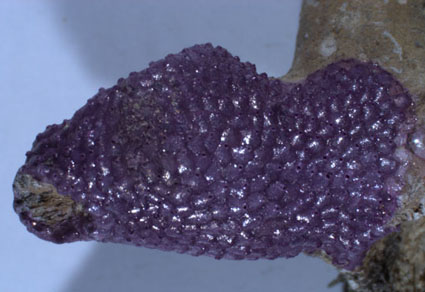
Fourteen bryozoan species were collected during the 2025 cruise of R.V. Falkor (too) to the Mar del Plata Submarine Canyon (37.883333° S, 53.933333° W), at depths ranging between 1018 and 2628 m. Six species are considered new to science: Buffonella plana sp. nov., B. profunda sp. nov., Fenestrulina crassa sp. nov., Smittina amatista sp. nov., Parasmittina symmetrica sp. nov. and Orthoporidra claviformis sp. nov. For comparison, Patagonian shelf material of Buffonella simplex, a poorly known species described in the 19th century, is illustrated for the first time with scanning electron microscopy. The known geographic distributions of Microporella gappai and Smittoidea granulosa are expanded northwards. The bryozoan assemblage analysed in the present study has no species in common with the Magellanic bryozoan fauna inhabiting coastal and shelf areas of the Southwest Atlantic. On the contrary, the known distribution of most of these species is, so far, restricted to the continental slope off the Atlantic coast of southern South America. The bryozoan diversity of this Southwest Atlantic canyon is probably much higher than the assemblage documented in the present study.
References
- Allmann, G.J. (1856) A monograph of the Freshwater Polyzoa, including all the known species, both British and Foreign. The Ray Society, London, 119 pp. https://doi.org/10.5962/bhl.title.9143
- Bozzano, G., Martín, J., Spoltore, D.V. & Violante, R. (2017) Los cañones submarinos del margen continental argentino: Una síntesis sobre su génesis y dinámica sedimentaria. Latin American Journal of Sedimentology and Basin Analysis, 24 (1), 85–101.
- Buge, E. (1979) Campagne de la Calypso au large des côtes Atlantiques de l’Amérique du Sud (1961–1962). Bryozoaires cyclostomes. Annales de I’Institut Océanographique, 55 (Supplement), 207–261.
- Busk, G. (1852) An account of the Polyzoa, and sertularian Zoophytes, collected in the voyage of the Rattlesnake, on the coasts of Australia and the Louisiade Archipelago, &c. In: MacGillivray, J. (Ed.), Narrative of the Voyage of H.M.S. Rattlesnake, commanded by the late Captain Owen Stanley...1846–1850; Including Discoveries and Surveys in New Guinea, the Louisiade Archipelago, etc., to which is added the Account of Mr E.B. Kennedy’s Expedition for the Exploration of the Cape York Peninsula (including Mr W. Carron’s Narrative). T.W. Boone, London, pp. 343–402. https://doi.org/10.1111/j.1096-3642.1881.tb00371.x
- Busk, G. (1881) Descriptive catalogue of the species of Cellepora collected on the “Challenger” expedition. Journal of the Linnean Society (Zoology) of London, 15, 341–356.
- Busk, G. (1884) Report on the Polyzoa collected by H.M.S. Challenger during the years 1873–1876. Part I. The Cheilostomata. Report on the Scientific Results of the Voyage of the H.M.S. “Challenger”, Zoology, 10 (30), 1–216.
- Busk, G. (1886) Report on the Polyzoa collected by H.M.S. Challenger during the years 1873–1876. Part II. The Cyclostomata, Ctenostomata and Pedicellinea. Report on the Scientific Results of the Voyage of the H.M.S. “Challenger”, Zoology, 17 (50), 1–47.
- Canu, F. & Bassler, R.S. (1927) Classification of the cheilostomatous Bryozoa. Proceedings of the United States national Museum, 69 (2640), 1–42. https://doi.org/10.5479/si.00963801.69-2640.1
- Cook, P.L. & Hayward, P.J. (1983) Notes on the family Lekythoporidae (Bryozoa, Cheilostomata). Bulletin of the British Museum (Natural History), Zoology Series, 45 (2), 55–76. https://doi.org/10.5962/p.27995
- Ehrenberg, C.G. (1831) s.n. In: Hemprich, P.C. & Ehrenberg, C.G. (Eds.),, Symbolae Physicae, seu Icones et descriptiones Corporum Naturalium novorum aut minus cognitorum, quae ex itineribus per Libyam, Aegyptum, Nubiam, Dongalam, Syriam, Arabiam et Habessiniam...studio annis 1820–25 redirerunt. Ex Officina Academica, venditur a Mittlero, Berolini, pp. 1–162.
- Figuerola, B., Gordon, D.P., Polonio, V., Cristobo, J. & Avila, C. (2014) Cheilostome bryozoan diversity from the southwest Atlantic region: Is Antarctica really isolated? Journal of Sea Research, 85, 1–17. https://doi.org/10.1016/j.seares.2013.09.003
- Figuerola, B., Gordon, D.P. & Cristobo, J. (2018) New deep Cheilostomata (Bryozoa) species from the Southwestern Atlantic: shedding light in the dark. Zootaxa, 4375 (2), 211–249. https://doi.org/10.11646/zootaxa.4375.2.3
- Fleming, J. (1828) A history of British animals, exhibiting their descriptive characters and systematic arrangement of the genera and species of quadrupeds, birds, reptiles, fishes, Mollusca, and Radiata of the United Kingdom. Bell & Bradfute, Edinburgh, 565 pp. https://doi.org/10.5962/bhl.title.12859
- Gontar, G.I. (2002) New species and new genera of Cheilostomata from the Weddell Sea, Antarctica (Bryozoa). Zoosystematica Rossica, 10 (2), 285–292. https://doi.org/10.31610/zsr/2001.10.2.285
- Gordon, D.P. (1989) The marine fauna of New Zealand: Bryozoa: Gymnolaemata (Cheilostomida Ascophorina) from the Western South Island continental shelf and slope. New Zealand Oceanographic Institute Memoir, 97, 1–158.
- Hayward, P.J. (1991) Systematic studies on some Antarctic and sub-Antarctic Ascophora (Bryozoa: Cheilostomata). Zoological Journal of the Linnean Society, 101 (4), 299–335. https://doi.org/10.1111/j.1096-3642.1991.tb00655.x
- Hayward, P.J. (1992) Some Antarctic and Subantarctic species of Celleporidae (Bryozoa: Cheilostomata). Journal of Zoology, London, 226 (2), 283–310. https://doi.org/10.1111/j.1469-7998.1992.tb03840.x
- Hayward, P.J. (1995) Antarctic cheilostomatous Bryozoa. Oxford University Press, Oxford, 366 pp. https://doi.org/10.1093/oso/9780198548911.001.0001
- Hayward, P.J. & Ryland, J.S. (1990) Some Antarctic and Subantarctic species of Microporellidae (Bryozoa: Cheilostomata). Journal of Natural History, 24 (5), 1263–1287. https://doi.org/10.1080/00222939000770751
- Hayward, P.J. & Thorpe, J.P. (1988) New genera of Antarctic cheilostome Bryozoa. Cahiers de Biologie Marine, 29, 277–296. https://doi.org/10.1111/j.1469-7998.1988.tb04900.x
- Hayward, P.J. & Thorpe, J.P. (1989) Systematic notes on some Antarctic Ascophora (Bryozoa, Cheilostomata). Zoologica Scripta, 18 (3), 365–374. https://doi.org/10.1111/j.1463-6409.1989.tb00131.x
- Hayward, P.J. & Thorpe, J.P. (1990) Some Antarctic and sub-Antarctic species of Smittinidae (Bryozoa: Cheilostomata). Journal of Zoology, London, 222, 137–175. https://doi.org/10.1111/j.1469-7998.1990.tb04036.x
- Hayward, P.J. & Winston, J.E. (2011) Bryozoa collected by the United States Antarctic Research Program: new taxa and new records. Journal of Natural History, 45 (37–38), 2259–2338. http://dx.doi.org/10.1080/00222933.2011.574922
- Hincks, T. (1877) On British Polyzoa Part II. Classification. Annals and Magazine of Natural History, series 4, 20 (120), 520–532. https://doi.org/10.1080/00222937708682275
- Hincks, T. (1879) On the classification of the British Polyzoa. Annals and Magazine of Natural History, series 5, 3 (14), 153–164. https://doi.org/10.1080/00222937908682494
- Hincks, T. (1881) Contributions towards a general history of the marine Polyzoa. VI-VII. Annals and Magazine of Natural History, series 5, 8, 1–14, 122–136. https://doi.org/10.1080/00222938109487426
- Hondt, J.-L. d’ (1981) Bryozoaires cheilostomes bathyaux et abyssaux provenant des campagnes océanographiques américaines (1969–1972) de l’ “Atlantis II”, du “Chain” et du “Knorr” (Woods Hole Oceanographic Institution). Bulletin du Muséum national d’Histoire naturelle, sér. 4, 3A (1), 5–71. https://doi.org/10.5962/p.285806
- Johnston, G. (1838) A history of British Zoophytes. W.H.Lizars, Edinburgh, London & Dublin, 341 pp. https://doi.org/10.5962/bhl.title.110844
- Jullien, J. (1888) Bryozoaires. Mission Scientifique du Cap Horn 1882-1883, 6, 1–92.
- Levinsen, G.M.R. (1909) Morphological and systematic studies on the cheilostomatous Bryozoa, Nationale Forfatterers Forlag, Copenhagen, 431 pp. https://doi.org/10.5962/bhl.title.5690
- López de la Cuadra, C.M. & García Gómez, J.C. (2000) The cheilostomate Bryozoa (Bryozoa: Cheilostomatida) collected by the Spanish ‘Antártida 8611’ Expedition to the Scotia Arc and South Shetland Islands. Journal of Natural History, 34 (5), 755–772. https://doi.org/10.1080/002229300299408
- López-Fé, C.M. (2005) Cheilostomate Bryozoa of the Bellingshausen Sea (Western Antarctica): a preliminary report of the results of the ‘Bentart 2003’ Spanish Expedition. In: Moyano, H., Cancino, J. & Wyse Jackson, P.N. (Eds.), Bryozoan Studies 2004. Taylor & Francis Group, London, pp. 173–179.
- López Gappa, J. (1982) Bryozoa collected by the German Antarctic Expedition 1980-81. I. Flustridae. “Meteor” Forschungs-Ergebnisse, Reihe D, 35, 35–41.
- López Gappa, J. (2000) Species richness of marine Bryozoa in the continental shelf and slope off Argentina (south-west Atlantic). Diversity and Distributions, 6 (1), 15–27. https://doi.org/10.1046/j.1472-4642.2000.00067.x
- López Gappa, J. & Lichtschein, V. (1988) Geographic distribution of bryozoans in the Argentine Sea (South-Western Atlantic). Oceanologica Acta, 11 (1), 89–99.
- López Gappa, J. & Lichtschein, V. (1990) Los briozoos coleccionados por el B/I Shinkai Maru en la plataforma continental argentina. Parte I. Servicio de Hidrografía Naval, Buenos Aires, 32 pp.
- López-Gappa, J. & Liuzzi, M.G. (2024) One new genus and five new species of deep-sea bryozoans from the subantarctic Southwest Atlantic. Deep-Sea Research I, 207, e104292. https://doi.org/10.1016/j.dsr.2024.104292
- López-Gappa, J. & Zelaya, D.G. (2021) Bryozoan assemblages on gastropod shells occupied by the hermit crab Pagurus comptus. Polar Biology, 44, 335–349. https://doi.org/10.1007/s00300-020-02796-y
- Moyano G., H.I. (1983) Southern Pacific Bryozoa: A general view with emphasis on Chilean species. Gayana Zoología, 46, 1–45.
- Moyano G., H.I. (1985) Bryozoa Lekythoporidae: Discusión general y nuevas especies de los géneros Catadysis y Orthoporidra de Chile Austral y de la Antártida. Gayana, Zoología, 49, 103–149.
- Moyano G., H.I. (1989) Briozoos microporélidos cellariformes y flustriformes de la Antárctica. Boletín de la Sociedad de Biología de Concepción, 60, 161–172.
- Moyano G., H.I. (1997) Revisión de la diversidad y de las conexiones zoogeográficas de los briozoos magallánicos. Gayana Zoología, 61, 125–139.
- Moyano G., H.I. (1999) Magellan Bryozoa: a review of the diversity and of the Subantarctic and Antarctic zoogeographical links. Scientia Marina, 63 (Supplement 1), 219–226. https://doi.org/10.3989/scimar.1999.63s1219
- Moyano G., H.I. (2000) Bryozoa from the Magellanic continental slope near Cape Horn: an unexpected collection. In: Herrera Cubilla, A. & Jackson, J.B.C. (Eds.), Proceedings of the 11th International Bryozoology Association Conference. Smithsonian Tropical Research Institute, Balboa, Panamá, pp. 298–304.
- Norman, A. (1903) Notes on the natural history of East Finmark, Polyzoa. Annals and Magazine of Natural History, series 7, 11 (61–66), 567–598. https://doi.org/10.5962/bhl.title.34596
- Orbigny, A. d’ (1847) Voyage dans l’Amérique méridionale. P. Bertrand & V. Levrault, Paris & Strasbourg, 28 pp.
- Osburn, R.C. (1952) Bryozoa of the Pacific coast of America, part 2, Cheilostomata-Ascophora. Report of the Allan Hancock Pacific Expeditions, 14, 271–611.
- Ramalho, L.V., López-Gappa, J. & Scarabino, F. (2022) Checklist of the marine Bryozoa from Uruguay (Southwest Atlantic). Revista del Museo Argentino de Ciencias Naturales, nueva serie, 24 (1), 109–134. https://doi.org/10.22179/REVMACN.24.722
- Schejter, L., López Gappa, J. & Bremec, C.S. (2014). Epibiotic relationships on Zygochlamys patagonica (Mollusca, Bivalvia, Pectinidae) increase biodiversity in a submarine canyon in Argentina. Deep-Sea Research II, 104, 252–258. https://doi.org/10.1016/j.dsr2.2013.10.010
- Schejter, L., Rimondino, C., Chiesa, I., Díaz de Astarloa, J.M., Doti, B., Elías, R., Escolar, M., Genzano, G., López-Gappa, J., Tatián, M., Zelaya, D.G., Cristobo, J., Perez, C.D., Cordeiro, R.T. & Bremec, C.S. (2016) Namuncurá Marine Protected Area: an oceanic hot spot of benthic biodiversity at Burdwood Bank, Argentina. Polar Biology, 39, 2373–2386. https://doi.org/10.1007/s00300-016-1913-2
- Schneider, C., Rasband, W. & Eliceiri, K. (2012) NIH Image to ImageJ: 25 years of image analysis. Nature Methods, 9, 671–675. https://doi.org/10.1038/nmeth.2089
- Silén, L. (1941) Cheilostomata Anasca (Bryozoa) collected by Prof. Dr. Sixten Bock’s expedition to Japan and the Bonin Islands 1914. Arkiv för Zoologi, 33A, 1–130.
- Waters, A.W. (1888) Supplementary report on the Polyzoa. Report on the Scientific Results of the Voyage of H.M.S. Challenger (1873–1876), 31 (79), 1–41.
- Waters, A.W. (1904) Bryozoa. Résultats du Voyage du S. Y. ‘Belgica’ en 1897–99, Zoologie. J.-E. Buschmann, 114 pp.