

Abstract
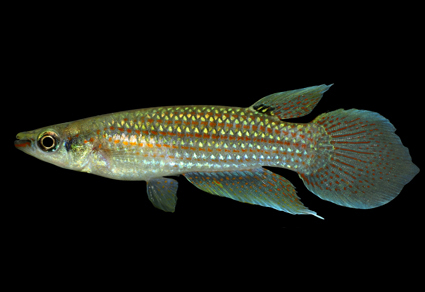
The identity and taxonomic status of the South Asian killifishes Aplocheilus blockii and A. parvus has often been debated, with the latter name considered a junior synonym of the former. To understand whether topotypic A. blockii and A. parvus, and populations across a wider distribution range in peninsular India and Sri Lanka, signal genetic structuring, and to help resolve the ambiguous taxonomy of these nominal species, we studied their population genetics and phylogeography based on the partial mitochondrial cytochrome c oxidase subunit 1 (cox1) gene marker. Phylogenetic analysis revealed that Aplocheilus blockii and A. parvus form two distinct, reciprocally monophyletic sister clades, the former of which is restricted to India while the latter is shared between southern Peninsular India and Sri Lanka. The maximum uncorrected intra-specific cox1 genetic distance was 1.5% for A. blockii and 0.7% for A. parvus, while minimum inter-specific genetic distance between the two species was 2.4%, suggesting that a narrow genetic gap, between 1.5 to 2.4%, separates the species. Despite the low genetic divergence between these sister taxa, they are readily distinguished morphologically by the pattern of iridescent scales on the side of the body. While A. blockii has continuous rows of iridescent scales on the lateral surface, giving an impression of horizontal iridescent lines, iridescence on the lateral surface of A. parvus is restricted to alternate scales, giving an impression of vertical iridescent lines. The median-joining genetic network revealed 37 haplotypes in A. blockii and 32 haplotypes in A. parvus. No haplotypes of A. parvus are shared between southern India and Sri Lanka. Analysis of molecular variance confirmed that there is significant population genetic structuring between the two species and their populations. We discuss genetic diversity and structuring in A. blockii and A. parvus in the context of the physiography of the southern Indian peninsula and Sri Lanka, as well as the historical biogeography of the region, and review implications for the taxonomy of south Asian killifishes.
References
- Ali, A., Dahanukar, N., Kanagavel, A., Philip, S. & Raghavan, R. (2013) Records of the endemic and threatened catfish, Hemibagrus punctatus from the southern Western Ghats with notes on its distribution, ecology and conservation status. Journal of Threatened Taxa, 5, 4569–4578. https://doi.org/10.11609/JoTT.o3427.4569-78
- Anoop, V.K., Dahanukar, N., Philip, S., Thomas, L. & Raghavan, R. (2018) Phylogeny of the hillstream loach genus Mesonoemacheilus reveals widespread diversification through ancient drainage connections in the Western Ghats Biodiversity Hotspot. Molecular Phylogenetics and Evolution, 129, 77–84. https://doi.org/10.1016/j.ympev.2018.08.013
- Arnold, J.P. (1911) Der Formen- und Farbenkreis der Haplochilus panchax-Gruppe. Wochenschrift für Aquarien- und Terrarienkunde, 8 (46), 669–672.
- Bandelt, H., Forster, P. & Röhl, A. (1999) Median-joining networks for inferring intraspecific phylogenies. Molecular Biology and Evolution, 16, 37–48. https://doi.org/10.1093/oxfordjournals.molbev.a026036
- Beck, S.V., Carvalho, G.R., Barlow, A., Rüber, L., Tan, H.H., Nugroho, E., Wowor, D., Nor, S.A.M., Herder, F., Muchlisin, Z.A. & de Bruyn, M. (2017) Plio-Pleistocene phylogeography of the Southeast Asian blue panchax killifish, Aplocheilus panchax. PLoS ONE, 12, e0179557. https://doi.org/10.1371/journal.pone.0179557
- Berkenkamp, H.O. & Etzel, V. (1986a) Revision der asiatischen Gattung Aplocheilus McClelland, 1839 (Familie Aploheilidae Bleeker, 1860). Deutsche Killifisch Gemeinschaft Journal, 18 (3), 32–43.
- Berkenkamp, H.O. & Etzel, V. (1986b) Revision der asiatischen Gattung Aplocheilus McClelland, 1839 (Familie Aplocheilidae Bleeker, 1860). 2. Teil. Wiederbeschreibung von Api. blockii sowie Api. parvus und Kreuzungsergebnisse der Artengruppe Apl. blockii. Deutsche Killifisch Gemeinschaft Journal, 18 (5), 57–70.
- Biswas, A. & Karanth, K.P. (2021) Role of geographical gaps in the Western Ghats in shaping intra- and interspecific genetic diversity. Journal of the Indian Institute of Science, 101, 151–164. https://doi.org/10.1007/s41745-021-00241-5
- Bouckaert, R., Vaughan, T.G., Barido-Sottani, J., Duchêne, S., Fourment, M., Gavryushkina, A., Heled, J., Jones, G., Kühnert, D., De Maio, N. & Matschiner, M. (2019) BEAST 2.5: An advanced software platform for Bayesian evolutionary analysis. PLoS Computational Biology, 15 (4), e1006650. https://doi.org/10.1371/journal.pcbi.1006650
- Collier, G.E., Murphy, W.J. & Espinoza, M. (2009) Phylogeography of the genus Epiplatys (Aplocheiloidea: Cyprinodontiformes). Molecular Phylogenetics and Evolution, 50, 190–196. https://doi.org/10.1016/j.ympev.2008.10.006
- Costa, W.J.E.M. (2013) Historical biogeography of aplocheiloid killifishes (Teleostei: Cyprinodontiformes). Vertebrate Zoology, 63 (2), 139–154. https://doi.org/10.3897/vz.63.e31419
- Chernomor, O., von Haeseler, A. & Minh, B.Q. (2016) Terrace aware data structure for phylogenomic inference from supermatrices. Systematic Biology, 65, 997–1008. https://doi.org/10.1093/sysbio/syw037
- Dahanukar, N., Raghavan, R., Ali, A. & Shaji, C.P. (2011) The status and distribution of freshwater fishes of the Western Ghats. In: Molur, S., Smith, K.G., Daniel, B.A. & Darwall, W.R.T. (compilers), The Status of Freshwater Biodiversity in the Western Ghats. International Union for Conservation of Nature (IUCN), Gland and Zoo Outreach Organization (ZOO), Coimbatore, pp. 21–48.
- Dahanukar, N., Raut, R. & Bhat, A. (2004) Distribution, endemism and threat status of freshwater fishes in the Western Ghats of India. Journal of Biogeography, 31 (1), 123–136. https://doi.org/10.1046/j.0305-0270.2003.01016.x
- Edgar, R.C. (2004) MUSCLE: multiple sequence alignment with high accuracy and high throughput. Nucleic Acids Research, 32, 1792–1797. https://doi.org/10.1093/nar/gkh340
- Excoffier, L. & Lischer, H.E. (2010) Arlequin suite ver 3.5: a new series of programs to perform population genetics analyses under Linux and Windows. Molecular Ecology Resources, 10, 564–567. https://doi.org/10.1111/j.1755-0998.2010.02847.x
- Excoffier, L., Smouse, P.E. & Quattro, J.M. (1992) Analysis of molecular variance inferred from metric distances among DNA haplotypes: application to human mitochondrial DNA restriction data. Genetics, 131 (2), 479–491. https://doi.org/10.1093/genetics/131.2.479
- Fricke, R. (1995) Types in the fish collection of the Staatliches Museum für Naturkunde in Stuttgart. Part 3. Types of fishes described in 1850–1994. Stuttgarter Beiträge zur Naturkunde, Serie A (Biologie), 524, 1–30.
- Fricke, R. (2005) Types in the fish collection of the Staatliches Museum für Naturkunde in Stuttgart, described in 1845–2004. Stuttgarter Beiträge zur Naturkunde, Serie A (Biologie), 684, 1–95.
- Fricke, R., Eschmeyer, W.N. & van der Laan, R. (Eds.) (2025) Eschmeyer’s catalog of fishes: genera, species, References. California Academy of Sciences, Department of Ichthyology, San Francisco, California. Available from: http://researcharchive.calacademy.org/research/ichthyology/catalog/journals.asp (accessed 16 February 2026)
- Goonatilake, S.de.A., Fernando, M., Kotagama, O., Perera, N., Vidanage, S., Weerakoon, D., Adam, A. & Maiz-Tome, L. (2020) The National Red List of Sri Lanka: Assessment of the Threat Status of the Freshwater Fishes of Sri Lanka 2020. IUCN, International Union for Conservation of Nature, Sri Lanka, the Biodiversity Secretariat, Ministry of Environment and Wildlife Resources, Colombo, xv + 106 pp.
- Graichen, V.H. (1909) Haplochilus species aus Cochin (Vorderindien). Wochenschrift für Aquarien- und Terrarienkunde, 6 (38), 517–518.
- Hammer, Ø., Harper, D.A.T. & Ryan, P.D. (2001) Past: Paleontological Statistics Software Package for education and data analysis. Paleontología Electrónica, 4, 1–9.
- Hasegawa, M., Kishino, H. & Yano, T. (1985) Dating of the human-ape splitting by a molecular clock of mitochondrial DNA. Journal of Molecular Evolution, 22, 160–174. https://doi.org/10.1007/BF02101694
- Hoang, D.T., Chernomor, O., von Haeseler, A., Minh, B.Q. & Vinh, L.S. (2018) UFBoot2: improving the ultrafast bootstrap approximation. Molecular Biology and Evolution, 35, 518–522. https://doi.org/10.1093/molbev/msx281
- Jayaram, K.C. (2010) The freshwater fishes of the Indian region. 2nd Edition. Narendra Publishing House, Delhi, 616 pp.
- John, L., Peter, R. & Gopalakrishnan, A. (2013) Population structure of Denison’s barb, Puntius denisonii (Pisces: Cyprinidae): a species complex endemic to the Western Ghats of India. Journal of Phylogenetics and Evolutionary Biology, 1, 1–12. https://doi.org/10.4172/2329-9002.1000106
- Kalyaanamoorthy, S., Minh, B., Wong, T.K.F., von Haeseler, A. & Jermiin, L.S. (2017) ModelFinder: fast model selection for accurate phylogenetic estimates. Nature Methods, 14, 587–589. https://doi.org/10.1038/nmeth.4285
- Katwate, U., Knight, J.D.M., Anoop, V.K., Raghavan, R. & Dahanukar, N. (2020) Three new species of filament barbs of the genus Dawkinsia (Teleostei: Cyprinidae) from the Western Ghats of India. Vertebrate Zoology, 70, 207–233. https://doi.org/10.26049/VZ70-2-2020-08
- Katwate, U., Kumkar, P., Britz, R., Raghavan, R. & Dahanukar, N. (2018) The identity of Aplocheilus andamanicus (Köhler, 1906) (Teleostei: Cyprinodontiformes), an endemic Killifish from the Andaman Islands, with notes on Odontopsis armata van Hasselt. Zootaxa, 4382 (1), 159–174. https://doi.org/10.11646/zootaxa.4382.1.6
- Kottelat, M. (2013) The fishes of the inland waters of Southeast Asia: A catalogue and core bibliography of the fishes known to occur in freshwaters, mangroves and estuaries. Raffles Bulletin of Zoology, 27, 1–663.
- Kumar, S., Stecher, G. & Tamura, K. (2016) MEGA7: Molecular Evolutionary Genetics Analysis version 7.0 for bigger datasets. Molecular Biology and Evolution, 33, 1870–1874. https://doi.org/10.1093/molbev/msw054
- Leigh, J.W. & Bryant, D. (2015) POPART: full‐feature software for haplotype network construction. Methods in Ecology and Evolution, 6, 1110–1116. https://doi.org/10.1111/2041-210X.12410
- Menon, A.G.K. (1999) Check list: Fresh water fishes of India. Records of the Zoological Survey of India, Occasional Papers, 175, 1–366.
- Minh, B.Q., Schmidt, H.A., Chernomor, O., Schrempf, D., Woodhams, M.D., von Haeseler, A. & Lanfear, R. (2020) IQ-TREE 2: New models and efficient methods for phylogenetic inference in the genomic era. Molecular Biology and Evolution, 37, 1530–1534. https://doi.org/10.1093/molbev/msaa015
- Misra, K.S. (1959) An aid to the identification of the common commercial fishes of India and Pakistan. Records of the Zoological Survey of India, 57, 1–320. https://doi.org/10.26515/rzsi/v57/i1-4/1959/161986
- Murphy, W.J. & Collier, G.E. (1997) A Molecular Phylogeny for Aplocheiloid Fishes (Atherinomorpha, Cyprinodontiformes): The Role of Vicariance and the Origins of Annualism. Molecular Phylogenetics and Evolution, 14 (8), 790–799. https://doi.org/10.1093/oxfordjournals.molbev.a025819
- Myers, G.S. (1933) The genera of Indo-Malayan and African cyprinodont fishes related to Panchax and Nothobranchius. Copeia, 1933, 180–185. https://doi.org/10.2307/1435551
- Nelson, J.S., Grande, T.C. & Wilson, M.V. (2016) Fishes of the World. John Wiley & Sons, Inc., Hoboken, New Jersey, 752 pp. https://doi.org/10.1002/9781119174844
- Parenti, L. (1981) A phylogenetic and biogeographic analysis of Cyprinodontiform fishes (Teleostei, Atherinomorpha). Bulletin of the American Museum of Natural History, 168, 335–557. [http://hdl.handle.net/2246/438]
- Pethiyagoda, R. (1991) Freshwater Fishes of Sri Lanka. Wildlife Heritage Trust of Sri Lanka, Colombo, 362 pp. https://doi.org/10.2307/1446131
- Pethiyagoda, R. & Sudasinghe, H. (2021) The Ecology and Biogeography of Sri Lanka: A Context for Freshwater Fishes. WHT Publications (Private) Limited, Colombo, xiv + 258 pp.
- Pohl, M., Milvertz, F.C., Meyer, A. & Vences, M. (2015) Multigene phylogeny of cyprinodontiform fishes suggests continental radiations and a rogue taxon position of Pantanodon. Vertebrate Zoology, 65, 37–44. https://doi.org/10.3897/vz.65.e31504
- Raj, B.S. (1916) Notes on the freshwater fish of Madras. Records of the Indian Museum, 12 (6), 249–294. https://doi.org/10.26515/rzsi/v12/i6/1916/163026
- Rambaut, A. (2018) FigTree. Version 1.4.4. Graphical viewer of phylogenetic trees. Available from: http://tree.bio.ed.ac.uk/software/figtree/ (accessed 16 February 2026)
- Rozas, J., Ferrer-Mata, A., Sánchez-DelBarrio, J.C., Guirao-Rico, S., Librado, P., Ramos-Onsins, S.E. & Sánchez-Gracia, A. (2017) DnaSP 6: DNA sequence polymorphism analysis of large data sets. Molecular Biology and Evolution, 34, 3299–3302. https://doi.org/10.1093/molbev/msx248
- Scheel, J.J. (1990) Atlas of Killifishes of the Old World. T.F.H. Publications, Inc., Neptune City, New Jersey, 448 pp.
- Schwarz, G. (1978) Estimating the dimension of a model. Annals of Statistics, 6, 461–464. https://doi.org/10.1214/aos/1176344136
- Sidharthan, A., Raghavan, R., Anoop, V.K., Philip, S. & Dahanukar, N. (2020) Riddle on the riffle: Miocene diversification and biogeography of endemic mountain loaches in the Western Ghats Biodiversity Hotspot. Journal of Biogeography, 47, 2741–2754. https://doi.org/10.1111/jbi.13972
- Sudasinghe, H., Ranasinghe, R.H.T., Goonatilake, S.de.A. & Meegaskumbura, M. (2018) A review of the genus Labeo (Teleostei: Cyprinidae) in Sri Lanka. Zootaxa, 4486 (3), 201–235. https://doi.org/10.11646/zootaxa.4486.3.1
- Sudasinghe, H., Pethiyagoda, R. & Meegaskumbura, M. (2019a) A review of the genus Esomus in Sri Lanka (Teleostei: Cyprinidae). Ichthyological Exploration of Freshwaters, 29, 343–360. https://doi.org/10.23788/IEF-1106
- Sudasinghe, H., Pethiyagoda, R., Maduwage, K. & Meegaskumbura, M. (2019b) The identity of the Sri Lankan Amblypharyngodon (Teleostei, Cyprinidae). ZooKeys, 820, 25–49. https://doi.org/10.3897/zookeys.820.29632
- Sudasinghe, H., Adamson, E.A.S., Ranasinghe, R.H.T., Meegaskumbura, M., Ikebe, C. & Britz, R. (2020a) Unexpected species diversity within Sri Lanka’s snakehead fishes of the Channa marulius group (Teleostei: Channidae). Zootaxa, 4747 (1), 113–132. https://doi.org/10.11646/zootaxa.4747.1.4
- Sudasinghe, H., Pethiyagoda, R., Meegaskumbura, M., Maduwage, K. & Britz, R. (2020b) Channa kelaartii, a valid species of dwarf snakehead from Sri Lanka and southern peninsular India (Teleostei: Channidae). Vertebrate Zoology, 70, 157–170. https://doi.org/10.26049/VZ70-2-2020-05
- Sudasinghe, H., Pethiyagoda, R., Raghavan, R., Dahanukar, N., Rüber, L. & Meegaskumbura, M. (2020c) Diversity, phylogeny and biogeography of Systomus (Teleostei, Cyprinidae) in Sri Lanka. Zoologica Scripta, 49, 710–731. https://doi.org/10.1111/zsc.12445
- Sudasinghe, H., Raghavan, R., Dahanukar, N., Pethiyagoda, R., Rüber, L. & Meegaskumbura, M. (2021) Diversification and biogeography of Dawkinsia (Teleostei: Cyprinidae) in the Western Ghats-Sri Lanka biodiversity hotspot. Organisms Diversity and Evolution, 21, 795–820. https://doi.org/10.1007/s13127-021-00515-x
- Sudasinghe, H., Ranasinghe, T., Dahanukar, N., Raghavan, R., Rüber, L., Pethiyagoda, R. & Meegaskumbura, M. (2023) Biogeography and evolutionary history of Puntius sensu lato (Teleostei: Cyprinidae) in Sri Lanka. Scientific Reports, 13, 18724. https://doi.org/10.1038/s41598-023-45377-9
- Sudasinghe, H., Dahanukar, N., Raghavan, R., Ranasinghe, T., Wijesooriya, K., Pethiyagoda, R., Rüber, L. & Meegaskumbura, M. (2023) The loach genus Lepidocephalichthys (Teleostei: Cobitidae) in Sri Lanka and peninsular India: Multiple colonizations and unexpected species diversity. Hydrobiologia, 851, 1113–1131. https://doi.org/10.1007/s10750-023-05321-4
- Sudasinghe, H., Ranasinghe, T., Wijesooriya, K., Rüber, L. & Meegaskumbura, M. (2024) Phylogenetic and phylogeographic insights into Sri Lankan killifishes (Teleostei: Aplocheilidae). Journal of Fish Biology, 105, 340–357. https://doi.org/10.1111/jfb.15792
- Talwar, P.K. & Jhingran, A.G. (1991) Inland Fishes of India and Adjacent Countries. Oxford-IBH Publishing Co. Pvt. Ltd., New Delhi, 1158.
- Tilak, R. (1972) A study of the freshwater and estuarine fishes of Goa, 2: Notes on the fishes found within the territory of Goa. Records of Zoological Survey of India, 67, 87–120. https://doi.org/10.26515/rzsi/v67/i1-4/1972/161467
- Yeo, D.C. & Lim, K.K. (2010) Aplocheilus lineatus, a non-native killifish (Actinopterygii: Cyprinodontiformes: Aplocheilidae) in Singapore. Nature in Singapore, 3, 327–332.