

Abstract
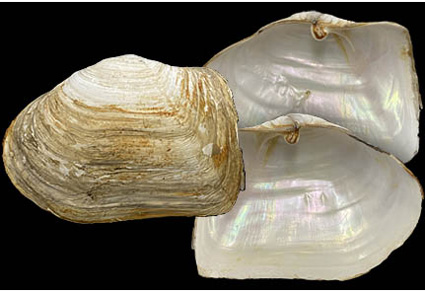
Species of the marine bivalve family Laternulidae are frequently misidentified with some having particularly tangled nomenclatural histories. To redress these problems all available type specimens or new images of them, totalling 52 of the 56 nominal species, were examined and assessed. Concurrently, new molecular analyses identified major clades and corroborated species boundaries based on shell characters. Two clades of laternulids were recognised as subfamilies Laternulinae and Exolaternulinae the latter introduced herein and characterised by presence of a lithodesma. A new classification of the family is presented. The depth of insertion of the pallial sinus is identified as a useful character separating species with similar shell shapes. Two new genera Cryolaternula and Parilaternula are proposed. Twenty-eight putative species are recognised with some resurrected from prior synonymy. Six new species are described: Laternula pristissinus Taylor & Glover, L. inopinata Taylor & Glover, L. omissa Taylor & Glover, Parilaternula acuta Taylor, Fukuda & Haga, P. certa Taylor & Glover and P. delicata Taylor, Glover & Hong. To stabilise the name Exolaternula a lectotype is selected for the type species, Anatina truncata Lamarck, 1818. Exolaternulinae species are distributed from the Arabian Gulf eastwards to Japan and eastern Russia and northern Australia at the southern limit. Laternulinae species occur around Australia, northern Indian Ocean, through the central Indo-W. Pacific to Japan, with Cryolaternula confined to the Southern Ocean within the Antarctic Convergence.
References
- Adal, M.N. & Morton, B. (1973) The fine structure of the pallial eyes of Laternula truncata (Bivalvia: Anomalodesmata: Pandoracea). Journal of Zoology, 170, 533–556. https://doi.org/10.1111/j.1469-7998.1973.tb05068.x
- Ahn, I-Y. (1994) Ecology of the Antarctic bivalve Laternula elliptica (King and Broderip) in Collins Harbor, King George Island: benthic environment and adaptive strategy. Memoirs of the National Institute of Polar Research, Special Issue, 50, 1–10.
- Allen, J.A. (1958) Observations on Cochlodesma praetenue (Pulteney) [Eulamellibranchia]. Journal of the Marine Biological Association of the United Kingdom, 37, 97–112. https://doi.org/10.1017/S0025315400014855
- Aller, R.C. (1974) Prefabrication of shell ornamentation in the bivalve Laternula. Lethaia, 7, 43–56. https://doi.org/10.1111/j.1502-3931.1974.tb00883.x
- Ansell, A.D. & Harvey, R. (1997) Protected larval development in the Antarctic bivalve Latemula elliptica (King and Broderip) (Anomalodesmata: Laternulidae). Journal of Molluscan Studies, 63, 285–286. https://doi.org/10.1093/mollus/63.2.285
- Arnaud, P.M. (1979) Ecologie, biogéographie et caractères biologiques des pélécypodos macrobentiques du Plateau des îles Kerguelen (Sud Océan Indien). Memoires Museum d’Histoire Naturelle, Paris, 43, 221–233.
- Beu, A.G. (2004) Marine Mollusca of oxygen isotope stages of the last 2 million years in New Zealand. Part 1: Revised generic positions and recognition of warm‐water and cool‐water migrants. Journal of the Royal Society of New Zealand, 34, 111–260. https://doi.org/10.1080/03014223.2004.9517766
- Bieler, R., Mikkelsen, P.M., Collins, T.M., Glover, E.A., González, V.L., Graf, D.L., Harper, E.M., Healy, J., Kawauchi, G.Y., Sharma, P.P., Staubach, S., Strong, E.E., Taylor, J.D., Temkin, T., Zardus, J.D., Clark, S., Guzmán, A., McIntyre, E., Sharp, P. & Giribet, G. (2014) Investigating the Bivalve Tree of Life—an exemplar-based approach combining molecular and novel morphological characters. Invertebrate Systematics, 28, 32–115. https://doi.org/10.1071/IS13010
- Boss, K.J. (1978) Taxonomic concepts and superfluity in bivalve nomenclature. Philosophical Transactions of the Royal Society of London, Series B, Biological Sciences, 284, 417–424. https://doi.org/10.1098/rstb.1978.0078
- Branch, M.L., Arnaud, P.M., Cantera, J. & Gianakouras, D. (1991) The benthic Mollusca and Brachiopoda of subantarctic Marion and Prince Edward I.: 1) Illustrated keys to the species, 2) Records of the 1982–1989 University of Cape Town Surveys. South African Journal of Antarctic Research, 21, 45–64.
- Broderip, W.J. (1834) On Clavagella. Proceedings of the Zoological Society of London, 2, 115–117.
- Burne, R.H. (1920) Mollusca. part iv. Anatomy of Pelecypoda. British Antarctic (“Terra Nova”) Expedition, 1910, Natural History Report, Zoology, 2 (10), 233–256.
- Bylenga, C.H., Cummings, V.J. & Ryan, K.G. (2017) High resolution microscopy reveals significant impacts of ocean acidification and warming on larval shell development in Laternula elliptica. PLoS ONE, 12 (4), e0175706. https://doi.org/10.1371/journal.pone.0175706
- Castresana, J. (2000) Selection of conserved blocks from multiple alignments for their use in phylogenetic analysis. Molecular Biology and Evolution, 17, 540–552. https://doi.org/10.1093/oxfordjournals.molbev.a026334
- Cavallo, A., Clark, M.S., Peck, L.S., Harper, E.M. & Sleight, V.A. (2022) Evolutionary conservation and divergence of the transcriptional regulation of bivalve shell secretion across life-history stages. Royal Society Open Science, 9, 221022. https://doi.org/10.1098/rsos.221022
- Checa, A.G. & Harper, E.M. (2010) Spikey bivalves: intraperiostracal crystal growth in anomalodesmatans. Biological Bulletin, 219, 231–248. https://doi.org/10.1086/BBLv219n3p231
- Chernomor, O., von Haeseler, A. & Minh, B.Q. (2016) Terrace aware data structure for phylogenomic inference from supermatrices. Systematic Biology, 65, 997–1008. https://doi.org/10.1093/sysbio/syw037
- Chemnitz, J.H. (1782) Neues systematiches Conchylien-Cabinet. Raspe, Nürnberg, 375 pp., 36 pls. https://doi.org/10.5962/bhl.title.120076
- Chung, E.Y. & Lee, J.S. (2008) Mollusca along the coast of the Saemangeum Area. Hanguel Graphics, Busan, 180 pp.
- Coan, E.V. & Kabat, A.R. (2017) The malacological contributions of Rudolph Amandus Philippi (1808–1904). Malacologia, 60 (1–2), 31–322. https://doi.org/10.4002/040.060.0108
- Coan, E.V., Lutaenko, K.A., Zhang, J. & Sun, Q. (2015) The molluscan taxa of A.W. Grabau & S.G. King (1928) and their types. Malacologia, 58, 179–224. https://doi.org/10.4002/040.058.0206
- Coan, E.V., Petit, R.E. & Zelaya, D.G. (2011) Authorship and date of a key South American paper by Phillip P. King (1832). The Nautilus, 125, 86–88.
- Coan, E.V. & Valentich-Scott, P. (2012) Bivalve Seashells of tropical West America. Marine Bivalve Mollusks from Baja California to northern Peru. Santa Barbara Museum of Natural History, Santa Barbara, California, 1258 pp.
- Coan, E.V., Valentich-Scott, P. & Bernard, F.R. (2000) Bivalve Seashells of Western North America. Marine Bivalve Mollusks from Arctic Alaska to Baja California. Santa Barbara Museum of Natural History, Santa Barbara, California, 764 pp.
- Combosch, D.J., Collins, T.M., Glover, E.A., Graf, D.L., Harper, E.M., Healy, J.M., Kawauchi, G.Y., Lemer, L., McIntyre, E., Strong, E.E., Taylor, J.D., Zardus, J.D., Mikkelsen, P.M., Giribet, G. & Bieler, R. (2017) A family-level Tree of Life for bivalves based on a Sanger-sequencing approach. Molecular Phylogenetics and Evolution, 107, 191–208. https://doi.org/10.1016/j.ympev.2016.11.003
- Cossignani, T. (2023) Nuova Laternula Röding, 1798 dall’ Oman. Malacologia Mostra mondiale - Cupra Marittima, 121, 20–21.
- Cossmann, M. & Peyrot, A. (1909) Conchologie néogénique de L’Aquitaine. Actes de la Société Linnéenne de Bordeaux, 63 (2), 73–144. https://doi.org/10.5962/bhl.title.165529
- Crame, J.A. (2000) The nature and origin of taxonomic diversity gradients in marine bivalves. In: Harper, E.M., Taylor, J.D. & Crame, J.A. (Eds.), The evolutionary biology of the Bivalvia. Special Publications 177. Geological Society, London, pp. 347–360. https://doi.org/10.1144/GSL.SP.2000.177.01.23
- Cretaceous Atlas of Ancient Life (2025) Digital Atlas of Ancient Life. Paleontological Research Institution, Ithaca, New York. Available from: https://www.cretaceousatlas.org (accessed 21 December 2025)
- Crouch, N.M.A., Edie, S.M., Collins, K.S., Bieler, R. & Jablonski, D. (2021) Calibrating phylogenies assuming bifurcation or budding alters inferred macroevolutionary dynamics in a densely sampled phylogeny of bivalve families. Proceedings of the Royal Society B, 288, 20212178. https://doi.org/10.1098/rspb.2021.2178
- Cuvier, G. (1829–1830) Le règne Animal distribué d’aprés son organisation, pour servir de base à l’histoire naturelle des animaux et d’introduction à l’anatomie comparée. Vol. 3. Molluscs. 2nd Edition. Déterville, Paris, 504 pp. [1829] https://doi.org/10.5962/bhl.title.1964
- Dall, W.H. (1889) On the hinge of pelecypods and its development, with an attempt toward a better subdivision of the group. American Journal of Science, Series 3, 38 (228), 445–462. https://doi.org/10.2475/ajs.s3-38.228.445
- Darriba, D., Posada, D., Kozlov, A.M., Stamatakis, A., Morel, B. & Flouri, T. (2020) ModelTest-NG: a new and scalable tool for the selection of DNA and protein evolutionary models. Molecular Biology and Evolution, 37 (1), 291–294. https://doi.org/10.1093/molbev/msz189
- D’Attilio, A. (1974) Some notes on the great Calvert shell collection. New York Shell Club Notes, 200, 5–6.
- Delessert, B. (1841) Recueil de coquilles décrites par Lamarck dans son Histoire naturelle des animaux sans vertèbres et non encore figurées. Chez Fortin, Masson et Cie, Paris, 40 plates with unnumbered pages of description.
- Dell, R.K. (1964) Antarctic and sub-Antarctic Mollusca: Amphineura, Scaphopoda and Bivalvia. Discovery Reports, 33, 93–250.
- Deshayes, G.P. (1830) Anatine, Anatina. In: Histoire naturelle des vers. 1792–1832. Tom. 2. Pt. 1. Chez Panckoucke, Paris, pp. 38–40.
- Deshayes, G.P. (1835) Histoire naturelle des animaux sans vertèbres. Vol. 6. 2nd Edition. J.B. Baillïère, London, 600 pp. [Lamarck, J.B.P.A., Deshayes, G.P., Dujardin, F., Milne-Edwards, H. & von Nordmann, A.] https://doi.org/10.5962/bhl.title.63986
- Dreyer, H., Steiner, G. & Harper, E.M. (2003) Molecular phylogeny of the Anomalodesmata (Mollusca: Bivalvia) inferred from 18S rRNA sequences. Zoological Journal of the Linnean Society, 139, 229–246. https://doi.org/10.1046/j.1096-3642.2003.00065.x
- Egorova, E.N. (2019) Species of warm‐water origin Laternula elliptica (King, 1832) (Mollusca: Bivalvia: Laternulidae), a widespread mollusk in Recent Antarctica. The Bulletin of the Russian Far East Malacological Society, 23, 82–116. [in Russian with English summary]
- Fang, Z.-J., Chen, J.-H., Chen, C.-Z., Sha, J.-G., Xiu, L. & Wen, S. (2009) Supraspecific taxa of the Bivalvia first named, described, and published in China (1927–2007). The University of Kansas Paleontological Contributions, 17, 1–157.
- Feulner, G.R. & Hornby, R.J. (2006) Intertidal molluscs in UAE lagoons. Tribulus, 16, 17–23.
- Freycinet, L. de. (1811) Voyage de découvertes aux terres australes, exécuté par ordre de sa majesté l’Empereur et Roi, sur les corvettes Le Géographe et le Naturaliste et la goëlette Le Casuarina pendant les années 1800, 1801, 1802, 1803, et 1804; publié par décret impérial sous le ministère de M. de Champagny, et rédigé par M. F. Péron, naturaliste de l’éxpedition, correspondant de l’Institut de France, de la Société de l’École de Médecine de Paris, des Sociétés philomatique et médicale de la même ville. Atlas 2er partie (Navigation et Geographie). Imprimerie Impériale, Paris, 14 pls. (26 maps or plans). [actual date 1814]
- Fukuda, H. (2019) Phylum Mollusca. In: Kuroda, T. (Ed.), Okayama Wildlife List 2019. Nature Environment Division, Life and Environmental Department, Okayama Prefectural Government, Okayama, pp. 259–292. [in Japanese with English title]
- Fukuda, H., Taylor, J.D. & Kimura, S. (2020a) Exolaternula sp. In: Red Data Book in Okayama 2020, Animals. Nature Environment Division, Life and Environment Department, Okayama Prefectural Government, Okayama, pp. 525. [in Japanese with English summary, pp. 571]
- Fukuda, H., Taylor, J.D. & Kimura, S. (2020b) Exolaternula sp. In: Kurashiki Museum of Natural History (Ed.), Threatened Wildlife of Okayama Prefecture, Japan, 2020. Kurashiki Museum of Natural History, Kurashiki, pp. 28.
- Gaillard, J.M. (1954) Lamellibranches recueillis aux Iles Kerguelen et Heard par MM. Angot, Arétas, Aubert de la Rue, Brown et Paulian. Bulletin du Museum national d’histoire naturelle, Series 2, 26, 620–623.
- Giribet, G. & Distel, D.L. (2003) Bivalve phylogeny and molecular data. In: Lydeard, C. & Lindberg, D. (Eds.), Molecular systematics and phylogeography of mollusks. Smithsonian Institution Press, Washington, D.C., pp. 45–90.
- Gistel, J. (1848) Naturgeschichte des Thierreichs für höhere Schulen. Hoffmann, Stuttgart, 216 pp.
- Gmelin, J.F. (1791) Caroli a Linné systema naturae per regna tria naturae. Vol. 1. Part 6. Vermes. 13th Edition. G.E. Beer, Lipsiae, pp. 3021–3910.
- Goeij, de P., Lavaleye, M., Pearson, G.B. & Piersma, T. (2003) Seasonal changes in the macro-zoobenthos of a tropical mudflat. NIOZ-Report 2003-4. Royal Netherlands Institute for Sea Research, Texel, 49 pp.
- Gofas, S. & Zenetos, A. (2003) Exotic molluscs in the Mediterranean Basin: current status and perspectives. Oceanography and Marine Biology: an Annual Review, 41, 237–277.
- González-Delgado, S., Rodríguez-Flores, P.C. & Giribet, G. (2024) Testing ultraconserved elements (UCEs) for phylogenetic inference across bivalves (Mollusca: Bivalvia). Molecular Phylogenetics and Evolution, 198, 108–129. https://doi.org/10.1016/j.ympev.2024.108129
- González-Wevar, C.A., Gérard, K., Rosenfeld, S., Saucede, T., Naretto, J., Angie Díaz, A., Morley, S.A., Brickle, P. & Poulin, E. (2019) Cryptic speciation in Southern Ocean Aequiyoldia eightsii (Jay, 1839): Mio-Pliocene trans-Drake Passage separation and diversification. Progress in Oceanography, 174, 44–54. https://doi.org/10.1016/j.pocean.2018.09.004
- Grabau, A.W. & King, S.G. (1928a) Shells of Peitaiho. Chapter IV. Common bivalve or pelecypod shells of the Peitaiho beaches. The China Journal of Science and Arts, 8 (1), 30–39.
- Grabau, A.W. & King, S.G. (1928b) Shells of Peitaiho. 2nd Edition. Peking Society of Natural History Handbook No. 2. Peking Laboratory of Natural History, Peking, 279 pp.
- Gray, J.E. (1847) A list of the genera of Recent Mollusca, their synonyms and types. Proceedings of the Zoological Society of London, 15, 129–219.
- Griffin, M. (1991) Eocene bivalves from the Rio Turbio formation, southwestern Patagonia (Argentina). Journal of Paleontology, 65, 119–146. https://doi.org/10.1017/S0022336000020254
- Griffith, E. & Pidgeon, E. (1834) The Mollusca and Radiata. Vol. 12. In: Griffith, E. ([1824]–1835), The Animal Kingdom arranged in conformity with its organization, by the Baron Cuvier. Whittaker and Co, London, pp. 1–601.
- Grove, S.J. (2018) A Guide to the seashells and other marine molluscs of Tasmania. Available from: https://molluscsoftasmania.org.au/ (accessed 21 December 2025)
- Guérin-Méneville, F.E. (1829–1844) Iconographie de règne animal de G. Cuvier, ou représentation d’après nature de l’une des espéces les plus remarquables et souvent non encore figurées, de chaque genre d’animaux. Vol. 2. Molluscs. J. B. Baillière, Paris, 64 pp. https://doi.org/10.5962/bhl.title.6255
- Güller, M. & Zelaya, D.G. (2025) “Lissarca miliaris” (Bivalvia: Philobryidae): a species able to cross the Antarctic Convergence or a species complex? Polar Biology, 48 (18), 1–19. https://doi.org/10.1007/s00300-024-03337-7
- Habe, T. (1952) Astartidae, Crassatellidae, Mesodesmatidae and Laternulidae. In: Kuroda, T. (Ed.), Illustrated Catalogue of Japanese Shells, 22, pp. 161–172.
- Habe, T. (1977) Systematics of Mollusca in Japan (Bivalvia and Scaphopoda). Hokuryan, Tokyo, 372 pp.
- Habe, T. (1981) A catalogue of molluscs of Wakayama Prefecture, the province of Kii.—I. Bivalvia, Scaphopoda and Cephalopoda. Publications of the Seto Marine Biological Laboratory. Special Publication Series 7. Publishing Association of a Catalogue of Molluscs of Wakayama Prefecture, Shirahama, 264 pp. https://doi.org/10.5134/176470
- Hall, R. (2009) Southeast Asia’s changing palaeogeography. Blumea, 54, 148–161. https://doi.org/10.3767/000651909X475941
- Hanley, S.C.T. (1842–1856) An illustrated and descriptive catalogue of recent bivalve Shells: with 960 figures by Wood and Sowerby [i.e. G. B. Sowerby, 2nd of the name], forming an appendix to the “Index Testaceologicus”. Williams & Norgate, London, 392 pp.
- Hareau, A. & Arnaud, P.M. (1984) Macropelecipodos de las Islas Crozet (Indico Sur). 1. Composición faunística y zoogeografía. Revista de la Facultad de Humanidades y Ciencias, Serie Ciencias Biológicas, 1 (28), 457–476.
- Harper, E.M., Hide, E.A. & Morton, B. (2000) Relationships between the extant Anomalodesmata: a cladistic test. Geological Society, London, Special Publications, 177, 129–143. https://doi.org/10.1144/GSL.SP.2000.177.01.07
- Harper, E.M., Dreyer, H. & Steiner, G. (2006) Reconstructing the Anomalodesmata (Mollusca: Bivalvia): morphology and molecules. Zoological Journal of the Linnean Society, 148, 395–420. https://doi.org/10.1111/j.1096-3642.2006.00260.x
- Harper, E.M., Clark, M.S., Hoffman, J.I., Philipp, E.E.R., Peck, L.S. & Morley, S.A. (2012) Iceberg scour and shell damage in the Antarctic bivalve Laternula elliptica. PLoS ONE, 7 (9), e46341. https://doi.org/10.1371/journal.pone.0046341
- Harzhauser, M., Kroh, A., Mandic, O., Piller, W.E., Gohlic, U., Resuter, M. & Berning, B. (2007) Biogeographic responses to geodynamics: a key study all around the Oligo-Miocene Tethyan Seaway. Zoologischer Anzeiger, 246, 241–256. https://doi.org/10.1016/j.jcz.2007.05.001
- Harzhauser, M., Mandic, O. & Schlögl, J. (2011) A late Burdigalian bathyal mollusc fauna from the Vienna Basin (Slovakia). Geologica Carpathica, 62, 211–231. https://doi.org/10.2478/v10096-011-0018-7
- Healy, J.M., Bieler, R. & Mikkelsen, P.M. (2008) Spermatozoa of the Anomalodesmata (Bivalvia, Mollusca) with special reference to relationships within the group. Acta Zoologica, 89, 339–350. https://doi.org/10.1111/j.1463-6395.2008.00322.x
- Hedley, C. (1916) Mollusca. Scientific Reports of the Australasian Antarctic Expedition 1911–1914, Series C, Zoology and Botany, 4 (1), 1–80. https://doi.org/10.5962/bhl.title.156403
- Hedley, C. (1918) A checklist of the marine fauna of New South Wales. Part 1. Journal and Proceedings of the Royal Society of New South Wales, 51, M1–M120.
- Hidalgo, J.G. (1903) Obras malacológicas. Parte 1. Estudios preliminares sobre la fauna malacológica de las islas Filipinas. Tomo 2. Memorias de la Real Academia de Ciencias Exactas, Físicas y Naturales de Madrid, 21, 1–400.
- Higo, S., Callomon, P. & Goto, Y. (1999) Catalogue and bibliography of the marine shell-bearing Mollusca of Japan. Elle Scientific Publications, Osaka, 749 pp.
- Hoang, D.T., Chernomor, O., von Haeseler, A., Minh, B.Q. & Vinh, L.S. (2018) UFBoot2: Improving the ultrafast bootstrap approximation. Molecular Biology and Evolution, 35, 518–522. https://doi.org/10.1093/molbev/msx281
- Hoernes, R. (1875) Die Fauna des Schliers von Ottnang. Jahrbuch der Kaiserlich Königlichen Geologischen Reichsanstalt, 25, 333–400.
- Hong, J.S., Yamashita, H. & Sato, S.I. (2007) The Saemangeum Reclamation Project in South Korea threatens to extinguish a unique mollusk, ectosymbiotic bivalve species attached to the shell of Lingula anatina. Plankton and Benthos Research, 2 (1), 70–75. https://doi.org/10.3800/pbr.2.70
- Hsueh, P.W. (2003) Responses of the pea crab Pinnotheres taichunge to the life history patterns of its primary bivalve host Laternula marilina. Journal of Natural History, 37, 1453–1462. https://doi.org/10.1080/00222930210125407
- Huber, M. (2010) Compendium of Bivalves. A full-color guide to 3,300 of the World’s marine bivalves: a status on Bivalvia after 250 years of research. ConchBooks, Hackenheim, 901 pp.
- Huelsenbeck, J.P. & Ronquist, F. (2001) MRBAYES: Bayesian inference of phylogeny. Bioinformatics, 17, 754–755. https://doi.org/10.1093/bioinformatics/17.8.754
- Hung, H.T. & Hsueh, P.W. (2008) Distribution and population biology of the thin-shelled bivalve Laternula marilina (Bivalvia: Laternulidae). Journal of the Fisheries Society of Taiwan, 35 (3), 239–249. https://doi.org/10.29822/JFST.200809.0005
- Hylleberg, J. & Knudsen, J. (2001) Translations into English of Lorenz Spengler’s papers on bivalves (1783–1798). Part 5.–1793: the genera Chaena and Mya. Phuket Marine Biological Center Special Publication, 25, 571–584.
- Ibrahim, H.D., Xue, P. & Eltahir, E.A.B. (2020) Multiple salinity equilibria and resilience of Persian/Arabian Gulf Basin salinity to brine discharge. Frontiers in Marine Science, 7 (573), 1–15. https://doi.org/10.3389/fmars.2020.00573
- ICZN [International Commission of Zoological Nomenclature] (1999) International Code of Zoological Nomenclature. 4th Edition. Available from: https://www.iczn.org/the-code/the-code-online/ (accessed 21 December 2025)
- Itoigawa, J., Shibata, H., Nishima, H. & Okumura, Y. (1981) Miocene fossils of the Mizunami group central Japan. 2. Molluscs. Monograph of the Mizunami Fossil Museum, 3A, 1–53. [in Japanese]
- Itoigawa, J., Shibata, H., Nishima, H. & Okumura, Y. (1982) Miocene fossils of the Mizunami group, central Japan. 2. Molluscs (continued). Monograph of the Mizunami Fossil Museum, 3B, 1–330. [in Japanese]
- Iwasaki, K., Ishida, S., Kashio, S., Kameda, Y., Kubo, H., Saito, T., Sawada, N., Haga, T., Hayase, Y., Hirano, T. & Fukuda, H. (2025) Diagnosis, distribution and habitat of undescribed threatened molluscan species of Japan. Molluscan Diversity, 7, 93–210. [in Japanese with English title and abstract]
- Jay, J.C. (1850) A catalogue of the shells, arranged according to the Lamarckian system, with their authorities, synonymes, and references to works where figured or described, contained in the collection of John C. Jay. 4th Edition. Craighead, New York, New York, 459 pp. https://doi.org/10.5962/bhl.title.13211
- Jones, D.S. (2017) The Baudin Expedition in Australian waters (1801–1803): the faunal legacy. Available from: https://museum.wa.gov.au/fc/aos/dj (accessed 21 December 2025)
- Kafanov, A.I., Ogasawara, K. & Marincovich, L. (2001) Checklist and bibliography of the Cenozoic marine Bivalvia (Mollusca) of Northeastern Asia (Russian Far East), 968–1999. Bulletin of the Mizunami Fossil Museum, 28, 1–138.
- Kalyaanamoorthy, S., Minh, B.Q., Wong, T.K.F., von Haeseler, A. & Jermiin, L.S. (2017) ModelFinder: fast model selection for accurate phylogenetic estimates. Nature Methods, 14, 587–589. https://doi.org/10.1038/nmeth.4285
- Kanaya, G., Takagi, S. & Kikuchi, E. (2008) Spatial dietary variations in Laternula marilina (Bivalvia) and Hediste spp. (Polychaeta) along environmental gradients in two brackish lagoons. Marine Ecology Progress Series, 359, 133–144. https://doi.org/10.3354/meps07356
- Kantharajan, G., Pandey, P.K., Krishnan, P., Deepak Samuel, V., Bharti, V.S. & Purvaja, R. (2017) Molluscan diversity in the mangrove ecosystem of Mumbai, west coast of India. Regional Studies in Marine Science, 14, 102–111. https://doi.org/10.1016/j.rsma.2017.06.002
- Katoh, K., Asimenos, G. & Toh, H. (2009) Multiple alignment of DNA sequences with MAFFT. In: Posada, D. (Ed.), Bioinformatics for DNA Sequence Analysis. Humana Press, New York, New York, pp. 39–64. https://doi.org/10.1007/978-1-59745-251-9_3
- Keen, M. & Cox, L.R. (1969) Family Laternulidae. In: Moore, R.C. (Ed.) Treatise on Invertebrate Paleontology, Part N. Mollusca 6. Bivalvia (2). Geological Society of America, Boulder, Colorado and University of Kansas Press, Lawrence, Kansas, pp. N491–N518.
- Kimura, S. (2009) Exolaternula sp. In: “Threatened Wildlife of Aichi Prefecture, Red Data Book Aichi 2009, Animals”. Edited by Aichi Environmental Research Center, Department of the Environment, Aichi Prefectural Government, Aichi, Nagoya, pp. 546. [in Japanese]
- Kimura, S. (2012) Laternula sp. In: Japanese Association of Benthology (Ed.), Threatened Animals of Japanese Tidal Flats: Red Data Book of Seashore Benthos. Tokai University Press, Hadano, pp. 169. [in Japanese with English title]
- King, P.P. (1832) Description of Cirrhipeda, Conchifera and Mollusca, in a collection formed by the officers of H.M.S. Adventure and Beagle employed between the years 1826 and 1830 in surveying the southern coasts of South America, including the Straits of Magalhaens and the coast of Tierra del Fuego [“assisted by W.J. Broderip”]. Zoological Journal, 5 (19), 332–349.
- Kolpakov, E.V. (2012) New findings of thermophilic bivalve mollusks in waters of northern Primorye. Izvestiya TINRO, 171, 163–167.
- Kuroda, T., Habe, T. & Oyama, K. (1971) The sea shells of Sagami Bay collected by His Majesty the Emperor of Japan. Maruzen Co., Tokyo, 741 pp.
- Lai, C.H., Morley, S.A., Tan, K.S. & Peck, L.S. (2011) Thermal niche separation in two sympatric tropical intertidal Laternula (Bivalvia: Anomalodesmata). Journal of Experimental Marine Biology and Ecology, 405, 68–72. https://doi.org/10.1016/j.jembe.2011.05.014
- Lamarck, J.B.P.A. de (1797) Vers, Coquilles, Mollusques et Polypiers. In: Bruguière, J.G., Lamarck, J.B.P.A. de, Bory de Saint-Vincent, J.B.G.M., Deshayes, G.P. & Müller, O.F. (1791–1827), Tableau Encyclopédique et Méthodique des Trois Règnes de la Nature Contenant l’Helminthologie, ou les Vers Infusoires, les Vers Intestins, les Vers Mollusques, &c. H. 3 Vols. Agasse, Paris, pl. 228.
- Lamarck, J.B.P.A. de (1818) Histoire naturelle des animaux sans vertébrés. Déterville/Verdière, Paris, 612 pp.
- Lamprell, K. & Healy, J. (1998) Bivalves of Australia. Vol. 2. Backhuys Publishers, Leiden, 228 pp.
- Lamy, E. (1925) Notes sur les espèces rangées par Lamarck dans son genre Anatina. Bulletin du Muséum national d’histoire naturelle, 31, 372–378.
- Lamy, E. (1934) Révision des Anatina vivants du Museum National d’Histoire Naturelle de Paris. Journal de Conchyliologie, 78, 145–168.
- Lemer, S., Bieler, R. & Giribet, G. (2019) Resolving the relationships of clams and cockles: dense transcriptome sampling drastically improves the bivalve tree of life. Proceedings of the Royal Society B, 286, 20182684. https://doi.org/10.1098/rspb.2018.2684
- Linnaeus, C. (1758) Systema Naturae per regna tria naturae, secundum classes, ordines, genera, species, cum characteribus, differentiis, synonymis, locis. Tomus 1. 10th Edition. Impensis Direct. L. Salvii, Holmiae [Stockholm], 824 pp. https://doi.org/10.5962/bhl.title.542
- Lischke, C.E. (1872) Diagnosen neuer Meeres-Conchylien von Japan. Malakozoologisches Blätter, 19, 100–109.
- Lischke, C.E. (1874) Japanische Meeres-Conchylien. Ein Beitrag zur Kenntnis der Mollusken Japans, mit besonderer Rücksicht auf die Geographische Verbreitung derselben. Theodor Fischer, Cassel, 123 pp., 9 pls.
- Logan, B.W. & Cebulski, D.E. (1970) Sedimentary environments of Shark Bay, Western Australia. In: Logan, B.W., Davies, G.R., Read, J.F. & Cebulski, D.E. (Eds.), Carbonate Sedimentation and Environments, Shark Bay, Western Australia. American Association of Petroleum Geologists Memoir, Tulsa, 13, pp. 1–37. https://doi.org/10.1306/M13369C1
- Lozouet, P. & Plaziat, J.-C. (2008) Mangrove environments and molluscs Abatan River, Bohol and Panglao Islands, Central Philippines. ConchBooks, Hackenheim, 160 pp.
- Lutaenko, K.A. & Noseworthy, R.G. (2012) Catalogue of the living Bivalvia of the continental coast of the Sea of Japan (East Sea). Dalnauka, Vladivostok, 167 pp.
- Lutaenko, K.A. & Volvenko, I.E. (2017) Atlas of common bivalve mollusks of Peter the Great Bay (Sea of Japan). Far Eastern Federal University, Vladivostok, 140 pp. [in Russian]
- Lutaenko, K.A. & Volvenko, I.E. (2023) Shallow-water Bivalve Mollusks of Peter the Great Bay (Sea of Japan). Publishing House of the Far Eastern Federal University, Vladivostok, 190 pp. [in Russian]
- Lutaenko, K.A. & Xu, F. (2008) A catalogue of types of bivalve mollusks in the Marine Biological Museum, Chinese Academy of Sciences (Qingdao). The Bulletin of the Russian Far East Malacological Society, 12, 42–70.
- Lynge, H. (1909) The Danish Expedition to Siam 1899–1900. IV. Marine Lamellibranchiata. Kongelige Danske Videnskabernes Selskabs Skrifter, 5, 101–299.
- Machado, F.M. & Passos, F.D. (2022) Revisiting the morphological aspects of the Anomalodesmata (Mollusca: Bivalvia): phylogenetic approach. Invertebrate Systematics, 36, 1063–1098. https://doi.org/10.1071/IS22028
- Marshall, B.A. (2002) Some Recent Thraciidae, Periplomatidae, Myochamidae, Cuspidariidae and Spheniopsidae (Anomalodesmata) from the New Zealand region and referral of Thraciareinga Crozier, 1966 and Scintillona benthicola Dell, 1956 to Tellimya Brown, 1827(Montacutidae) (Mollusca: Bivalvia). Molluscan Research, 22, 221–288. https://doi.org/10.1071/MR02011
- Marwick, J. (1948) Lower Pliocene Mollusca from Otahuhu, Auckland. New Zealand Geological Survey Paleontological Bulletin, 16, 1–38.
- Matsubara, T., Sasaki, T., Ito, Y. & Amano, K. (2023) Illustrations of Cenozoic molluscan type specimens preserved in the University Museum, the University of Tokyo. Part 26. The subgenus Periploma (Aelga) (Bivalvia: Periplomatidae). The Chiribotan, 53 (2), 97–109. [in Japanese]
- Matsukuma, A., Ishibashi, T., Kawagishi, H. & Yamashita, H. (2014) Mollusks. In: Natural Environment Department of Fukuoka Prefecture (Ed.), Fukuoka Red Data Book 2014. Department of Environmental Affairs, Fukuoka Prefectural Government, Hakata, pp. 173–241. [in Japanese]
- Matsukuma, A., Miyazaki, S., Kawagishi, H., Ishibashi, T., Sakai, N., Komiya, S., Nakajima, J. & Mizumoto, M. (2025) Molluscs. In: Nature Conservation and Environmental Impact Assessment Division, Department of Environmental Affairs, Fukuoka Prefectural Government (Ed.), Threatened Wildlife in Fukuoka Prefecture: Red Data Book Fukuoka 2024. Nature Conservation and Environmental Impact Assessment Division, Department of Environmental Affairs, Fukuoka, pp. 702–815. [in Japanese]
- Megerle von Mühlfeld, J.C. (1811) Entwurf eines neuen Systems der Schaltiergehäuse. Magazin für die neuesten Entdecklungen in der gesammten Naturkunde von der Gesellschaft Naturforschaft Freunde zu Berlin, 5 (1), 38–72, pls. 3.
- Melvill, J.C. & Standen, R. (1898) Notes on a collection of marine shells from Lively Island, Falklands, with a list of species. Journal of Conchology, 9, 97–105. https://doi.org/10.5962/p.405567
- Melvill, J.C. & Standen, R. (1914) Notes on Mollusca collected in the north-west Falklands by Mr Rupert Valentin, F.L.S with descriptions of six new species. Annals and Magazine of Natural History, Series 8, 13 (73), 110–136. https://doi.org/10.1080/00222931408693460
- Miller, T.W., Coan, E.V. & Chapman, J.W. (1999) Rediscovery of the introduced, non-indigenous bivalve Laternula marilina (Reeve, 1860) in the northeastern Pacific. The Veliger, 42, 282–284.
- Min, D.K., Lee, J.S., Koh, D.B. & Je, J.K. (2004) Mollusks in Korea. Min Molluscan Research Institute, Seoul, 556 pp.
- Mirarab, S., Nguyen, N. & Warnow, T. (2014) PASTA: ultra-large multiple sequence alignment. In: Sharan, R. (Ed.), Research in Computational Molecular Biology. Lecture Notes in Computer Science. Vol. 8394. Springer, Cham, pp. 177–191. https://doi.org/10.1007/978-3-319-05269-4_15
- Mittre, H. (1844) Mémoire sur le genre Anatina. In: Guerin-Meneville, F.E. (Ed.), Magasin de Zoologie, d’Anatomie Comparée et de Palaeontologie. Arthus Bertrand, Paris, pp. 1–18, pls. 102–104.
- Moazzam, M. & Moazzam, N. (2023) Additions to the molluscan fauna (bivalves and gastropods) of Pakistan. International Journal of Biology and Biotechnology, 20, 535–555.
- MolluscaBase eds. (2025) MolluscaBase. Available from: https://www.molluscabase.org (accessed 05 December 2025) https://doi.org/10.14284/448
- Morley, S.A., Peck, L.S., Tan, K.S., Martin, S.M. & Pörtner, H.O. (2007) Slowest of the slow: latitudinal insensitivity of burrowing capacity in the bivalve Laternula. Marine Biology, 151, 1823–1830. https://doi.org/10.1007/s00227-007-0610-7
- Morley, S.A., Tan, K.S., Day, R.W., Martin, S.M., Pörtner, H.O. & Peck, L.S. (2009) Thermal dependency of burrowing in three species within the bivalve genus Laternula: a latitudinal comparison. Marine Biology, 156, 1977–1984. https://doi.org/10.1007/s00227-009-1228-8
- Morris, S. & Morris, N. (1993) New shells from the UAE’s East Coast. Tribulus, 3, 5–8 + 18–19.
- Morton, B. (1973) The biology and functional morphology of Laternula rostrata (Lamarck, 1818) (Bivalvia: Anomalodesmata: Pandoracea). Biological Bulletin, 145, 509–531. https://doi.org/10.2307/1540634
- Morton, B. (1976) The structure, mode of operation and variation in form of the shell of the Laternulidae (Bivalvia: Anomalodesmata: Pandoracea). Journal of Molluscan Studies, 42, 261–278. https://doi.org/10.1093/oxfordjournals.mollus.a065332
- Morton, B. (1980) The biology and functional morphology of Periploma (Offadesma) angasi (Bivalvia: Anomalodesmata: Periplomatidae). Journal of Zoology, 193, 39–70. https://doi.org/10.1111/j.1469-7998.1981.tb01490.x
- Morton, B. (2012) The functional morphology and inferred biology of the enigmatic South African ‘quadrivalve’ bivalve Clistoconcha insignis Smith, 1910 (Thracioidea: Clistoconchidae fam. nov.): another anomalodesmatan evolutionary eccentric. Transactions of the Royal Society of South Africa, 67 (2), 59–89. https://doi.org/10.1080/0035919X.2012.702321
- Nguyen, L.-T., Schmidt, H.A., von Haeseler, A. & Minh, B.Q. (2015) IQ-TREE: A fast and effective stochastic algorithm for estimating maximum likelihood phylogenies. Molecular. Biology and Evolution, 32, 268–274. https://doi.org/10.1093/molbev/msu300
- NIBR (2024) National List of Korea. National Institute of Biological Resources, Incheon, Korea. Available from: https://kbr.go.kr/ (accessed 25 August 2025)
- O’Dea, A. & Winderlich, S. (2021) A citizen science project in Ludmilla Bay, Darwin Harbour, helps identify invertebrates that fuel shorebird migration. Northern Territory Naturalist, 30, 15–35. https://doi.org/10.5962/p.374209
- Okutani, T. (Ed.) (2017) Marine mollusks in Japan. 2 Vols. 2nd Edition. Tokai University Press, Hiratsuka, 1375 pp.
- Oliver, P.G. (1995) Bivalvia. In: Dance, S.P. (Ed.), Seashells of Eastern Arabia. Motivate Publishing, Dubai, pp. 194–281.
- Oliver, P.G., Al-Kandari, M., Behbehani, M. & Dekker, H. (2023) An illustrated checklist of the intertidal Bivalvia of the State of Kuwait. Journal of Conchology, 44 (6), 483–528. https://doi.org/10.61733/jconch44601
- Park, Y.H., Durand, I., Kestenare, E., Rougier, G., Zhou, M., d’Ovidio, F., Cotte, C. & Lee, J.-H. (2014) Polar Front around the Kerguelen Islands: an up to-date determination and associated circulation of surface/subsurface waters. Journal of Geophysical Research: Oceans, 119, 6575–6592. https://doi.org/10.1002/2014JC010061
- Parras, A. & Griffin, M. (2013) Late Cretaceous (Campanian/Maastrichtian) freshwater to restricted marine mollusc fauna from the Loncoche Formation, Neuquén Basin, west-central Argentina. Cretaceous Research, 40, 190–206. https://doi.org/10.1016/j.cretres.2012.07.002
- Passos, F.D., Sartori, A.F., Domaneschi, O. & Bieler, R. (2022) Anatomy and behavior of Laternula elliptica, a keystone species of the Antarctic benthos (Bivalvia: Anomalodesmata: Laternulidae). PeerJ, 10, e14380. https://doi.org/10.7717/peerj.14380
- Pauthenet, E., Roquet, F., Madec, G., Guinet, C., Hindell, M., McMahon, C.R., Harcourt, R. & Nerini, D. (2018) Seasonal meandering of the Polar Front upstream of the Kerguelen Plateau. Geophysical Research Letters, 45, 9774–9781. https://doi.org/10.1029/2018GL079614
- Peck, L.S., Ansell, A.D., Webb, K.E., Hepburn, L. & Burrows, M. (2004) Movements and burrowing activity in the Antarctic bivalve molluscs Laternula elliptica and Yoldia eightsi. Polar Biology, 27, 357–367. https://doi.org/10.1007/s00300-003-0588-7
- Peck, L.S., Powell, D.K. & Tyler, P.A. (2007) Very slow development in two Antarctic bivalve molluscs, the infaunal clam Laternula elliptica and the scallop Adamussium colbecki. Marine Biology, 150, 1191–1197. https://doi.org/10.1007/s00227-006-0428-8
- Pelseneer, P. (1911) Les Lamellibranches de l’expédition du Siboga: partie anatomique. Siboga-Expeditie, 53a, 1–125.
- Philippi, R.A. (1844) Descriptiones testaceorum quorundam novorum, maxime chinensium. Zeitschrift für Malakozoologie, 1 (11), 161–167.
- Philipp, E., Brey, T., Pörtner, H.O. & Abele, D. (2005) Chronological and physiological ageing in a polar and a temperate mud clam. Mechanisms of Ageing and Development, 126, 598–609. https://doi.org/10.1016/j.mad.2004.12.003
- Piersma, T., Pearson, G.B., Hickey, R., Dittmann, S., Rogers, D.I., Folmer, E., Honkoop, P., Drent, J., Goeij, P.D. & Marsh, L. (2006) Roebuck Bay invertebrate and bird mapping 2006. University of Groningen, Groningen, 67 pp.
- Pilsbry, H.A. (1895) Catalogue of the marine mollusks of Japan with descriptions of new species and notes on others collected by Frederick Stearns. F. Stearns, Detroit, 196 pp., 11 pls. https://doi.org/10.5962/bhl.title.32672
- Pilsbry, H.A. (1901) New Japanese marine, land and fresh-water Mollusca. Proceedings of the Academy of Natural Sciences of Philadelphia, 53, 385–408.
- Poppe, G.T. (2011) Myochamidae, Thraciidae, Laternulidae. In: Philippine Marine Mollusks. Vol. 4 Bivalvia. Part 2. Scaphopoda, Polyplacophora, Cephalopoda & Addenda. ConchBooks, Hackenheim, pp. 30–31 + 32–33 + 34–41.
- Prashad, B. (1932) The Lamellibranchia of the Siboga Expedition Systematic Part II Pelecypoda (exclusive of the Pectinidae). Siboga Expeditie. Vol. 53c. E.J. Brill, Leiden, 353 pp.
- Preston, H.B. (1905) Descriptions of new species of marine shells from Ceylon. Journal of Malacology, 12, 1–8. https://doi.org/10.1093/oxfordjournals.mollus.a066124
- Preston, H.B. (1914) Mollusca from the Chilka Lake on the east coast of India. Records of the Indian Museum, 10, 297–310. https://doi.org/10.5962/bhl.part.5630
- Preston, H.B. (1915) A further report on Mollusca from Lake Chilka on the east coast of India. Records of the Indian Museum, 11, 289–310. https://doi.org/10.26515/rzsi/v11/i4/1915/163059
- Prezant, R.S. (1998) Family Laternulidae. In: Beesley, P.L., Ross, G.J.B. & Wells, A. (Eds.), Mollusca the southern synthesis, fauna of Australia. Vol. 5. Part A. CSIRO Publishing, Melbourne, pp. 411–412.
- Prezant, R.S., Sutcharit, C., Chalermwat, K., Kakhai, NT., Duangdee, T. & Dumrongrojwattana, P. (2008) Population study of Laternula rostrata (Bivalvia: Anomalodesmata: Laternulidae) in the mangrove sand flat of Kunkrabaen Bay, Thailand, with notes on Laternula anatina. Raffles Bulletin of Zoology Supplement, 18, 57–73. https://doi.org/d1wqtxts1xzle7.cloudfront.net/76886833
- Prezant, R.S., Shell, R.M. & Wu, L. (2015) Comparative shell microstructure of two species of tropical laternulid bivalves from Kungkrabaen Bay, Thailand with after-thoughts on laternulid taxonomy. American Malacological Bulletin, 33, 1–12. https://doi.org/10.4003/006.033.0112
- Price, M.N., Dehal, P.S. & Arkin, A.P. (2009) FastTree: computing large minimum evolution trees with profiles instead of a distance matrix. Molecular Biology and Evolution, 26, 1641–1650. https://doi.org/10.1093/molbev/msp077
- Pufahl, P.K., James, N.P., Bone, Y. & Lukasik, J.J. (2004) Pliocene sedimentation in a shallow, cool-water, estuarine gulf, Murray Basin, South Australia. Sedimentology, 51, 997–1027. https://doi.org/10.1111/j.1365-3091.2004.00658.x
- Rafinesque, C.S. (1815) Analyse de la nature ou Tableau de l’univers et des corps organisés. Published by the author, Palermo, 224 pp. https://doi.org/10.5962/bhl.title.106607
- Reeve, L.A. (1860-1863) Monograph of the genus Anatina. In: Conchologica Iconica. Vol. 14. Reeve, Benham & Reeve, London, pl. II (1860), pls. I + III + IV (1863)
- Röding, P.F. (1798) Museum Boltenianum sive Catalogus cimeliorum e tribus regnis naturæ quæ olim collegerat Joa. Fried Bolten, M. D. p. d. per XL. annos proto physicus Hamburgensis. Pars secunda continens Conchylia sive Testacea univalvia, bivalvia & multivalvia. Trapp, Hamburg, 199 pp.
- Ronquist, F., Teslenko, M., van der Mark, P., Ayres, D.L., Darling, A., Höhna, S., Larget, B., Liu, L., Suchard, M.A. & Huelsenbeck, J.P. (2012) MrBayes 3.2: efficient Bayesian phylogenetic inference and model choice across a large model space. Systematic Biology, 61 (3), 539–542. https://doi.org/10.1093/sysbio/sys029
- Rumpf [Rumphius], G.E. (1705) D’Amboinsche Rariteitkamer, behelzende eene beschryvinge van allerhande zoo weeke als harde schaalvisschen, te weeten raare krabben, kreeften, en diergelyke zeedieren, als mede allerhande hoorntjes en schulpen, die men in d’Amboinsche zee vindt: daar beneven zommige mineraalen, gesteenten, en soorten van aarde, die in d’Amboinsche, en zom- mige omleggende eilanden gevonden worden. Gedrukt by François Halma, boekverkoper in Konstantijn den Grooten, Amsterdam, 340 + 43 pp., 60 pls. https://doi.org/10.5962/bhl.title.70350
- Ryu, J., Nam, J., Park, J., Kwon, B-O., Lee, J-H., Song, S.J., Hong, S., Chang, W.K. & Khim, J.S. (2014) The Saemangeum tidal flat: Long-term environmental and ecological changes in marine benthic flora and fauna in relation to the embankment. Ocean & Coastal Management, 102, 559–571. https://doi.org/10.1016/j.ocecoaman.2014.07.020
- Sahu, B.K., Pati, P. & Panigrahy, R.C. (2014) Environmental conditions of Chilika Lake during pre and post hydrological intervention: an overview. Journal of Coastal Conservation, 18, 285–297. https://doi.org/10.1007/s11852-014-0318-z
- Samanta, S., Ghora, S., Midya, S., Paria, S., Al-Helal, M.A. & Chakraborty, S.K. (2021) Role of Laternula truncata (Lamarck, 1818) in maintaining of biological integrity of West Bengal coastal region. International Research Journal of Basic and Applied Sciences, 6, 54–61.
- Sartori, A.F. (2008) Are morphological and molecular perspectives of anomalodesmatan phylogeny reconcilable? The Malacologist. Available from: http://malacsoc.org.uk/the_Malacologist/BULL50/Sartori.htm (accessed 21 September 2025)
- Sartori, A.F. (2009) Comparative morphology and phylogeny of anomalodesmatan bivalves. PhD Thesis, University of Cambridge, Cambridge, 379 pp.
- Sartori, A.F. & Ball, A.D. (2009) Morphology and postlarval development of the ligament of Thracia phaseolina (Bivalvia: Thraciidae), with a discussion of model choice in allometric studies. Journal of Molluscan Studies, 75, 295–304. https://doi.org/10.1093/mollus/eyp029
- Sartori, A.F., Passos, F.D. & Domaneschi, O. (2006) Arenophilic mantle glands in the Laternulidae (Bivalvia: Anomalodesmata) and their evolutionary significance. Acta Zoologica, 87, 265–272. https://doi.org/10.1111/j.1463-6395.2006.00240.x
- Sato, S., Yamashita, H., Kim, K. & Matsuo, M. (2007) Human impacts on coastal communities: a case study of benthic faunal changes after dike construction in Saemangeum, South Korea. The Quaternary Research (Daivonki-Kenkyu), 46 (3), 265–274. https://doi.org/10.4116/jaqua.46.265
- Sato, S., Hong, J.S. & Kim, S.H. (2019) Macrobenthic faunal change after dike construction in Saemangeum Lake, South Korea, with special emphasis on mollusks. Plankton and Benthos Research, 14, 251–260. https://doi.org/10.3800/pbr.14.251
- Savazzi, E. (1990) Shell biomechanics in the bivalve Laternula. Lethaia, 23, 93–101. https://doi.org/10.1111/j.1502-3931.1990.tb01784.x
- Scher, H.D., Whittaker, J.M., Williams, S.E., Latimer, J.C., Kordesch, W.E.C. & Delaney, M.L. (2015) Onset of Antarctic Circumpolar current 30 million years ago as Tasmanian Gateway aligned with westerlies. Nature, 523, 580–583. https://doi.org/10.1038/nature14598
- Schnetler, K.I. (2001) The Selandian (Paleocene) mollusc fauna from Copenhagen, Denmark: the Poul Harder 1920 collection. Geology of Denmark Survey Bulletin, 37, 1–85. https://doi.org/10.34194/dgub.v37.5021
- Seo, T. & Tanangonan, J. (2014) Recent marine malacofauna in Kagawa Prefecture, 2009-2013. Memoirs of the Faculty of Agriculture of Kinki University, 47, 87–124.
- Siddiqui, K.U., Islam, M.A., Kabir, S.M.H., Ahmad, M., Ahmed, A.T.A., Rahman, A.K.A., Haque, E.U., Ahmed, Z.U., Begum, Z.N.T., Hassan, M.A., Khondker, M. & Rahman, M.M. (2007) Encyclopedia of flora and fauna of Bangladesh. Vol .1. Molluscs. Asiatic Society of Bangladesh, Dhaka, 415 pp.
- Slack-Smith, S.M. (1990) The bivalves of Shark Bay, Western Australia. In: Berry, P.F., Bradshaw, S.D. & Wilson, B.R. (Eds.), Research in Shark Bay. Western Australian Museum, Perth, pp. 129–157.
- Sleight, V.A., Clark, M.S., Yap-Chiongco, M.K., Turner, F. & Kocot, K.M. (2025) Genomic, transcriptomic and epigenomic signatures of ageing and cold adaptation in the Antarctic clam Laternula elliptica. Open Biology, 15, 250009. https://doi.org/10.1098/rsob.250009
- Sowerby, G.B. (1834) Characters of new genera and species of Mollusca and Conchifera, collected by Mr. Cuming. Proceedings of the Zoological Society of London, 1834, 87–89.
- Sowerby, G.B. II. (1839) A conchological manual. G.B. Sowerby, London, 130 pp., 530 figs. https://doi.org/10.5962/bhl.title.39567
- Spengler, L. (1793) Beskrivelse over et nyt Slægt af de toskallede Konchylier, forhen af mig kaldet Chæna, saa og over det Linnéiske Slægt Mya, hvilket nøiere bestemmes, og inddeles i tvende Slægter. Skrivter af Naturhistorie-Selskabet, 3 (1), 16–69, pl. 2. [https://babel.hathitrust.org/cgi/pt?id=hvd.32044106425119;view=1up;seq=24]
- Strand, E. (1927) Miscellanea nomenclatorica zoologica et paleontologica I—II. Archiv für Naturgeschichte, Abteilung A, 8, 30–75.
- Subba Rao, N.V. (2017) Indian Seashells part 2: Bivalvia. Records of the Zoological Survey of India Occasional Paper, 375, 1–568.
- Subba Rao, N.V., Surya Rao, K.V. & Maitra, S. (1991) Marine molluscs. Zoological Survey of India: State Fauna Series, 1, Fauna of Orissa (Part 3), 1–175.
- Tan, K.S. & Oh, T.M. (2002) Feeding habits of Chicoreus capucinus (Neogastropoda: Muricidae) in a Singapore mangrove. Bollettino Malacologico Supplemento, 4, 43–50. [https://www.societaitalianadimalacologia.it/Bollettino/Supplemento%204/]
- Taylor, J.D., Williams, S.T., Glover, E.A. & Dyal, P. (2007) A molecular phylogeny of heterodont bivalves (Mollusca: Bivalvia: Heterodonta): new analyses of 18S rRNA and 28S rRNA genes. Zoologica Scripta, 36, 587–606. https://doi.org/10.1111/j.1463-6409.2007.00299.x
- Taylor, J.D., Glover, E.A., Harper, E.M., Crame, J.A., Ikebe, C. & Williams, S.T. (2018) Left in the cold? Evolutionary origin of Laternula elliptica, a keystone bivalve species of Antarctic benthos. Biological Journal of the Linnean Society, 123, 360–376. https://doi.org/10.1093/biolinnean/blx144
- Thach, N.N. (2020) New shells of South Asia. Volume 2. Seashells Freshwater Land snails. With one New Genus and 140 New Species & Subspecies, Reply to comments made in error. 48Hr Books Company, Akron, Ohio, 189 pp.
- Thach, N.N. (2025) New shells of Vietnam, Indonesia and some other countries. Recent & fossil. Seashells - Freshwater - Landshells. With 5 new genera & 208 new species, subspecies. The author and 48Hr Books Company, Akron, Ohio, 188 pp.
- Tian, S.Y., Yasuhara, M., Condamine, F.L., Huang, H.H.M., Fernando, A.G.S., Aguilar, Y.M., Pandita, H., Irizuki, T., Iwatani, H., Shin, C.P., Renema, W. & Kase, T. (2024) Cenozoic history of the tropical marine biodiversity hotspot. Nature, 632, 343–349. https://doi.org/10.1038/s41586-024-07617-4
- Tomlin, J.R. le B. (1938) Thracia antarctica M. & S. and Mya antarctica M. & S. Journal of Conchology, 21, 84. https://doi.org/10.5962/p.406880
- Troncoso, N., Van Goethem, J.L. & Troncoso, J.S. (2001) Contribution to the marine molluscan fauna of Kerguelen Islands, South Indian Ocean. Iberus, 19, 83–114.
- Tue, N.T., Hamaoka, H., Sogabe, A., Quy, T.D., Nhuan, M.T. & Omori, K. (2012) Food sources of macro-invertebrates in an important mangrove ecosystem of Vietnam determined by dual stable isotope signatures. Journal of Sea Research, 72, 14–21. https://doi.org/10.1016/j.seares.2012.05.006
- Waller, C.L., Overall, A., Fitzcharles, E.M. & Griffiths, H. (2017) First report of Laternula elliptica in the Antarctic intertidal zone. Polar Biology, 40, 227–230. https://doi.org/10.1007/s00300-016-1941-y
- Wells, F.E., Chalermwat, K., Kakhai, N. & Rangubpit, P. (2001) Population characteristics and feeding of the snail Chicoreus capucinus at Ang-sila, Chonburi Province, Thailand. Phuket Marine Biological Center Special Publication, 25 (1), 31–39.
- Wheeler, T.J. & Kececioglu, J.D. (2007) Multiple alignment by aligning alignments. Bioinformatics, 23, i559–i568. https://doi.org/10.1093/bioinformatics/btm226
- Williams, S.T., Smith, L.M., Herbert, D.G., Marshall, B.A., Warén, A., Kiel, S., Dyal, P., Linse, K., Vilvens, C. & Kano, Y. (2013) Cenozoic climate change and diversification on the continental shelf and slope: evolution of gastropod diversity in the family Solariellidae (Trochoidea). Ecology and Evolution, 3, 887–917. https://doi.org/10.1002/ece3.513
- Winckworth, R. (1931) Mollusca from Pulicat Lake. Proceedings of the Malacological Society of London, 19, 188–189.
- Woodward, S.P. (1855) Descriptions of the animals of certain genera of Conchifera. Annals and Magazine of Natural History, Series 2, 16 (91), 22–27. https://doi.org/10.1080/037454809495472
- Xu, F. (1999) Fauna Sinica, Phylum Mollusca, Class Bivalvia, Subclasses Protobranchia and Anomalodesmata. Science Press, Beijing, 244 pp.
- Xu, F. & Zhang, S. (2008) An illustrated Bivalvia Mollusca fauna of China seas. Ke xue chu ban she, Beijing, 336 pp.
- Yamashita, H., Sato, S., Mizuma, Y. & Nawa, J. (2006) A catalogue of marine mollusks in Saemangeum area. In: Japan/Korea Tidal-flats Joint Survey Group (Ed.), Reports of Japan/Korea Tidal-flats Joint Survey Group, 2006, pp. 97–119. [in Japanese]
- Yonge, C.M. & Morton, B. (1980) Ligament and lithodesma in the Pandoracea and the Poromyacea with a discussion on the evolutionary history in the Anomalodesmata (Mollusca: Bivalvia). Journal of Zoology, 191, 263–292. https://doi.org/10.1111/j.1469-7998.1980.tb01459.x
- Zamorano, J.H., Duarte, W.E. & Moreno, C.A. (1986) Predation upon Laternula elliptica (Bivalvia, Anatinidae): a field manipulation in South Bay, Antarctica. Polar Biology, 6, 139–143. https://doi.org/10.1007/BF00274876
- Zenetos, A., Gofas, S., Russo, G.F., Templado, J. & Kurz, T. (2003) CIESM atlas of exotic species in the Mediterranean. Vol. 3. Molluscs. CIESM, Monaco, 376 pp.
- Zhang, S., Zhang, J., Chen, Z. & Xu, F. (2016) Mollusks of the Yellow Sea and Bohai Sea. LifeScience Publishing, Beijing, 421 pp.
- Zhuang, Q.Q. & Cai, Y.Y. (1982) Studies on the Laternulidae off the Chinese coast. Oceanologia et Limnologia Sinica, 13, 553–561.
- Zhuang, S. (2005) Influence of salinity, diurnal rhythm and day length on feeding in Laternula marilina Reeve. Aquaculture Research, 36, 130–136. https://doi.org/10.1111/j.1365-2109.2004.01195.x