

Abstract
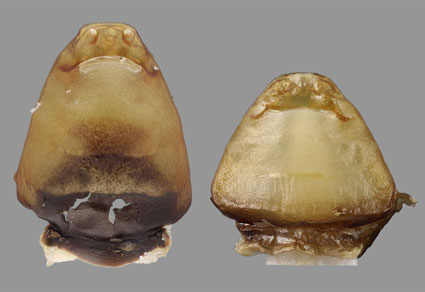
Twisted-winged parasites (Strepsiptera) is a small insect order with around 610 species worldwide and whose members are obligate parasites of other insects. While recent advances in molecular methods have significantly improved our understanding of the species diversity, there is no review of Strepsiptera diversity from the Nordic countries that fully reflect the current state of taxonomic knowledge. Here we revise the Nordic Strepsiptera fauna, present an updated and annotated checklist of species, including new distribution data and host associations based on new records from museums, private collectors, previous publications, and databases. We describe two new species of Stylops (Strepsiptera: Stylopidae) from the Nordic countries, Stylops sapmiensis Lähteenaro & Bergsten, sp. nov. and Stylops serotinus Lähteenaro & Straka, sp. nov., supported by molecular, morphological, and host-use data. A key to genera of Nordic Strepsiptera based on males and to species based on females is provided together with distribution maps of known species.
References
- Aarvik, L. & Elven, H. (2014) Strepsipterans Strepsiptera. Artsdatabanken, Natural History Museum, University of Oslo, Oslo. Available from: https://www.biodiversity.no/Pages/148178/ (accessed 25 August 2024)
- Ahlberg, O.V. (1925) Zikaden-Parasiten unter den Strepsipteren und Hymenopteren. Meddelanden från Centralanstalten för försöksverksamheten på jordbruksområdet, 287, 79–86.
- Andersen, T. & Fjellberg, A. (1975) Elenchus tenuicornis (Kirby, 1815) (Strepsiptera, Elenchidae) new to Norway. Norsk Entomologisk Tidsskrift, 22, 166–167.
- Aurivillius, C. (1903) Svensk Insektfauna. 13. Hymenoptera. 1. Svensk Insektfauna 13. Trettonde Ordningen steklar Hymenoptera. Entomologisk Tidskrift, 24, 129.
- Baker, D.B. (1994) On the nomenclature of two sibling species of the Andrena tibialis (Kirby, 1802) group (Hymenoptera, Apoidea). Entomologists Gazette, 45, 281–281.
- Bartsch, H. (2006) Insektsinventering av sandtaget Lindormsnäs samt förslag till åtgärder. Naturvårdsenheten, Länstyrelsen i Stockholm län, 34 pp.
- Benda, D., Parslow, B.A., Leijs, R. & Straka, J. (2024) New insect family for Australia: Chrysostylops australiensis Benda & Straka, gen. et sp. nov. (Strepsiptera: Stylopidae) described from Chrysocolletes aureus Leijs & Hogendoorn, 2021 (Hymenoptera: Colletidae). Austral Entomology, 63 (3), 360–368. https://doi.org/10.1111/aen.12704
- Benda, D., Pohl, H., Nakase, Y., Beutel, R. & Straka, J. (2022) A generic classification of Xenidae (Strepsiptera) based on the morphology of the female cephalothorax and male cephalotheca with a preliminary checklist of species. ZooKeys, 1093, 1–134. https://doi.org/10.3897/zookeys.1093.72339
- Benda, D., Votýpková, K., Nakase, Y. & Straka, J. (2021) Unexpected cryptic species diversity of parasites of the family Xenidae (Strepsiptera) with a constant diversification rate over time. Systematic Entomology, 46 (1), 252–265. https://doi.org/10.1111/syen.12460
- Bergsten, J. (2007) Insekter i sand- och grustag. En inventering i Stockholms län 2006 (2007:21). Miljö-och planeringsavdelningen, Länsstyrelsen i Stockholms län, Stockholm, 108 pp.
- Blüthgen, P. (1923) Beitrage zur Systematik der Bienengattung Halictus Latr. (Hym.). Konowia, 2, 65–81.
- Boheman, C.H. (1847) Nya Svenska Homoptera. Kongliga Svenska Vetenskaps Akademien Handlingar, 3 (34), 23–67.
- Boheman, C.H. (1850) Bidrag till Gottlands Insekt-Fauna. Kongliga Svenska Vetenskaps Akademien Handlingar, 3 (37), 195–267.
- Bramson, K.L. (1879) Die Hymenoptera Mellifera der Umgegend von Jekaterinoslaw. Bulletin de la Société impériale des naturalistes de Moscou, 54 (1), 253.
- Brullé, A. (1833) Expédition scientifique de Morée. Section des sciences physiques. Tome III. Zoologie et Botanique. Partie 1. Zoologie. Deuxième Section—Des animaux articulés. Levrault, Paris, pp. 289–400.
- Christ, J.L. (1791) Naturgeschichte, Klassification und Nomenclatur der Insekten vom Bienen, Wespen und Ameisengeschlecht: als der fünften Klasse fünfte Ordnung des Linneischen Natursystems von den Insekten, Hymenoptera: mit häutigen Flügeln. Hermannischen Buchhandlung, Frankfurt, 535 pp. https://doi.org/10.5962/bhl.title.87724
- Crowson, R.A. (1974) On a possible female of Halictophagus curtisi (Col., Stylopoidea). Entomologist’s Monthly Magazine, 111, 62.
- Curtis, J. (1829–1849) British Entomology. E. Ellis & Co, London. [unknown pagination]
- Dahlbom, A.G. (1845) Hymenoptera europaea praecipue borealia : formis typicis nonnullis specierum generumve exoticorum aut extraneorum propter nexum systematicum associatis; per familias, genera, species et varietates disposita atque descripta. Vol. 1. Ex officina Lundbergiana, Lund, 498 pp.
- Danforth, B.N., Conway, L. & Ji, S. (2003) Phylogeny of eusocial Lasioglossum reveals multiple losses of eusociality within a primitively eusocial clade of bees (Hymenoptera: Halictidae). Systematic Biology, 52 (1), 23–36. https://doi.org/10.1080/10635150390132687
- Dours, M. (1872) Hyménoptères nouveaux du bassin mediterranéen. Revue et magasin de Zoologie, 1, 1–47.
- Dufour, L. (1854) Signalements de quelques especes nouvelles ou peu connues d’Hymenopteres algeriens. Annales de la Societe Entomologique de France, 1, 375–382.
- Fabricius, J.C. (1775) Systema entomologiae: sistens insectorum classes, ordines, genera, species, adiectis synonymis, locis, descriptionibus, observationibus. Korte, Flensburgi et Lipsiae [Flensburg and Leipzig], 832 pp. https://doi.org/10.5962/bhl.title.36510
- Fabricius, J.C. (1793) Entomologia systematica emandata et aucta. Secundum classes, ordines, genera, species adjectis synonimis, locis, observationibus descriptionibus. Tom. II. Proft, Christian Gottlob, Copenhagen, 519 pp. https://doi.org/10.5962/bhl.title.125869
- Fabricius, J.C. (1794) Entomologia systematica emendata et aucta. Secundum classes, ordines, genera, species adjectis synonimis, locis, observationibus, descriptionibus. Tom. IV. C.G. Proft, Fil. et Soc., Copenhagen, 472 pp.
- Fieber, F.X. (1866) Grundzüge zur generischen Theilung der Delphacini. Verhandlungen Der Kaiserlich-Königlichen Zoologisch-Botanischen Gesellschaft in Wien, 16, 517–534.
- Flor, G. (1861) Die Rhynchoten Livlands in systematischer Folge beschrieben. Zweiter Theil: Rhynchota gulaerostria Zett. (Homoptera Au.t). Cicadina und Psyllodea. Archiv für die Naturkunde Liv-, Ehst-und Kurlands, Series 2, 4, 1–567. https://doi.org/10.5962/bhl.title.12430
- Friese, H. (1887) Species aliquot novae generis Andrena Fabr. Termeszetrajzi Fuzetek, 11, 21–26.
- Gaunitz, D. (1938) Halictoxenos, ett för Sverige nytt strepsiptersläkte. Entomologisk Tidskrift, 59, 163–165.
- Germar, E.F. (1830) Species Cicadarium enumeratae et sub genera distributae. Thon’s Entomologisches Archiv, 2 (2), 1–57.
- Guérin-Méneville, M.F.E. (1829-1858) Iconographie du règne animal de G. Cuvier. Insectes. J. B. Baillière, Paris, 576 pp.
- Günther, V. & Šedivý, J. (1957) Řád Řasnokřídlí – Strepsiptera. In: Kratochvíl, J. (Ed.), Klíč zvířeny ČSR. Díl II. Čsav, Praha, pp. 407–417.
- Hansen, H.J. (1892) [”Strepsiptera hos Homoptera”]. Forhandlingerne ved de Skandinaviske Naturforskeres 14. Møde i Kjøbenhavn, 4–9 juli 1892, 494–495.
- Hellén, W. (1935a) Fynd av Strepsiptera in Finland. Notulae Entomologicae, 15, 110–111.
- Hellén, W. (1935b) Strepsiptera. In: Enumeratio Insectorum Fenniae IV. Helsingin hyönteisvaihtoyhdistys, Helsinki, 191 pp.
- Hellén, W. (1936) Verzeichnis der in den Jahren 1931-1935 für die Fauna Finnlands neu hinzugekommenen Insektenarten. Notulae Entomologicae, 16, 43–63.
- Heqvist, K.-J. (1958) Fynd av en representant för Halictophagidae, en för vårt land ny familj inom ordningen Strepsiptera. Entomologisk Tidskrift, 79, 61–65.
- Herrich-Schaffer, G.A.W. (1835) Nomenclator entomologicus. Verzeichniss der europaischen Insecten; zur Erleichterung des Tauschverkehrs mit Preisen versehen. Heft 1; Lepidoptera und Hemiptera, letztere syntopisch bearbeitet und mit vollstandiger Synonymie. Pustet, Regensburg, 116 pp. https://doi.org/10.5962/bhl.title.66047
- Hirashima, Y. (1962) Systematic and biological studies of the family Andrenidae of Japan (Hymenoptera, Apoidea). Part 2. Systematics. Journal of the Faculty of Agriculture, Kyushu University, 12 (2), 117–154. https://doi.org/10.5109/22692
- Huflejt, T. & Liana, A. (2004) Materiały do poznania wachlarzoskrzydłych (Strepsiptera) w Polsce. Nowy Pamiętnik Fizjograficzny, 3 (1–2), 61–80.
- ICZN (1999) International Code of Zoological Nomenclature. International Trust for Zoological Nomenclature.
- Imhoff, L. (1832) Entomologica. Isis, Oken, 1832, 1198–1208.
- Jandausch, K., van de Kamp, T., Beutel, R.G., Niehuis, O. & Pohl, H. (2023) ‘Stab, chase me, mate with me, seduce me’: how widespread is traumatic insemination in Strepsiptera? Biological Journal of the Linnean Society, 140 (2), 206–223. https://doi.org/10.1093/biolinnean/blad046
- Jensen, O. (1971) Iagttagelser over en koloni af stylopiserede bier, Andrena vaga Panz., i Nordsjaelland (Strepsiptera & Hymenoptera, Apidae). Entomologiske Meddelelser, 39, 90–95.
- Jůzová, K., Nakase, Y. & Straka, J. (2015) Host specialization and species diversity in the genus Stylops (Strepsiptera: Stylopidae), revealed by molecular phylogenetic analysis. Zoological Journal of the Linnean Society, 174 (2), 228–243. https://doi.org/10.1111/zoj.12233
- Kanervo, V., Heikinheimo, O., Raatikainen, M. & Tinnilä, A. (1957) The leafhopper Delphacodes pellucida (F) (Hom., Auchenorrhyncha) as the cause and distributor of the damage to oats in Finland. Publications of the Finnish State Agricultural Research Board, 160, 1–56.
- Karlsson, D., Forshage, M., Holston, K. & Ronquist, F. (2020) The data of the Swedish Malaise Trap Project, a countrywide inventory of Sweden’s insect fauna. Biodiversity Data Journal, 8, e56286. https://doi.org/10.3897/BDJ.8.e56286
- Kathirithamby, J. (1989) Review of the Order Strepsiptera. Systematic Entomology, 14 (1), 41–92. https://doi.org/10.1111/j.1365-3113.1989.tb00265.x
- Kathirithamby, J. (2009) Host-Parasitoid Associations in Strepsiptera. Annual Review of Entomology, 54 (1), 227–249. https://doi.org/10.1146/annurev.ento.54.110807.090525
- Kifune, T. & Maeta, Y. (1975) A new subgenus and new species of the genus Xenos (Strepsiptera, Sylopidae) from Japan. Kontyû, 43, 446–455.
- Kifune, T. & Hirashima, Y. (1985) Nine new species of the genus Stylops (Strepsiptera: Stylopidae) parasitic on the genus Andrena (Hymenoptera: Andrenidae) of Japan (studies on the Japanese Strepsiptera X). Esakia, 23, 45–57. https://doi.org/10.5109/2467
- Kinzelbach, R. (1971) Morphologische Befunde an Fächerflüglern und ihre phylogenetische Bedeutung (Insecta: Strepsiptera). Schweizerbart’sche Verlagsbuchhandlung, Stuttgart, 256 pp.
- Kinzelbach, R. (1978) Fächerflügler (Strepsiptera). In: Senglaub, K. & Hannemann, H.J. (Eds.), Die Tierwelt Deutschlands, 65. Teil. Gustav Fischer, Jena, 166 pp.
- Kirby, W. (1802) Monographia Apum Angliae; or, an attempt to divide into their natural genera and families, such species of the Linnean genus Apis as have been discovered in England: With descriptions and observations. To which are prefixed some introductory remarks upon the class Hymenoptera, and a synoptical table of the nomenclature of the external parts of these Insects. J. Raw, Ipswich, 387 pp. https://doi.org/10.5962/bhl.title.10346
- Kirby, W. (1813) VI. Strepsiptera, a new Order of Insects proposed; and the Characters of the Order, with those of its Genera, laid down. Transactions of the Linnean Society of London, 11 (1), 86–122. https://doi.org/10.1111/j.1096-3642.1813.tb00040.x
- Kirschbaum, C.L. (1868) Die Cicadinen der gemeind von Wiesbaden und Frankfurt A. M. nebst einer anzahl neuer oder Schwer zu unterscheidender Arten aus anderen Gegenden Europa’s Tabellarisch Beschrieben. Jahrbücher des Vereins für Naturkunde im Herzogthum Nassau, 21, 1–202.
- Kohl, F. (1888) Neue Hymenopteren in den Sammlungen des k. k. Naturhistorischen Hofmuseums. III. Verhandlungender kaiserlich-königlichen zoologisch-botanischen Gesellschaft in Wien, 38, 33–156. https://doi.org/10.5962/bhl.part.25327
- Kohl, F. (1901) Zur Kenntnis der Sandwespen (Gen. Ammophila KIRBY). Annalen des kaiserlich-königlichen Naturhistorischen Hofmuseums, 16, 142–164.
- Kohl, F. (1906) Die Hymenopterengruppe der Sphecinen. III. Monographie der Gattung Ammophila W. Kirby (sens. lat. –Ammophilinae Ashmead). Abteilung A. Die Ammophilinen der paläarktischen Region. Annalen des kaiserlich-königlichen Naturhistorischen Hofmuseums, 21, 228–382.
- Kontkanen, P. (1950) Notes on the parasites of leafhoppers in North Karelia. Annales Entomologici Fennici, 16, 101–109.
- Kriechbaumer, J. (1873) Hymenopterologische Beiträge. III. Verhandlungen der Zoologisch-Botanischen Gesellschaft in Wien, 23, 49–68.
- Lähteenaro, M. & Paukkunen, J. (2019) Kierresiipiset. In: Uddström, A., Hyvärinen, E., Juslén, A., Kemppainen, E. & Liukko, U.-M. (Eds.), Suomen lajien uhanalaisuus – Punainen kirja 2019. Ympäristöministeriö & Suomen ympäristökeskus, Helsinki, pp. 509–512.
- Lähteenaro, M., Benda, D., Straka, J., Nylander, J.A.A. & Bergsten, J. (2024a) Phylogenomic analysis of Stylops reveals the evolutionary history of a Holarctic Strepsiptera radiation parasitizing wild bees. Molecular Phylogenetics and Evolution, 195, 108068. https://doi.org/10.1016/j.ympev.2024.108068
- Lähteenaro, M., Straka, J., Forshage, M., Hovmöller, R., Nakase, Y., Nilsson, A.L., Smit, J.T., Nylander, J.A.A. & Bergsten, J. (2024b) Phylogenomic species delimitation of the twisted-winged parasite genus Stylops (Strepsiptera). Systematic Entomology, 49 (2), 294–313. https://doi.org/10.1111/syen.12618
- Lähteenaro, M. (2019a) Strepsiptera, Twisted-winged parasites. In: FinBIF 2019: The FinBIF checklist of Finnish species 2018. Finnish Biodiversity Information Facility, Finnish Museum of Natural History, University of Helsinki, Helsinki. [unknown pagination]
- Lähteenaro, M. (2019b) Twisted-wing parasite genus Stylops (Strepsiptera: Stylopidae) in Finland and the suitability of adult female morphology for species identification. Master Thesis, University of Helsinki, Helsinki. [unknown pagination]
- Lähteenaro, M. (2024) Strepsiptera, Twisted-winged parasites. In: FinBIF 2023: The FinBIF checklist of Finnish species 2023. Finnish Biodiversity Information Facility, Finnish Museum of Natural History, University of Helsinki.
- Landin, B.-O. (1971) Fältfauna. Insekter. Natur och Kultur, Stockholm, 143 pp.
- Latreille, P.A. (1809) Genera crustaceorum et insectorum secundum ordinem naturalem in familias disposita, iconibus exemplisque plurimus explicata. Tomus 4. A. Koenig, Parisiis et Argentorati [Paris and Strasbourg], 399 pp.
- Latreille, P.A. (1809) Genera Grustaceorum et Insectorum secundum ordinem naturalem in familias disposita, iconibus exemplisque plurimis explicata. Vol. 4. A. Koenig, Parisiis, 599 pp.
- Le Guillou, E.J.F. (1841) Des insectres hymenopteres recueillis dans le voyage de circumnavigation de corvettes l’Astrolabe et la Zelee. Annales de la Societe Entomologique France, 10, 311–324.
- Lepeletier, A.L.M. (1841) Histoire Naturelle des Insectes. Hyménoptères. 2. Librairie Encyclopédique de Roret, Paris, 680 pp.
- Lepeletier, A.L.M. (1845) Histoire Naturelle des Insectes. Hyménoptères. 3. Librairie Encyclopédique de Roret, Paris, 668 pp.
- Lind, J. (2014) Mytomspunna vridvingar – om en dröm som gick i uppfyllelse. Fauna Och Flora, 109 (2), 2–6.
- Lindberg, H. (1925) [“Stritlarver sannolikt angripna av vridvingar (Strepsiptera).”] Notulae Entomologicae, 5 (4), 124.
- Lindberg, H. (1936) Några drag ur på stritar (Cikader) levande vridvingars (Strepsiptera) biologi. Pohjoismainen (19. Skandinaavinen) luonnontutkijan kokous Helsingissä, 1936, 494–495.
- Lindberg, H. (1939) Der Parasitismus der auf Chloriona-Arten (Homoptera Cicadina) lebenden Strepsiptere Elenchus chlorionae n. sp. Sowie die Einwirkung derselben auf ihren Wirt. Acta Zoologica Fennica, 22, 1–179.
- Lindberg, H. (1943) Äußere morphologische Veränderungen infolge Stylopisierung bei einigen Delphaciden (Hom. Cicad.). Notulae Entomologicae, 23, 144–156.
- Lindberg, H. (1949) On stylopisation of Araeopids. Acta Zoologica Fennica, 57, 1–37.
- Lindberg, H. (1960) Die Strepsiptere Elenchus tenuicornis Kirby und ihre wirte Calligypona propinqua (Fieb.) und C. anthracina (Horv.) (Homoptera Araeopidae). Commetiones biologicae, 23, 1–10.
- Linnaeus, C. (1758) Systema Naturae per regna tria naturae, secundum classes, ordines, genera, species, cum characteribus, differentiis, synonymis, locis. Laurentii Salvii, Holmiae [Stockholm], 824 pp. https://doi.org/10.5962/bhl.title.542
- Linsley, E.G. & MacSwain, J.W. (1957) Observations on the habits of Stylops pacifica Bohart. University of California Publications in Entomology, 11, 395–430.
- Löwe, S., Beutel, R. & Pohl, H. (2016) The female cephalothorax of Stylops ovinae Noskiewicz & Poluszyński, 1928 (Strepsiptera: Stylopida). Arthropod Systematics & Phylogeny, 74, 65–81. https://doi.org/10.3897/asp.74.e31839
- Løken, A. (1967) A stylopized female of Andrena fucata Smith (Streps-Hym). Opuscula Entomologica, 32, 93–96.
- Magretti, P. (1883) Description de trois nouvelles espèces d’Apiaires trouvées en Italie. Annales de la Société entomologique de France, 6 (3), 199–205.
- Mäklin, F.W. (1866) Om Strepsiptera och deras förekommande i Finland. Öfversigt Af Finska Vetenskaps Societetens Förhandlingar, 8, 84–92.
- Mäklin, F.W. (1867) Ytterligare om Strepsiptera och deras förekommande i Finland. Öfversikg Af Finska Vetenskaps Societetens Förhandlingar, 9, 66–69.
- Meidell, O. (1967) Notes on Stylops males and the biology of the host Andrena wilkella (Kirby). Opuscula Entomologica, 32, 97–98.
- Meinert, F.V.A. (1896a) Bidrag till Strepsipterernes Naturhistorie. Entomologiske Meddelelser, 5, 148–182.
- Meinert, F.V.A. (1896b) Contribution à l’histoire naturelle des Strepsiptères. Oversigt over det Kongelige Danske Videnskabernes Selskabs Forhandlinger, 1, 67–76.
- Merisuo, A. & Pekkarinen, A. (1980) Vridvingen Paraxenos sphecidarum som parasit på Ammophila sabulosa och A. pubescens på Gotland. Entomologisk Tidskrift, 101, 43.
- Michener, C.D. (2007) The bees of the world. JHU press, Baltimore, Maryland, 953 pp. https://doi.org/10.56021/9780801885730
- Müller, O.F. (1766) Beschreibung der Insekten. In: Allioni, C., Manipulus Insectorum Taurinensium. Melanges de Philoso phie et de Mathematique de la Societe Royale de Turin, 3, 185–198.
- Müller, O.F. (1776) Zoologiæ Danicæ prodromus, seu animalium Daniæ et Norvegiæ indigenarum characteres, nomina, et synonyma imprimis popularium. Typis Hallageriis, Havniæ, 282 pp. https://doi.org/10.5962/bhl.title.13268
- Nassonov, N.V. (1893) On the morphology of Stylops melittae. Warsaw University News, 9, 17–30.
- Newport, G. (1851) The natural history, anatomy and development of Meloe (continued). Second memoir. The history and general anatomy of Meloe, and its affinities, compared with those of the Strepsiptera and Anoplura, with reference to the connection which exists between structure, function, and instinct. Transactions of the Linnean Society of London, 20, 321–357. https://doi.org/10.1111/j.1096-3642.1846.tb00425.x
- Nielsen, O.F. & Oyre, M.A.H. (2016) Viftevingen Halictophagus curtisi Dale, 1832 – ny for den danske fauna (Strepsiptera, Halictophagidae). Entomologiske Meddelelser, 84, 117–119.
- Nielsen, O.F., Skipper, L. & Madsen, H.B. (2014) Status of Danish twisted-winged insects and their hosts (Strepsiptera, Hymenoptera and Hemiptera). Entomologiske Meddelelser, 82 (1), 13–24.
- Nilsson, L.A. (2010) The type material of Swedish bees (Hymenoptera, Apoidea) IV. Bees from Thomson’s collection. Entomologisk tidskrift, 131 (1), 73–94.
- Noskiewicz, J. (1939) Beiträge zur Kenntnis der Bienenfauna Ungarns. Polskie pismo entomologiczne, 16, 17, 240–265.
- Noskiewicz, J. & Poluszynski, G. (1928) Embryologische Untersuchungen an Strepsipteren. I. Teil. Embtyogenesis der Gattung Stylops Kirby. Bulletin International de l’Académie Polonaise des Sciences et des Lettres, B, Sciences Naturelles, 1927, 1093–1227.
- Nylander, W. (1848) Adnotationes in expositionem monagraphicam apum borealium. Notiser ur Sällskapets pro Fauna et Flora Fennica Förhandlingar, 1, 165–282. https://doi.org/10.5962/bhl.title.66897
- Oehlke, J. (2011) Strepsiptera—Fächerflügler, Kolbenflügler. In: Klausnitzer, B. (Ed.), Exkursionsfauna von Deutschland: Band 2 Wirbellose: Insekten. Spektrum Akademischer Verlag, Heidelberg, pp. 826–831. https://doi.org/10.1007/978-3-8274-2452-5_39
- Panzer, G.W.F. (1799) Faunae insectorum Germanicae initia. Favnae insectorvm Germanicae initia, oder, Deutschlands Insecten. Felseckersche Buchhandlung, Nürnberg, 64, pp. 1–24.
- Pekkarinen, A. & Raatikainen, M. (1973) The Strepsiptera of Eastern Fennoscandia. Notulae Entomologicae, 53, 1–10.
- Pekkarinen, A. & Valtonen, P. (2000) Kierresiipisen koiras löydetty maamehiläiseltä Suomessa (Strepsiptera, Stylopidae). Sahlbergia, 5, 47–48.
- Pekkarinen, A. (1984) A check list of the Finnish insects. Small orders. Notulae Entomologicae, 64, 1–29.
- Pekkarinen, A. (1997) Oligolectic bee species in Northern Europe (Hymenoptera, Apoidea). Entomologica Fennica, 8 (4), 205–214. https://doi.org/10.33338/ef.83945
- Pérez, J. (1895) Espèces nouvelles de mellifères de Barbarie. (Diagnoses préliminaires). Gounouilhou, Bordeux, 64 pp.
- Pérez, J. (1902) Espèces nouvelles de Mellifères (paléarctiques). Procèsverbaux Société Linnean de Bordeaux, 57, 174–180.
- Pérez, J. (1903) Espèces nouvelles de mellifères (paléarctiques). Procès-verbaux de la Société linnéenne de Bordeaux, 58, 78–93.
- Perkins, R.C.L. (1914) Synopsis of the British forms of the Andrena minutula group. Entomologist’s Monthly Magazine, 50, 7–75.
- Perkins, R.C.L. (1915) Andrena falsifica n. n. for A. moricella Weibchen, nec Mannchen. Entomologist’s Monthly Magazine, 1 (3), 215–216.
- Perkins, R.C.L. (1918) Synopsis of British Strepsiptera of the genera Stylops and Halictoxenos. Entomologist’s Monthly Magazine, 54, 67–76.
- Pierce, W.D. (1909) A monographic revision of the twisted winged insects comprising the order Strepsiptera Kirby. Bulletin of the United States National Museum, 66 (I–XII), 1–232.
- Pohl, H. & Melber, A. (1996) Verzeichnis der mitteleuropäischen Fächerflügler und die Beschreibung einer neuen Art der Gattung Malayaxenos Kifune 1981. Senckenbergiana biologica, 75, 171–180.
- Raatikainen, M. & Heikinheimo, O. (1974) The flying times of Strepsiptera males at different latitudes in Finland. Annales Entomologici Fennici, 40, 22–25.
- Raatikainen, M. (1966) The effect of different sexes of the parasite Elenchus tenuicornis (Kirby) on the morphology of the adult Javesella pellucida (F.) (Hom., Delphacidae). Annales Entomologie Fennici, 32, 138–146.
- Raatikainen, M. (1967a) Bionomics, enemies and population dynamics of Javesella pellucida (F.) (Hom., Delphacidae). Annales Agriculturae Fenniae, 6 (27), 1–149.
- Raatikainen, M. (1967b) Elenchidae (Strepsiptera). Arten, ökologie und Einwirkungen auf den Wirt. Annales Entomologici Fennici, 33, 276.
- Raatikainen, M. (1970) Ecology and fluctuations in abundance of Megadelphax sordidula (Stål) (Hom., Delphacidae). Annales Agriculturae Fenniae, 9, 315–324.
- Raatikainen, M. (1972) Dispersal of leafhoppers and their enemies to oatfields. Annales Agriculturae Fenniae, 11, 146–153.
- Reeves, W.K. (2024) New records of the Strepsiptera genera Halictophagus, Leionotoxenos, and Xenos, in Canada and in Washington State, United States of America. Journal of the Entomological Society of British Columbia, 121, 1–4.
- Reichert, A. (1914) Aus der Wochenstube einer Strepsipteren-Mutter. Entomologisches Jahrbuch, 23, 148–152.
- Rossi, P. (1793) Observations sur un nouveau genre d’insecte voisin des Ichneumons. Bulletin de La Société Philomathique de Paris, 1 (49), 1.
- Sahlberg, J.R. (1871) Ofversigt af Finlands och den Skandinaviska hälfons Cicadariae. I. Notiser ur Sällskapets pro Fauna et Flora Fennica Förhandlingar, 9 (12), 1–506. https://doi.org/10.5962/bhl.title.13274
- Saunders, E. (1903) XII. Hymenoptera aculeata, collected by the Rev. Alfred E. Eaton, MA, in Madeira and Tenerife, in the spring of 1902, including notes on species taken by the late T. Vernon Wollaston and FA Bellamy. Transactions of the Royal Entomological Society of London, 51 (2), 207–218. https://doi.org/10.1111/j.1365-2311.1903.tb01135.x
- Saure, C.W. (2003) Insekten am konventionellen und transgenen Raps: Blütenbesuch, Pollentransfer und Auskreuzung. Doctoral dissertation, Freien Universität Berlin, Berlin. Available from: https://refubium.fu-berlin.de/handle/fub188/12116 (accessed 8 December 2025)
- http://dx.doi.org/10.17169/refubium-16314
- Schenck, A. (1853) Nachtrag zu der Beschreibung nassauischer Bienenarten. Jahrbücher des Vereins für Naturkunde im Herzogthum Nassau, 9, 88–306.
- Schenck, A. (1869) Beschreibung der nassauischen Bienen. Zweiter Nachtrag. Jahrbucher des Nassauischen Vereins fur Naturkunde, 21–22, 1–114.
- Schmiedeknecht, O. (1883) Apidae Europaeae (Die Bienen Europas) per genera, species et varietates dispositae atque descriptae. Tomus I: Nomada, Bombus, Psithyrus et Andrena. s.n., Berolini, 1071 pp. https://doi.org/10.5962/bhl.title.14097
- Scopoli, I.A. (1763) Entomologia Carniolica; exhibens Insecta Carnioliae indigena et distributa in ordines, genera, species, varietates. Methodo Linnaeana, Vienna, 420 pp. https://doi.org/10.5962/bhl.title.119976
- Seidenstucker, G. (1951) Trapezonotus desertus n. sp., eine neue deutsche Lygaeiden-Art (Heteroptera). Senckenbergiana, 32 (1–4), 79–85.
- Siebold, C.T. (1839) Beiträge zur Naturgeschichte der Wirbellosen Thiere–V. Über Xenos sphecidarum und dessen Schmarotzer. Schriften der Naturforschenden Gesellschaft in Danzig, 3, 72–87.
- Smit, J.T., Smit, J., Raemakers, I.P. & van der Hoorn, B. (2020) The Strepsiptera of the Netherlands revisited (Insecta). Entomologische Berichten, 80 (1), 8–30.
- Smith, F. (1847) Description of British bees belonging to the genus Andrena of Fabricius. Zoologist, 5, 1732–1753.
- Smith, F. (1853) Catalogue of hymenopterous insects in the collection of the British Museum. Part I. Andrenidae and Apidae. Printed by order of the Trustees, London, 197 pp.
- Söderman, G. (2010) Kierresiipiset. In: Rassi, P., Hyvärinen, E., Juslén, A. & Mannerkoski, I. (Eds.), Suomen lajien uhanalaisuus – Punainen kirja 2010. Ympäristöministeriö & Suomen ympäristökeskus, Helsinki, pp. 505–507.
- Soon, V., Kesküla, T. & Kurina, O. (2011) Strepsiptera species in Estonia. Entomologica Fennica, 22 (4), 213–218. https://doi.org/10.33338/ef.5001
- Spinola, M. (1839) Compte-rendu des Hymenopteres recueillis par M. Fischer pendant son voyage en Egypte, et communiques par M. le Docteur Waltl a Maximilien Spinola. Annales de la Societe Entomologique de France, 7, 437–546.
- Stål, C. (1853) Nya Genera bland Hemiptera. Ofversigt af Kongliga Svenska Vetenskaps-Akademiens Förhandlingar, 10, 259–267.
- Stål, C. (1858) Orthoptera och Hemiptera fran södra Afrika. Ofversigt af Kongliga Svenska Vetenskaps-Akademiens Förhandlingar, 15, 307–320.
- Stöckhert, E. (1928) Andrena strohmella n. sp., eine neue deutsche Biene (Hym.). Archiv für Insektenkunde des Oberrheingebietes Freiburg, 2, 243–248.
- Straka, J., Alqarni, A., Juzova, K., Hannan, M., Hinojosa-Díaz, I. & Engel, M. (2015) Rediscovered parasitism of Andrena savignyi Spinola (Hymenoptera, Andrenidae) by Stylops (Strepsiptera, Stylopidae) and revised taxonomic status of the parasite. ZooKeys, 519, 117–139. https://doi.org/10.3897/zookeys.519.6035
- Straka, J., Jůzová, K. & Nakase, Y. (2015) Nomenclature and taxonomy of the genus Stylops (Strepsiptera): An annotated preliminary world checklist. Acta Entomologica Musei Nationalis Pragae, 55 (1), 305–332.
- Straka, J., Malenovský, I. & Batelka, J. (2006) The genus Halictoxenos Pierce, 1908 (Strepsiptera, Stylopidae) in the Czech Republic and Slovakia. Acta Musei Moraviae, Scientiae biologicae, 91, 69–82.
- Székessy, V. (1955) Eine neue Strepsipteren-Art aus Ungarn sowie die durch die Stylopisierung an ihrem Wirt hervorgerufenen Veränderungen. Annales Historico–Naturales Musei Nationalis Hungarici, 47 (6), 279–284.
- Taschenberg, E.L. (1869) Die Sphegidae des zoologischen Museums der Universität in Halle. Zeitschrift für die Gesammten Naturwissenschaften, 34, 407–435.
- Thomson, C.G. (1870) Öfversigt af de i Sverige funna arter af Genus Andrena. In: Thomson, C.G. (Ed.), Opuscula Entomologica. Part 2. Ohlsson, Lund, pp. 140–156.
- Thomson, C.G. (1872) Hymenoptera Scandinaviae. II. (Apis Lin.). Berling, Lundae, 286 pp.
- Tullgren, T. & Wahlgren, E. (1920-1922) Svenska Insekter, en orienterande handbok vid studiet av vårt lands insektfauna. P.A. Norstedt & Söners Förlag, Stockholm, 812 pp.
- Ulrich, W. (1933) Über drei Halictoxenos-Weibchen aus dem südlichen Norwegen (Halictoxenos cylindrici Perk., Ins. Strepsipt.). Norsk Entomologisk Tidsskrift, 3, 225–237.
- van der Linden, P.L. (1827) Observations sur les hyménoptères d’Europe de la famille des fouisseurs. Vol. 1. M. Hayez, Bruxelles, 123 pp.
- van der Vecht, J. (1927) Über eine neue holländische Andrena-art aus der A. ovatula K.-Gruppe, Andrena gelriae n. sp. Zoologische Mededelingen, 10 (7), 87–89.
- von Paula Schrank, F. (1781) Enumeratio insectorum Austriae indigenorum. Avgvstae Vindelicorvm, Apvd vidvam E. Klett et Franck, Augsburg, 548 pp.
- Waloff, N. (1981) The life history and descriptions of Halictophagus silwoodensis sp. n. (Strepsiptera) and its host Ulopa reticulata (Cicadellidae) in Britain. Systematic Entomology, 6 (1), 103–113. https://doi.org/10.1111/j.1365-3113.1981.tb00020.x
- Warncke, K. (1986) Die Wildbienen Mitteleuropas, ihre gültigen Namen und ihre Verbreitung (Insecta: Hymenoptera). Entomofauna Supplement, 3, 5–128.
- Zettel, H. (2018) Wirtebasierte Nachweise von Fächerflüglern der Gattung Stylops Kirby, 1802 (Strepsiptera: Stylopidae) in Österreich. Zeitschrift der Arbeitsgemeinschaft Österreichischer Entomologen, 70, 175–178.
- Zetterstedt, J.W. (1838) Insecta Lapponica. Sectio secunda. Hymenoptera. Voss, Lipsiae, 51 pp. [pp. 358–408]
- Zhang, D., Niu, Z.Q., Luo, A.R., Orr, M.C., Ferrari, R.R., Jin, J.F., Wu, Q.T. & Zhu, C.D. (2022) Testing the systematic status of Homalictus and Rostrohalictus with weakened cross‐vein groups within Halictini (Hymenoptera: Halictidae) using low‐coverage whole‐genome sequencing. Insect Science, 29 (6), 1819–1833. https://doi.org/10.1111/1744-7917.13034