

Abstract
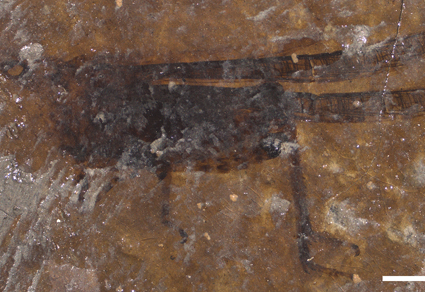
Paleogene insects in China are well documented from Eocene Fushun amber. In contrast, Paleogene insects preserved in sedimentary rock are poorly recorded, although they appear to represent a potentially rich resource, as evidenced by specimens from Eocene deposits in Tibet and the Paleocene Buxin Formation in Guangdong. Here, we report two new localities in southern Henan Province, central China. Relatively abundant insect fossils have been recovered from the middle–upper Eocene Hetaoyuan Formation near Tanghe City. In addition, both insect and plant fossils have recently been collected from the middle–upper Eocene Wulidun Formation near Tongbai County. These new discoveries highlight the significant potential of Eocene insect fossil resources in China.
References
- Cai, C.Y., Huang, D.Y., Wu, F.X., Zhao, M. & Wang, N. (2019) Tertiary water striders (Hemiptera, Gerromorpha, Gerridae) from the central Tibetan Plateau and their palaeobiogeographic implications. Journal of Asian Earth Sciences, 175, 121–127. https://doi.org/10.1016/j.jseaes.2019.03.020
- Dong, Y.L., Zhu, X.M., Geng, X.J., Luo, J.Q, Liu, G.L. & Jiang, Q. (2014) Provenance analysis of the Paleogene Hetaoyuan Formation in southeastern Biyang Sag of Nanxiang Basin, Henan Province. Journal of Palaeogeography, 16 (1), 115–124. [In Chinese] http://doi.org/10.7605/gdlxb.2014.01.011
- Heads, S.W., Thomas, M.J., Hedlund, T.J. & Wang, Y. (2023) A new fossil katydid of the genus Arethaea Stål (Orthoptera: Tettigoniidae) with exceptionally preserved internal organs from the Eocene Green River Formation of Colorado. Palaeoentomology, 6 (3), 268–277. https://doi.org/10.11646/palaeoentomology.6.3.10
- Henan Provincial Bureau of Geology and Mineral Resources. (1997) Lithologic stratigraphy of Hebei Province. China University of Geosciences Press, Beijing. 299 pp. [In Chinese]
- Hong, Y.C. (1985) Fossil insects, scorpionids and araneids in the diatoms of Shanwang. Geological Publishing House, Beijing, 80 pp. [In Chinese]
- Hong, Y.C. (2002a) Amber insects of China. Beijing Science and Technology Press, Beijing, 653 pp. [In Chinese]
- Hong, Y.C. (2002b) Atlas of amber insects of China. Henan Scientific and Technological Publishing House, Zhengzhou, 394 pp. [In Chinese]
- Huang, D.Y., Lian, X.N., Corentin, J., Gao, J. & Nel, A. (2022) First green lacewing (Insecta: Neuroptera: Chrysopidae) from the Palaeocene Sanshui basin of Guangdong, South China. Historical Biology, 34 (4), 704–712. https://doi.org/10.1080/08912963.2021.1943381
- Huang, D.Y., Lian, X.N., Fu, Y.Z. & Nel, A. (2022) The first Chinese representative of the Cenozoic hawker dragonfly Oligoaeschna (Odonata: Aeshnidae) from the Eocene of North Tibet. Historical Biology, 35, 997–1001. https://doi.org/10.1080/08912963.2022.2071713
- Luo, L.H, Yu, X.F., Huang, L.L, Azar, D. & Huang, D.Y. (2025) Eocene amber from the Huangxian Basin of Longkou, eastern China. Palaeoentomology, 8 (6), 251–260. https://doi.org/10.11646/palaeoentomology.8.6.5
- Peyrot, C., Ngô-muller, V. & Nel, A. (2023) New Baltic amber Rhagionidae (Insecta, Diptera). Palaeoentomology, 6 (6), 639–650. https://doi.org/10.11646/palaeoentomology.6.6.6
- Wang, B., Rust, J., Engel, M.S., Szwedo, J., Dutta, S., Nel, A., Fan, Y., Meng, F., Shi, G., Jarzembowski, E.A., Wappler, T., Stebner, F., Fang, Y., Mao, L., Zheng, D. & Zhang, H. (2014) A diverse paleobiota in early Eocene Fushun amber from China. Current Biology, 24 (14), 1606–1610. https://doi.org/10.1016/j.cub.2014.05.048
- Wang, B., Shi, G., Xu, C., Spicer, R.A., Perrichot, V., Schmidt, A.R., Feldberg, Heinrichs, J., Chéyn, C., Pang, H., Liu, X.Y., Gao, T.P., Wang, Z.X., Ślipiński, A., Solórzano-kraemer, M.M., Head, S.W., Thomas, M.J., Sadowski, E., Szwedo, J., Azar, D., Nel, A., Liu, Y., Chen, J., Zhang, Q., Zhang, Q.Q., Luo, C.H., Yu, T.T., Zheng, D.R., Zhang, H.C. & Engel, M.S. (2021) The mid-Miocene Zhangpu biota reveals an outstandingly rich rainforest biome in East Asia. Science Advances, 7 (18), eabg0625. http://doi.org/10.1126/sciadv.abg0625
- Wang, Y.F., Wang, S.M. & Feng, F. (1990) Lacustrine cryptoalgal laminate and its environmental significance, Eogene Hetaoyuan Formation, Biyang Depression. Acta Sedimentologica Sinica, 8 (4), 49–58. [In Chinese]
- Wang, Z.X., Wu, X.T., Yin, S.X., Dong, C. & Liu, W.Q. (2023) First fossil record of Trichosteleum (Bryophyta: Sematophyllaceae) from mid Miocene Zhangpu amber in Asia. Palaeoentomology, 6 (5), 482–495. https://doi.org/10.11646/palaeoentomology.6.5.7
- Xia, G.Q., Zheng, D.R., Krieg-Jacquier, R., Fan, Q.S., Chen, Y. & Nel, A. (2022) The oldest-known Lestidae (Odonata) from the late Eocene of Tibet: palaeoclimatic implications. Geological Magazine, 159, 511–518. https://doi.org/10.1017/S0016756821001102
- Xu, X.T., Szwedo, J., Huang, D.Y., Deng, W.Y.D., Obroślak, M., Wu, F.X. & Su, T. (2021) A new genus of spittlebugs (Hemiptera, Cercopidae) from the Eocene of central Tibetan Plateau. Insects, 12, 1043. https://doi.org/10.3390/insects12111043
- Zhang, Z.J., Wang, X., Liu, Z. & Zhang X.Q. (2022) A brief report on the Palaeocene insects from the Sanshui Basin of Guangdong, South China. Palaeoentomology, 5 (2), 167–172. https://doi.org/10.11646/palaeoentomology.5.2.10
- Zhao, P.F., Yan, Y.X. & Yang, X.H. (2012) Provenance and distribution pattern of the sandbody of Eocene Hetaoyuan Formation in Wuyang Depression. Marine Geology & Quaternary Geology, 32 (3), 37–44. [In Chinese] http://doi.org/10.3724/SP.J.1140.2012.03037
- Zhou, Z.Q., Dong, Q.S., Hou, G.F., Xu, S.C. & Miao, C.S. (2006) The forming environment and sedimentary evolution of the oil shale intergrowthing with salt alkali mine. Journal of Jilin University (Earth Science Edition), 36 (6), 1001–1005. [In Chinese]