

Abstract
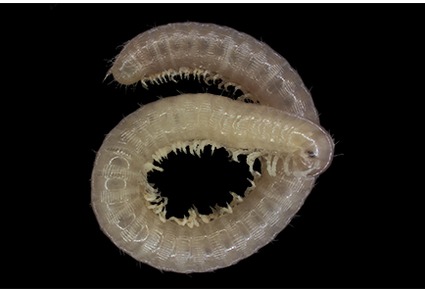
The Caucasian endemic genus Armeniophyllum Lohmander, 1932 is revised on the basis of abundant material from Armenia, Azerbaijan, and Georgia. A redescription of the type and so far only species, Armeniophyllum dissectum (Lohmander, 1932), is provided including drawings, SEM micrographs and micro-CT of both gonopod and external morphological structures. In addition, a new, second species of the genus—A. pollex sp. nov.—is described from the Georgian part of Lesser Caucasus using the same methodology, with designation of a male and a female cybertype based on micro-CT imaging. The first genetic sequences of the genus were obtained from a near-topotypic specimen of A. dissectum. They were subsequently used for building a phylogenetic reconstruction according to which Armeniophyllum appears as sister group to the tribe Leucogeorgiini. The distribution patterns of the two species and the possible systematic position of the genus within Julidae are briefly discussed.
References
- Antić, D.Ž. & Reip, H.S. (2020) The millipede genus Leucogeorgia Verhoeff, 1930 in the Caucasus, with descriptions of eleven new species, erection of a new monotypic genus and notes on the tribe Leucogeorgiini (Diplopoda: Julida: Julidae). European Journal of Taxonomy, 713, 1–106. https://doi.org/10.5852/ejt.2020.713
- Attems, C.G. (1894) Vorläufige Mitteilung über die Copulationsfüße der Iuliden. Zoologischer Anzeiger, 17 (458), 356–359.
- Blower, J.G. & Rolfe, S.W. (1956) Metaiulus pratensis, gen. et sp. nov., and Leptoiulus kervillei (Brolemann) from Britain. Annals and Magazine of Natural History, 12 (9), 513–520. https://doi.org/10.1080/00222935608655848
- Brandt, J.F. (1833) Tentaminum quorundam monographicorum Insecta Myriapoda Chilognathi Latreillii spectantium prodromus. Bulletin de la Societé Impériale des Naturalistes de Moscou, 6, 194–209.
- Cognato, A.I. & Vogler, A.P. (2001) Exploring Data Interaction and Nucleotide Alignment in a Multiple Gene Analysis of Ips (Coleoptera: Scolytinae). Systematic Biology, 50 (6), 758–780. https://doi.org/10.1080/106351501753462803
- Enghoff, H. (1996) The penis as a phylogenetic character in the millipede family Julidae. In: Geoffroy, J.J., Mauriès, J.-P. & Nguyen Duy-Jacquemin, M. (Eds.), Acta Myriapodologica. Mémoires du Museum National d1397969521Histoire Naturelle, 169, 313–326.
- Enghoff, H., Petersen, G. & Seberg, O. (2011) Phylogenetic relationships in the millipede family Julidae. Cladistics, 27, 1–11. https://doi.org/10.1111/j.1096-0031.2011.00360.x
- Enghoff, H., Petersen, G. & Seberg, O. (2013) The aberrant millipede genus Pteridoiulus and its position in a revised molecular phylogeny of the family Julidae (Diplopoda: Julida). Invertebrate Systematics, 27, 515–529. https://doi.org/10.1071/IS13016
- Evsyukov, A., Golovatch, S. & Reip, H.S. (2018) The millipede genus Julus Linnaeus, 1758 in the Caucasus (Diplopoda: Julida: Julidae). Zootaxa, 4461 (1), 90–117. https://doi.org/10.11646/zootaxa.4461.1.7
- Evsyukov, A., Golovatch, S., Reip, H. & VandenSpiegel, D. (2020) The millipede tribe Leptoiulini in the Caucasus, with notes on its generic classification (Diplopoda: Julida: Julidae). Zootaxa, 4778 (2), 237–280. https://doi.org/10.11646/zootaxa.4778.2.2
- Evsyukov, A.P., Golovatch, S.I. & Antić, D.Ž. (2021) The millipede genera Amblyiulus Silvestri, 1896 and Syrioiulus Verhoeff, 1914 in the Caucasus, with notes on their distributions (Diplopoda, Julida, Julidae). ZooKeys, 1048, 109–143. https://doi.org/10.3897/zookeys.1048.68454
- Evsyukov, A.P., Vagalinski, B., Zabiyaka, I.Y. & Sadyrin, E.V. (2022) A new millipede genus and species of the tribe Pachyiulini from the Caucasus (Diplopoda, Julida, Julidae). ZooKeys, 1097, 47–63. https://doi.org/10.3897/zookeys.1097.81792
- Gervais, P. (1844) Études sur les Myriapodes. Annales des Sciences naturelles, Série 3, 2, 51–80.
- Golovatch, S.I. (1977) [New or poorly known Julida (Diplopoda) millipedes from the Sataplia State Nature Reserve (SSR Georgia)]. Byulleten1397969521 Moskovskogo obshchestva ispytatelei prirody, otdel biologicheskii, 82 (4), 46–51. [in Russian, English summary] https://doi.org/10.55959/msu0027-1403-bb-2023-128
- Guindon, S., Dufayard, J.-F., Lefort, V., Anisimova, M., Hordijk, W. & Gascuel, O. (2010) New Algorithms and Methods to Estimate Maximum-Likelihood Phylogenies: Assessing the Performance of PhyML 3.0. Systematic Biology, 59 (3), 307–321. https://doi.org/10.1093/sysbio/syq010
- Gulička, J. (1967) Neue und interessante Diplopoden aus Bulgarien. Annotationes zoologicae et botanicae, 39, 1–5.
- Hoffman, R.L. (1980) Classification of the Diplopoda. Museum d'Histoire Naturelle, Genève, 237 pp.
- Kalyaanamoorthy, S., Minh, B.Q., Wong, T.K.F., Von Haeseler, A. & Jermiin, L.S. (2017) ModelFinder: fast model selection for accurate phylogenetic estimates. Nature Methods, 14 (6), 587–589. https://doi.org/10.1038/nmeth.4285
- Kutty, S.N., Bernasconi, M.V., Šifner, F. & Meier, R. (2007) Sensitivity analysis, molecular systematics and natural history evolution of Scathophagidae (Diptera: Cyclorrhapha: Calyptratae). Cladistics, 23 (1), 64–83. https://doi.org/10.1111/j.1096-0031.2006.00131.x
- Leach, W.E. (1814) Myriapoda. In: Brewster (Ed.), The Edinburgh Encyclopaedia, Vol. 7, 386–387.
- Lignau, N.G. (1903) Die Myriopoden am Kaukasischen Schwarzmeerufer. Memoires de la Societe des naturalistes de la Nouvell-Russie, 25, 126–148.
- Lignau, N. (1915) Vielfüssler aus Abchasien. Annuaire du Musée Zoologique de l1397969521Académie Impériale des Sciences de Petrograd [Ezhegodnik zoologicheskogo muzeya Imperatorskoy akademii nauk. Petrograd], 19, 349–401.
- Lohmander, H. (1932) Neue transkaukasische Diplopoden. 4. Aufsatz über Diplopoden aus der Sowjet- Union. Zoologischer Anzeiger, 98 (7–8), 171–182.
- Lohmander, H. (1936) Über die Diplopoden des Kaukasusgebietes. Göteborgs Kungliga Vetenskaps- och Vitterhets-Samhälles handlingar, 5 (Följden), Series B, 5 (1), 1–196.
- Makarov S.E., Bodner M., Reineke D., Vujisić Lj.V., Todosijević M.M., Antić D.Ž., Vagalinski B., Lučić L.R., Mitić B.M., Mitov P., Anđelković B.D., Pavković Lučić S., Vajs V., Tomić V.T. & Raspotnig G. (2017) Chemical ecology of cave-dwelling millipedes: defensive secretions of the Typhloiulini (Diplopoda, Julida, Julidae). Journal of Chemical Ecology, 43 (4), 317–326. https://doi.org/10.1007/s10886-017-0832-1
- Metscher, B.D. (2009) MicroCT for comparative morphology: Simple staining methods allow high-contrast 3D imaging of diverse non-mineralized animal tissues. BMC Physiology, 9 (1), e11. https://doi.org/10.1186/1472-6793-9-11
- Metscher, B.D. (2011) X-ray microtomographic imaging of intact vertebrate embryos. Cold Spring Harbor Protocols, 2011 (12), 1462–1471. https://doi.org/10.1101/pdb.prot067033
- Minh, B.Q., Nguyen, M.A.T. & Von Haeseler, A. (2013) Ultrafast Approximation for Phylogenetic Bootstrap. Molecular Biology and Evolution, 30 (5), 1188–1195. https://doi.org/10.1093/molbev/mst024
- Muraji, M. & Tachikawa, S. (2000) Phylogenetic analysis of water striders (Hemiptera: Gerroidea) based on partial sequences of mitochondrial and nuclear ribosomal RNA genes. Entomological Science, 3 (4), 615–626.
- Nguyen, L.-T., Schmidt, H.A., Von Haeseler, A. & Minh, B.Q. (2015) IQ-TREE: A Fast and Effective Stochastic Algorithm for Estimating Maximum-Likelihood Phylogenies. Molecular Biology and Evolution, 32 (1), 268–274. https://doi.org/10.1093/molbev/msu300
- O'Leary, M.A. & Kaufman, S. (2026) MorphoBank 4.0: Web application for morphological phylogenetics and taxonomy. Available from: https://www.morphobank.org
- Pocock, R.I. (1895) Report upon the Chilopoda and Diplopoda obtained by P. W. Bassett-Smith, Esq., Surgeon R.N., and J. J. Walker, Esq., R.N., during the cruise in the Chinese Seas of H.M.S.'Penguin', Commander W. U. Moore commanding. Annals and Magazine of Natural History, 6 (15), 346–368. https://doi.org/10.1080/00222939508677895
- Read, H.J. (1992) The genus Cylindroiulus Verhoeff, 1894 in the faunas of the Caucasus, Turkey and Iran (Myriapoda: Diplopoda: Julidae). Senckenbergiana biologica, 72 (4/6), 373–433.
- Simon, C., Frati, F., Beckenbach, A., Crespi, B., Liu, H. & Flook, P. (1994) Evolution, Weighting, and Phylogenetic Utility of Mitochondrial Gene Sequences and a Compilation of Conserved Polymerase Chain Reaction Primers. Annals of the Entomological Society of America, 87 (6), 651–701. https://doi.org/10.1093/aesa/87.6.651
- Tamura, K., Stecher, G. & Kumar, S. (2021) MEGA11: Molecular Evolutionary Genetics Analysis Version 11. Molecular Biology and Evolution, 38 (7), 3022–3027. https://doi.org/10.1093/molbev/msab120
- Vagalinski, B. & Golovatch, S.I. (2021) The millipede tribe Brachyiulini in the Caucasus (Diplopoda, Julida, Julidae). ZooKeys, 1058, 1–127. https://doi.org/10.3897/zookeys.1058.68628
- Vagalinski, B., Evsyukov, A.P., Chumachenko, Y.A. & Zabiyaka, I.Y. (2023) A review of the genus Micropachyiulus Verhoeff, 1899 and description of the related Armeniopachyiulus gen. nov. (Diplopoda: Julida: Julidae: Pachyiulini). Zootaxa, 5239 (2), 221–246. https://doi.org/10.11646/zootaxa.5239.2.3
- Vagalinski, B., Evsyukov, A., Borissov, S., Hristov, G., Zabiyaka, I. & Sadyrin, E. (2023) The enigmatic Caucasian genus Armeniophyllum Lohmander revisited, with the description of a second species and notes on the systematic position of the genus (Diplopoda: Julida: Julidae). In: Martínez-Torres, D. & Bueno-Villegas, J. (Eds.), 19th International Congress of Myriapodology. Program and Abstracts. pp. 101.
- Verhoeff, C.W. (1895) Aphorismen zur Biologie, Morphologie, Gattungs- und Art-Systematik der Diplopoden. Zoologischer Anzeiger, 18 (476–478), 203–244.
- Verhoeff, C.W. (1901) Beiträge zur Kenntniss paläarktischer Myriopoden. XVII. Aufsatz: Diplopoden aus dem Mittelmeergebiet. Archiv für Naturgeschichte, 67 (1), 79–102.
- Verhoeff, K.W. (1913) Zwei neue Iuliden-Gattungen aus den Tauern (Über Diplopoden, 67. Aufsatz). Zoologischer Anzeiger, 43 (4), 145–161.
- Xia, X. (2018) DAMBE7: New and Improved Tools for Data Analysis in Molecular Biology and Evolution. Molecular Biology and Evolution, 35 (6), 1550–1552. https://doi.org/10.1093/molbev/msy073