

Abstract
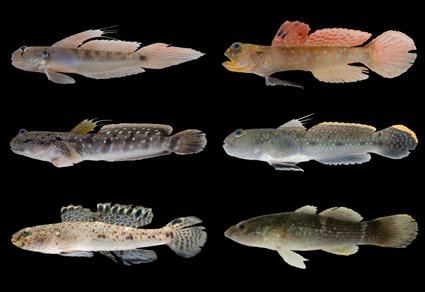
Penang Island in northern Peninsular Malaysia is undergoing rapid coastal development that threatens its intertidal and mangrove ecosystems, which support a high diversity of gobioid fishes. The only previous checklist for the island was published by Cantor in 1849, leaving major gaps in contemporary knowledge. This study provides an updated and comprehensive inventory of gobioid species based on surveys conducted across mudflats, brackish rivers, mangrove forests, and coastal marine habitats. A total of 46 species were collected, including 20 species newly recorded from Penang Island. Nine of these represent first records for Peninsular Malaysia and belong to the genera Eleotris, Butis, Favonigobius, Gobiopterus, Cryptocentrus, Mugilogobius, and Pseudogobius. When combined with Cantor’s account and other previous records, the gobioid fauna list of Penang Island comprises 61 species. This study highlights the substantial and previously undocumented diversity of gobioid fishes in the region and provides a foundation for future taxonomic, ecological, and conservation assessments.
References
- Abdullah, M.C. & Khaironizam, M.Z. (2019) Length-weight relationships, condition factor and growth parameters of Periophthalmus chrysospilos (Bleeker, 1852) (Gobiiformes: Gobiidae) in Bayan Bay, Penang Island, Malaysia. Sains Malaysiana, 48 (2), 271–279. https://doi.org/10.17576/jsm-2019-4802-02
- Abdul Mubin, N.A.A.A., Salleh, S., Nadthikphorn, K., Mohammad, M., Michelle, G.G.J., Cheah, W. & Hossain, S. (2025) Photoacclimation of corals in the turbid waters of the Northern Malacca Straits, Malaysia. Environmental Science and Pollution Research, 32, 11228–11241. https://doi.org/10.1007/s11356-025-36360-0
- Akihito, P. & Meguro, K. (1975) Description of a new gobiid fish, Glossogobius aureus, with notes on related species of the genus. Japanese Journal of Ichthyology, 22 (3), 127–142. https://doi.org/10.11369/JJI1950.22.127
- Albotoush, R. & Shau-Hwai, A.T. (2019) Evaluating integrated coastal zone management efforts in Penang Malaysia. Ocean & Coastal Management, 181, 104899. https://doi.org/10.1016/j.ocecoaman.2019.104899
- Alfred, E.R. (1963) Notes on a collection of freshwater fishes from Penang. Bulletin of National Singapore Museum, 32, 143–153.
- Amir Shah, R.M.S. (1993) A Preliminary Study of Freshwater Fishes of Penang Island. BSc Thesis (Unpublished). Universiti Sains Malaysia, Penang, 58 pp.
- Amirrudin, A., Yusri, Y., Siti Azizah, M.N. & Ali, A. (2002) The fish fauna of Pantai Acheh Forest Reserve in Penang Island, Malaysia. Jurnal Biosains, 13 (2), 35–41.
- Amirrudin, A., Yusuf, Y., Nor, S.A.M. & Ali, A. (2004) The fish fauna of Pantai Acheh Forest Reserve in Penang, Malaysia: species composition, local distribution and inter-site relationship. Jurnal Biosains, 15 (1), 49–61.
- Barrow, C.J. (1981) Urbanisation and growth: Growth and environmental degradation in Penang (Georgetown). Third World Planning Review, 3 (4), 407. https://doi.org/10.3828/twpr.3.4.ll152140257v1107
- Cantor, T.E. (1849) Catalogue of Malayan fishes. Journal of the Asiatic Society of Bengal, 18 (2), 983–1443.
- Chee, S.Y., Othman, A.G., Sim, Y.K., Adam, A.N.M. & Firth, L.B. (2017) Land reclamation and artificial islands: Walking the tightrope between development and conservation. Global Ecology and Conservation, 12, 80–95. https://doi.org/10.1016/j.gecco.2017.08.005
- Erftemeijer, P. & Lewis, R.R. (1999) Planting mangroves on intertidal mudflats: habitat restoration or habitat conversion? In: Proceedings of the ECOTONE VIII Seminar Enhancing Coastal Ecosystems Restoration for the 21st Century. UNESCO, Bangkok, pp. 156–165. https://doi.org/10.13140/RG.2.1.3872.0728
- Fricke, R., Eschmeyer, W.N. & van der Laan, R. (Eds.) (2025) Eschmeyer’s Catalog of Fishes: Genera, Species, References. California Academy of Sciences. Available from: https://researcharchive.calacademy.org/research/ichthyology/catalog/fishcatmain.asp (accessed 29 May 2025)
- Günther, A. (1861) Catalogue of the Fishes in the British Museum. Catalogue of the Acanthopterygian Fishes in the Collection of the British Museum. Gobiidae, Discoboli, Pediculati, Blenniidae, Labyrinthici, Mugilidae, Notacanthi. Vol. 3. British Museum, London, 586 pp.
- Gierl, C., Dohrmann, M., Keith, P., Humphreys, W., Esmaeili, H.R., Vukić, J., Šanda, R. & Reichenbacher, B. (2022) An integrative phylogenetic approach for inferring relationships of fossil gobioids (Teleostei: Gobiiformes). Public Library of Science One, 17 (7), e0271121. https://doi.org/10.1371/journal.pone.0271121
- Herler, J., Munday, P.L. & Hernaman, V. (2011) Gobies on coral reefs. In: Patzner, R.A., Van Tassell, J.L., Kovačić, M. & Kapoor, B.G. (Eds.), The Biology of Gobies. Science Publishers, Jersey, British Isles, New Hampshire, pp. 493–529. https://doi.org/10.1201/b11397-27
- Huang, S.P., Shao, K.T., Huang, H.M., Chong, V.C. & Chen, I. (2013a) An annotated checklist of gobioid fishes from the mangrove estuary of Matang, Malay Peninsula, with comments on a new Pseudogobius (Teleostei: Gobiidae) species. Journal of Marine Science and Technology, 21 (7), 106–116. https://doi.org/10.6119/JMST-013-1219-8
- Huang, S.P., Chen, I. & Shao, K.T. (2013b) The molecular phylogeny of genus Hemigobius (teleostei: gobiidae), with the confirmation of validity of Hemigobius crassa (Herre, 1945) Journal of Marine Science and Technology, 21 (7), 12. https://doi.org/10.6119/JMST-013-1219-13
- Hubbs, C.L., Lagler, K.F. & Smith, G.R. (2004) Fishes of the Great Lakes Region. Revised Edition. University of Michigan Press, Ann Arbor, Michigan, 332 pp. https://doi.org/10.3998/mpub.17658
- Huie, J.M., Thacker, C.E. & Tornabene, L. (2020) Co-evolution of cleaning and feeding morphology in western Atlantic and eastern Pacific gobies. Evolution, 74 (2), 419–433. https://doi.org/10.1111/evo.13904
- Jaafar, Z. & Parenti, L.R. (2016) Systematics of the mudskipper genus Oxuderces Eydoux & Souleyet 1848 (Teleostei: Gobiidae: Oxudercinae) with resurrection from synonymy of O. nexipinnis (Cantor 1849). Zoological Journal of the Linnean Society, 180 (1), 195–215. https://doi.org/10.1111/zoj.12482
- Jaafar, Z., Perrig, M. & Chou, L.M. (2009) Periophthalmus variabilis (Teleostei: Gobiidae: Oxudercinae), a valid species of mudskipper, and a re-diagnosis of Periophthalmus novemradiatus. Zoological Science, 26 (4), 309–314. https://doi.org/10.2108/zsj.26.309
- Jamaluddin, J.A.F., Lavoué, S., Alshari, N.F.M.A.H., Ghazali, S.Z., Ahmad, A., Tan, A., Leng, C.L. & Sam, N. (2022) Reassessing fish diversity of Penang Island’s freshwaters (northwest Peninsular Malaysia) through a molecular approach raises questions on its conservation status. Biodiversity and Conservation, 31, 1551–1576. https://doi.org/10.1007/s10531-022-02409-6
- Keith, P. & Mennesson, M.I. (2023) Review of Butis (Teleostei: Butidae) from Indo-Pacific islands with description of three new species. Cybium: International Journal of Ichthyology, 47 (4), 431–466. https://doi.org/10.26028/cybium/2023-034
- Kobayashi, H. & Sato, M. (2024) The genus Ophiocara (Teleostei: Butidae) in Japan, with descriptions of two new species. Ichthyology Research, 71 (1), 119–153. https://doi.org/10.1007/s10228-023-00919-z
- Kottelat, M. (2013) The fishes of the inland waters of Southeast Asia: a catalogue and core bibliography of the fishes known to occur in freshwaters, mangroves and estuaries. The Raffles Bulletin of Zoology, 27, 1–663.
- Larson, H.K. (2001) A revision of the gobiid fish genus Mugilogobius (Teleostei: Gobioidei), and its systematic placement. Records of the Western Australian Museum Supplements, 62 (1), 1–233. https://doi.org/10.18195/issn.0313-122x.62.2001.001-233
- Larson, H.K. & Murdy, E.O. (2001) Suborder Gobioidei. In: Carpenter, K.E. & Niem, V.H. (Eds.), Species Identification Guide For Fishery Purposes. The Living Marine Resources of the Western Central Pacific. Bony Fishes Part 4. (Labridae to Latimeriidae), Estuarine Crocodiles, Sea Turtles, Sea Snakes and Marine Mammals. Vol. 6. FAO, Rome, pp. 3574–3609.
- Larson, H.K. & Miller, P.J. (1986) Two new species of Silhouettea (Gobiidae) from northern Australia. Japanese Journal of Ichthyology, 33 (2), 110–118. https://doi.org/10.11369/jji1950.33.110
- Larson, H.K. (2009) Review of the gobiid fish genera Eugnathogobius and Pseudogobiopsis (Gobioidei: Gobiidae: Gobionellinae), with descriptions of three new species. The Raffles Bulletin of Zoology, 57 (1), 127–181.
- Larson, H.K., Jaafar, Z. & Lim, K.K. (2016) An updated checklist of the gobioid fishes of Singapore. Raffles Bulletin of Zoology, 34, 744–757.
- Larson, H.K. & Jaafar, Z. (2022) A review of the gobiid fish genus Aulopareia (Gobiidae: Gobiinae) with description of a new species from Kuwait and discussion of the status of Gobius cyanomos Bleeker. Zootaxa, 5155 (4), 493–516. https://doi.org/10.11646/zootaxa.5155.4.2
- Miller, P.J. (1988) New species of Corcyrogobius, Thorogobius and Wheelerigobius from West Africa (Teleostei: Gobiidae). Journal of Natural History, 22 (5), 1245–1262. https://doi.org/10.1080/00222938800770761
- Murdy, E.O. (1989) A taxonomic revision and cladistic analysis of the oxudercine gobies (Gobiidae: Oxudercinae). Records of the Australian Museum, Supplement 11, 1–93. https://doi.org/10.3853/j.0812-7387.11.1989.93
- Murdy, E.O. & Shibukawa, K. (2002) A redescription of the gobiid fish genus Pseudotrypauchen (Gobiidae: Amblyopinae) and its significance in amblyopine phylogeny. Marine and Freshwater Research, 53, 253–258. https://doi.org/10.1071/MF01116
- Murdy, E.O. (2006) A revision of the gobiid fish genus Trypauchen (Gobiidae: Amblyopinae). Zootaxa, 1343 (1), 55–68. https://doi.org/10.11646/zootaxa.1343.1.3
- Parenti, P. (2021) A checklist of the gobioid fishes of the world (Percomorpha: Gobiiformes). Iranian Journal of Ichthyology, 8 (1), 1–480. https://doi.org/10.22034/iji.v8i0.556
- Polgar, G. & Crosa, G. (2009) Multivariate characterization of the habitats of seven species of Malayan mudskippers (Gobiidae: Oxudercinae). Marine Biology, 156 (7), 1475–1486. https://doi.org/10.1007/s00227-009-1187-0
- Sanzo, L. (1911) Distribuzione delle papille cutanee (organi ciatiforme) e suo valore sistematico nei Gobi. Mitteilungen aus der Zoologischen Station zu Neapel, 20, 249–328.
- Švolíková, K.S., Števove, B., Križek, P., Mosna, P., Fedorčák, J. & Kováč, V. (2021) Tubenose goby—a discreet invader from the past goes higher. Journal of Vertebrate Biology, 70 (4), 21042. https://doi.org/10.25225/jvb.21042
- Takita, T., Agusnimar & Ali, A.B. (1999) Distribution and habitat requirements of oxudercine gobies (Gobiidae: Oxudercinae) along the Straits of Malacca. Ichthyological Research, 46, 131–138. https://doi.org/10.1007/BF02675431
- Ve, N.D., Fan, D., Van Vuong, B. & Lan, T.D. (2021) Sediment budget and morphological change in the Red River Delta under increasing human interferences. Marine Geology, 431, 106379. https://doi.org/10.1016/j.margeo.2020.106379
- Vidthayanon, C. & Premcharoen, S. (2002) The status of estuarine fish diversity in Thailand. Marine and Freshwater Research, 5 (2), 471–478. https://doi.org/10.1071/MF01122
- Wongrat, P. & Miller, P.J. (1991) The innervation of head neuromast rows in eleotridine gobies (Teleostei: Gobioidei). Journal of Zoology, 225 (1), 27–42. https://doi.org/10.1111/j.1469-7998.1991.tb03799.x
- Yasin, Z., Hwai, A.T.S., Lee, A., Pinn, W.S. & Razali, N. (2023) Protecting Penang’s Marine Biodiversity: Establishing the Middle Bank Marine Sanctuary (MBMS). Penang Institute, George Town, Penang, 37 pp. Available from: https://penanginstitute.org/wp-content/uploads/2023/08/Monograph_MBMS.pdf (accessed 21 March 2025)
- Zainal Abidin, D.H., Lavoué, S., Alshari, N.F.M.A.H., Nor, S.A.M., Rahim, M.A. & Akib, N.A.M. (2021) Ichthyofauna of Sungai Merbok Mangrove Forest Reserve, northwest Peninsular Malaysia, and its adjacent marine waters. Check List, 17 (2), 601–631. https://doi.org/10.15560/17.2.601