

Abstract
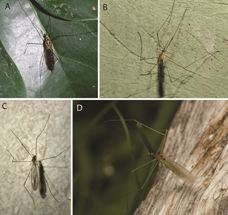
Craneflies in Brazil comprise 649 species. Despite this, they remain under-sampled and understudied, with a distribution record currently lacking. This study analyzed 1,626 individual records, revealing the species’ distribution. A total of 75.2% of these species are found exclusively in Brazil. Internal distribution patterns expose biases and gaps within the biomes, with the Atlantic Forest hosting 426 species, while the Caatinga and Pantanal each have just one. Only 2.8% of species are found across more than one biome, and the Atlantic Forest records the highest level of endemism (97%). Despite the diversity, craneflies require more attention, further research, improved databases, and better integration to achieve a comprehensive understanding of this diverse group.
References
Alexander C. P. 1945. Records and descriptions of Brazilian Tipulidae (Dipt.). Part XII–XIII. Revista de Entomologia 16: 210–243.
Amorim D. S., Brown B. V., Boscolo D., Ale-Rocha R., Alvarez-Garcia D. M., Balbi M. I. P. A., Barbosa A. M., Capellari R. S., de Carvalho C. J. B., Couri M. S., Dios R. V. P., Fachin D. A., Ferro G. B., Flores H. F., Frare L. M., Gudin F. M., Hauser M., Lamas C. J. E., Lindsay K. G., Marinho M. A. T., Marques D. W. A., Marshall S. A., Mello-Patiu C. A., Menezes M. A., Morales M. N., Nihei S. S., Oliveira S. S., Pirani G., Ribeiro G. C., Riccardi P. R., Santis M. D., Santos D., Santos J. R., Silva V. C., Wood E. M. & Rafael J. A. 2022. Vertical stratification of insect abundance and species richness in an Amazonian tropical forest. Scientific Reports 12: 1734. https://doi.org/10.1038/s41598-022-05677-y
Amorim D. S., Santos C. M. D., Krell F.-T., Dubois A., Nihei S. S., Oliveira O. M. P., Pont A., Song H., Verdade V. K., Fachin D. A., Klassa B., Lamas C. J. E., Oliveira S. S., Carvalho C. J. B., Mello-Patiu C. A., Hajdu E., Couri M. S., Silva V. C., Capellari R. S., Falaschi R. L., Feitosa R. M., Prendini L., Pombal J. P. J., Fernandez F., Rocha R. M., Lattke J. E., Caramaschi U., Duarte M., Marques A. C., Reis R. E., Kurina O., Takiya D. M., Tavares M., Fernandes D. S, Franco F. L., Cuezzo F., Paulson D., Guenard B., Schlick-Steiner B. C., Arthofer W., Steiner F. M., Fisher B. L., Johnson R. A., Delsinne T. D., Donoso D. A., Mulieri P. R., Patitucci L. D., Carpenter J. M., Herman L. & Grimaldi D. 2016. Timeless standards for species delimitation. Zootaxa 4137(1): 121–128. https://doi.org/10.11646/zootaxa.4137.1.9
Andrew I. G. 2000. Species diversity in the Trimicra pilipes complex (Diptera: Tipulidae). New Zealand Entomologist 23: 3–8. https://doi.org/10.1080/00779962.2000.9722059
Brown B. V. & Hartop E. A. 2017. Big data from tiny flies: patterns revealed from over 42,000 phorid flies (Insecta: Diptera: Phoridae) collected over one year in Los Angeles, California, USA. Urban Ecosystems 20: 521–534. https://doi.org/10.1007/s11252-016-0612-7
Brown B. V., Borkent A., Adler P. H., Amorim D. de S., Barber K., Bickel D., Boucher S., Brooks S. E., Burger J., Burington Z. L., Capellari R. S., Costa D. N. R., Cumming J. M., Curler G., Dick C. W., Epler J. H., Fisher E., Gaimari S.D., Gelhaus J., Grimaldi D. A., Hash J., Hauser M., Hippa H., Ibáñez-Bernal S., Jaschhof M., Kameneva E. P., Kerr P. H., Korneyev V., Korytkowski C. A., Kung G., Kvifte G. M., Lonsdale O., Marshall S. A., Mathis W., Michelsen V., Naglis S., Norrbom A. L., Paiero S., Pape T., Pereira-Colavite A., Pollet M., Rochefort S., Rung A., Runyon J. B., Savage J., Silva V. C., Sinclair B. J., Skevington J. H., Stireman J. O. III, Swann J., Thompson F. C., Vilkamaa P., Wheeler T., Whitworth T., Wong M., Wood D. M., Woodley N. E., Yau T., Zavortink T. J. & Zumbado M. A. 2018. Comprehensive inventory of true flies (Diptera) at a tropical site. Communications Biology 1: 21. https://doi.org/10.1038/s42003-018-0022-x
Carvalho C. J. B. & Couri M. S. 2023. Muscidae in Catálogo Taxonômico da Fauna do Brasil. PNUD. Available from: http://fauna.jbrj.gov.br/fauna/faunadobrasil/1506 (Accessed 12 Dec. 2018)
Carvalho M. R., Bockmann F. A., Amorim D. S., de Vivo M., Toledo-Piza M., Menezes N. A., Figueiredo J. L., Castro R. M. C., Gill A. C., McEachran J. D., Compagno L. J. V.. Schelly R. C., Britz R., Lundberg J. G., Vari R. P. & Nelson G. 2005. Revisiting the taxonomic impediment. Science 307(5708): 353–355. https://doi.org/10.1126/science.307.5708.353b
Cayuela L., Golicher D. J., Newton A. C., Kolb M., de Albuquerque F. S., Arets E. J. M. M., Alkemade J. R. M. & Pérez A. M. 2009. Species Distribution Modeling in the Tropics: Problems, Potentialities, and the Role of Biological Data for Effective Species Conservation. Tropical Conservation Science 2(3): 319–352. https://doi.org/10.1177/194008290900200304
Condit R., Ashton P. S., Baker P., Bunyavejchewin S., Gunatilleke S., Gunatilleke N., Hubbell S. P., Foster S. P. R. B., Itoh A., LaFrankie J. V., Lee H. S., Losos E., Manokaran N., Sukumar R. & Yamakura T. 2000. Spatial patterns in the distribution of tropical tree species. Science 288(5470): 1414–1418. https://doi.org/10.1126/science.288.5470.1414
Costa L. P., Leite Y. L. R., Fonseca G. A. B. & Fonseca M. T. 2000. Biogeography of South American Forest Mammals: Endemism and Diversity in the Atlantic Forest. Biotropica 32(4b): 872–881. https://doi.org/10.1111/j.1744-7429.2000.tb00625.x
Costello M. J., May R. M. & Stork N. E. 2013. Can we name Earth’s species before they go extinct?. Science 339(6118): 413–416. https://doi.org/10.1126/science.1230318
da Silva M. D. & Fearnside P. M. 2022. Brazil: environment under attack. Environmental Conservation 49(4): 203–205. https://doi.org/10.1017/S0376892922000364
de Araujo M. L. & Ramos F. N. 2021. Targeting the survey efforts: gaps and biases in epiphyte sampling at a biodiversity hotspot. Forest Ecology and Management 498: 119544. https://doi.org/10.1016/j.foreco.2021.119544
de Jong H., Oosterbroek P., Gelhaus J., Reusch H. & Young C. 2008. Global diversity of craneflies (Insecta, Diptera: Tipuloidea or Tipulidae sensu lato) in freshwater. Freshwater Animal Diversity Assessment 595: 457–467. https://doi.org/10.1007/s10750-007-9131-0
de Souza M. M., Teófilo-Guedes G. S., Milani L. R., de Souza A. S. B. & Gomes P. P. 2020. Social wasps (Vespidae: Polistinae) from the Brazilian Atlantic Forest. Sociobiology 67(1): 1–12. https://doi.org/10.13102/sociobiology.v67i1.4597
Evenhuis N. L. 2007. Helping solve the “other” taxonomic impediment: completing the eight steps to total enlightenment and taxonomic nirvana. Zootaxa 1407: 3–12. https://doi.org/10.11646/zootaxa.1407.1.2
Hijmans R. J., Guarino L., Bussink C., Mathur P., Cruz M., Barrentes I., Rojas E. 2004. Diva-GIS. Available from: http://www.diva-gis.org/ (Accessed 10 Dec. 2021)
Hortal J., de Bello F., Diniz-Filho J. A. F., Lewinsohn T. M., Lobo J. M. & Ladle R. J. 2015. Seven shortfalls that beset large-scale knowledge of biodiversity. Annual Review of Ecology, Evolution, and Systematics 46: 523–549. https://doi.org/10.1146/annurev-ecolsys-112414-054400
Hutchings R. W., Hutchings R. S. G. & Sallum M. A. M. 2023. Culicidae in Catálogo Taxonômico da Fauna do Brasil. PNUD. Available from: http://fauna.jbrj.gov.br/fauna/faunadobrasil/798. (Accessed 12 Dec. 2023)
Jenkins C. N., Alves M. A. S., Uezu A. & Vale M. M. 2015. Patterns of vertebrate diversity and protection in Brazil. PLoS ONE 10: e0145064. https://doi.org/10.1371/journal.pone.0145064
Juen L., Batista J. D., Barbosa J. E. L., Cabette H. S. R., de Marco P. & Pompeu P. S. 2016. Aquatic insect assemblages as indicators of ecological conditions in Brazilian savanna streams. Ecological Indicators 61: 532–541. https://doi.org/10.1016/j.ecolind.2015.09.042
Krell F. T. & Wheeler Q. D. 2014. Specimen collection: Plan for the future. Science 344(6186): 815–816. https://doi.org/10.1126/science.344.6186.815
Lamas C. J. E., Fachin D. A., Falaschi R. L., Alcantara D. M. C. D., Ale-Rocha R., Amorim D. D. S., Araújo M. X., Ascendino S., Baldassio L., Bellodi C. F., Bravo F., Calhau J., Capellari R. S., Carmo-Neto A. M., Cegolin B. M., Couri M. S., de Carvalho C. J. B., Dios R. V. P., Falcon A. V. G., Fusari L. M., Garcia C. A., Gil-Azevedo L. H., Gomes M. M., Graciolli G., Gudin F. M., Henriques A. L., Krolow T. K., Mendes L. L., Limeira-de-Oliveira F., Maia V. C., Marinoni L., Mello R. L., Mello-Patiu C. A., Morales M. N., Oliveira S. S., Patiu C., Proença B., Pujol-Luz C. V. A., Pujol-Luz J. R., Rafael J. A., Riccardi P. R., Rodrigues J. P. V., Roque F. O., Sallum M. A. M., Santis M. D., Santos C. M. D., Santos J. R., Savaris M., Shimabukuro P. H. F., Silva V. C., Schelesky-Prado D. C., Silva-Neto A. M., Camargo A., Sousa V. R., Urso-Guimarães M. V., Wiedenbrug S., Yamaguchi C. & Nihei S. S. 2023. The SISBIOTA-Diptera Brazilian network: a long-term survey of diptera from unexplored Brazilian Western Arc of Amazon, Cerrado, and pantanal. Revista Brasileira de Entomologia 67(4): e20230051.
Laurance W. F., Camargo J. L. C., Fearnside P. M., Lovejoy T. E., Williamson G. B., Mesquita R. C. G., Meyer C. F. J., Bobrowiec P. E. D. & Laurance S. G. 2018. An Amazonian rainforest and its fragments as a laboratory of global change. Biological Reviews 93(1): 223–247. https://doi.org/10.1111/brv.12343
Lewinsohn T. M. & Prado P. I. 2005. How many species are there in Brazil? Conservation Biology 19(3): 619–624. https://doi.org/10.1111/j.1523-1739.2005.00680.x
Mares M. A., Braun J. K. & Barquez R. M. 1989. Fossorial mammals of the central Andes: adaptations to nocturnal burrowing in desert habitats. In: Vertebrate ecology in the northern neotropics. (J. F. Eisenberg, editor). Washington D.C., Smithsonian Institution Press, 537–548 pp.
Margules C. R. & Pressey R. L. 2000. Systematic conservation planning. Nature 405: 243–253. https://doi.org/10.1038/35012251
Morrone J. J. 2014. Biogeographical regionalisation of the Neotropical region. Zootaxa 3782(1): 1–110. https://doi.org/10.11646/zootaxa.3782.1.1
Nascimento D. O., Santos R. S., Sousa D. S., Queiroz M. A. & Sousa W. O. 2021. Ichthyofauna as a bioindicator of the environmental integrity of streams in eastern Amazon. Environmental Monitoring and Assessment 193: 747. https://doi.org/10.1007/s10661-021-09589-1
Neves F. S., Braga R. F., Fernandes G. W. & França F. 2010. Insects as indicators of ecosystem restoration: a model of succession in Caatinga dry forest. Restoration Ecology 18(1): 111–117. https://doi.org/10.1111/j.1526-100X.2008.00438.x
Oosterbroek P. 2025. Catalogue of the Craneflies of the World (CCW). Available from: https://ccw.naturalis.nl/index.php. (Accessed 2 Feb. 2025)
Oosterbroek P. & Theowald B. 1980a. Index to the writings of Charles P. Alexander mainly on Tipuloidea. Part I. a. List of publications 1-1000, b. Geographical index, c. Index to keys. Verslagen en Technische Gegevens, Instituut voor Taxonomische Zoologie (Zoologisch Museum), Universiteit van Amsterdam 21: 1–131.
Oosterbroek P. & Theowald B. 1980b. Index to the writings of Charles P. Alexander mainly on Tipuloidea. Part II. Index to genera and subgenera. Verslagen en Technische Gegevens, Instituut voor Taxonomische Zoologie (Zoologisch Museum) 25: 1–108.
Pimm S. L., Jenkins C. N., Abell R., Brooks T. M., Gittleman J. L., Joppa L. N., Raven P. H., Roberts C. M. & Sexton J. O. 2014. The biodiversity of species and their rates of extinction, distribution, and protection. Science 344(6187): 1246752. https://doi.org/10.1126/science.1246752
Pires A. P. F., Costa H., Bini L. M., Siqueira T., Trivinho-Strixino S. & Fernandes R. 2014. Thresholds of taxonomic sufficiency in stream chironomid assemblages under multiple anthropogenic pressures. Ecological Indicators 45: 209–214. https://doi.org/10.1016/j.ecolind.2014.04.032
Pohl D., Flechtner A. & Beck L. A. 2016. Sampling methods for biodiversity studies: a comparison of light-trapping and pitfall trapping in tropical and temperate forests. Biodiversity and Ecology 6: 45–56. https://doi.org/10.7809/b-e.00283
Qin S., Buchadas A., Meyfroidt P., He Y., Ghoddousi A., Pötzschner F., Baumann M. & Kuemmerle T. 2024. Links between deforestation, conservation areas and conservation funding in major deforestation regions of South America. People and Nature 6(5): 1789–1803. https://doi.org/10.1002/pan3.10718
Rafael J.A., Amorim D. S., Carmo D. D. D., Cordeiro D. P., Freitas-Silva R. A. P. & Fachin D. A. 2024. The Diptera (Insecta) fauna of Brazil: an online system and two centuries of taxonomic progress. Zoologia (Curitiba) 41: e23096. https://doi.org/10.1590/S1984-4689.v41.e23096
Rafael J. A., Limeira-de-Oliveira F., Hutchings R. W., Miranda G. F. G., Silva Neto A. M., Somavilla A., Camargo A., Asenjo A., Pinto Â. P., Bello A. M., Dalmorra C., Mello-Patiu C. A., Carvalho C. J. B., Takiya D. M., Parizotto D. R., Marques D. W. A., Cavalheiro D. O., Mendes D. M. M., Zeppelini D., Carneiro E., Lima É. F. B., Lima E. C. A., Godoi F. S. P., Pessoa F. A. C., Vaz-de-Mello F. Z., Sosa-Duque F. J., Flores H. F., Fernandes I. O., Silva-Júnior J. O., Gomes L. R. P., Monné M. L., Castro M. C. M., Silva M. P. G., Couri M. S., Gottschalk M. S., Soares M. M. M., Monné M. A., Rafael M. S., Casagrande M. M., Mielke O. H. H., Grossi P. C., Pinto P. J. C., Bartholomay P. R., Sobral R., Heleodoro R. A., Machado R. J. P., Corrêa R. C., Hutchings R. S. G., Ale-Rocha R., Santos S. D., Lima S. P., Mahlmann T., Silva V. C. & Fernandes D. R. R. 2020. Insect (Hexapoda) diversity in the oceanic archipelago of Fernando de Noronha, Brazil: updated taxonomic checklist and new records. Revista Brasileira de Entomologia 64(3): e20200052. https://doi.org/10.1590/1806-9665-RBENT-2020-0052
Ramalho M., Souza J. L. P., Calvão L. B., Clemente M. A., Silva L. F. & Oliveira M. L. 2017. Spatial distribution and diversity of stingless bees (Hymenoptera: Apidae: Meliponini) in Amazonian forest fragments. Sociobiology 64(3): 290–297. https://doi.org/10.13102/sociobiology.v64i3.1742
Reis R. E., Kullander S. O. & Ferraris Jr. C. J. 2003. Checklist of the freshwater fishes of South and Central America. Porto Alegre, EDIPUCRS, 729 pp.
Ribeiro G. C., Lamas C. J. E. & Silva de Azevedo L. N. 2007. A catalogue of the types of Limoniidae and Tipulidae (Diptera: Tipulomorpha) in the collection of the Museu de Zoologia da Universidade de Sao Paulo, Brazil. Zootaxa 1497: 1–22.
Riccardi P. R., Fachin D. A., Ale-Rocha R., Amaral E. M., Amorim D. de S., Gil-Azevedo L. H., Capellari R. S., Carmo D. D. D. do ., Carvalho C. J. B. de ., Ferro G. B., Flores H. F., Gomes L. R. P., Gottschalk M. S., Lamas C. J. E., Lampert S., Marinho M. A. T., Marques D. W. A., Mello R. L., Mello-Patiu C. A. de., Menezes M. A., Morales M. N., Oliveira S. S., Pereira T. P. L., Pereira-Colavite A., Pirani G., Rafael J. A., Santos J. R., Savaris M., Schelesky-Prado D. C., Silva V. C., Sousa V. R., Urso-Guimarães M. V., Vargas L. V., Yamaguchi C. & Falaschi R. L. 2022. Checklist of the dipterofauna (Insecta) from Roraima, Brazil, with special reference to the Brazilian Ecological Station of Maracá. Papéis Avulsos De Zoologia 62: e202262014. https://doi.org/10.11606/1807-0205/2022.62.01
Rocha R. M., Leite F. P. P., Migotto A. E., Young P. S. & Nassar A. M. 2011. Biodiversidade marinha. In: Biodiversidade marinha da Baía de Ilha Grande (Rocha R. M.; Marques A. C. & Pereira R. C., editors). São Paulo, Instituto Virtual da Biodiversidade – IVB, 17–26 pp.
Santos D., Sampronha S. & Santos C. M. D. 2017. Advances on dipterology in the 21 st century and extinction rates. Papéis Avulsos de Zoologia 57(33): 433–444.
Santos D. C., Bastos R. P., Bitar Y. O. C. & Silva H. L. R. 2014. Amphibians as bioindicators in forest fragments in southeastern Brazil. Journal of Herpetology 48(4): 504–510. https://doi.org/10.1670/13-122
Silva J. M. C., Rylands A. B. & Fonseca G. A. B. 2005. The fate of the Amazonian areas of endemism. Conservation Biology 19(3): 689–694. https://doi.org/10.1111/j.1523-1739.2005.00705.x
Silva V. C. & Wendt L. D. 2023. Stratiomyidae in Catálogo Taxonômico da Fauna do Brasil. PNUD. Available from: http://fauna.jbrj.gov.br/fauna/faunadobrasil/1533 (Accessed 12 Dec. 2023)
Stropp J., Umbelino B., Correia R. A., Campos‐Silva J. V., Ladle R. J. & Malhado A. C. M. 2020. The ghosts of forests past and future: deforestation and botanical sampling in the Brazilian Amazon. Ecography 43(7): 979–989.
Thomas W. L. Jr. 1990. Amazonia at the crossroads: the challenge of sustainable development. New York, Institute of Latin American Studies, University of Columbia Press, 415 pp.
Wilson E. O. 1987. The little things that run the world (the importance and conservation of invertebrates). Conservation Biology 1(4): 344–346. https://doi.org/10.1111/j.1523-1739.1987.tb00055.x
Young P. S. 2005. Biodiversidade e conservação marinha no Brasil. Megadiversidade 1(1): 31–37.