

Abstract
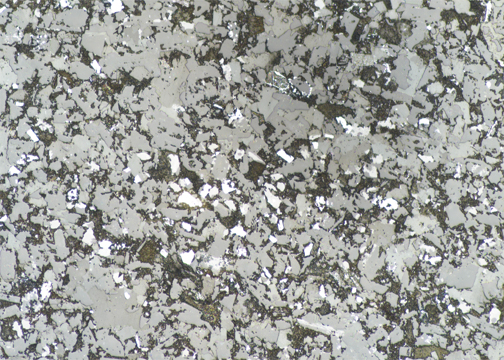
To evaluate whether palaeolatitude influenced spatial variations in biotic recovery following the end-Permian mass extinction, we conducted a palaeomagnetic comparison between two representative regions, South China and Oman, where contrasting recovery patterns have been documented. Detailed palaeomagnetic investigations were carried out in the Lower Triassic Yelang and Maocaopu formations in the Zunyi area of the South China Block. Characteristic remanent magnetizations (ChRMs) were isolated from 31 specimens across five sites (Ds = 224.4°, Is = -10.5°, α95 = 6.7°). Rock magnetic measurements and scanning electron microscopy (SEM) observations indicate that the principal magnetic carriers are detrital magnetite and hematite. Together with the positive fold test, the ChRMs are interpreted as primary remanent magnetization acquired during deposition. This interpretation is further supported by the consistency of our results with other Early Triassic palaeomagnetic data from South China. The primary remanent magnetization directions yield a palaeolatitude of approximately 5°N for the Zunyi region in South China during the Early Triassic, placing it within the low-latitude Tethyan realm and comparable to coeval palaeolatitudes of Oman. These similar low-latitude settings suggest that latitudinal position alone is unlikely to have controlled the differences in biotic recovery between the two regions. Instead, other palaeogeographic factors, including the position relative to Pangaea and the consequent variations in ocean circulation, oxygenation state, and nutrient supply, may have played a more significant role in the spatial heterogeneity of Early Triassic ecosystem recovery.
References
- Angiolini, L., Balini, M., Garzanti, E., Nicora, A., Tintori, A., Crasquin, S. & Muttoni, G. (2003) Permian climatic and paleogeographic changes in northern Gondwana: The Khuff Formation of interior Oman. Palaeogeography, Palaeoclimatology, Palaeoecology, 191, 269–300. https://doi.org/10.1016/S0031-0182(02)00668-5
- Chen, J., Tong, J., Song, H., Luo, M., Huang, Y. & Xiang, Y. (2015) Recovery pattern of brachiopods after the Permian–Triassic crisis in South China. Palaeogeography, Palaeoclimatology, Palaeoecology, 433, 91–105. https://doi.org/10.1016/j.palaeo.2015.05.020
- Dai, X., Davies, J.H.F.L., Yuan, Z., Brayard, A., Ovtcharova, M., Xu, G., Liu, X., Smith, C.P.A., Schweitzer, C.E. & Song, H. (2023) A Mesozoic fossil lagerstätte from 250.8 million years ago shows a modern-type marine ecosystem. Science, 379, 567–572. https://doi.org/10.1126/science.adf1622
- Enkin, R.J. (2003) The direction-correction tilt test: An all-purpose tilt/fold test for paleomagnetic studies. Earth and Planetary Science Letters, 212, 151–166. https://doi.org/10.1016/S0012-821X(03)00238-3
- Erwin, D.H. (1998) The end and the beginning: Recoveries from mass extinctions. Trends in Ecology & Evolution, 13, 344–349.
- Fan, J.X., Shen, S.Z., Erwin, D.H., Sadler, P.M., MacLeod, N., Cheng, Q.M., Hou, X.D. & Zhao, Y.Y. (2020) A high-resolution summary of Cambrian to Early Triassic marine invertebrate biodiversity. Science, 367, 272–277. https://doi.org/10.1126/science.aax4953
- Feng, Z., Bai, Z., Wang, S., Li, Y. & Wang, G. (1997) Lithofacies palaeogeography of the Early and Middle Triassic of South China. Chinese Journal of Geology, 32, 212–220.
- Grasby, S.E., Sanei, H., Beauchamp, B. & Chen, Z. (2013) Mercury deposition through the Permo-Triassic biotic crisis. Chemical Geology, 351, 209–216. https://doi.org/10.1016/j.chemgeo.2013.05.022
- Hallam, A. (1991) Why was there a delayed radiation after the end-Palaeozoic extinctions? Historical Biology, 5, 257–262. https://doi.org/10.1080/10292389109380405
- He, W.H., Zhang, K.X., Wu, S.B., Feng, Q.L., Yang, T.L., Yue, M.L. & Chen, B. (2015) End-Permian faunas from the Yangtze Basin and its marginal region: Implications for palaeogeographical and tectonic environments. Earth Science, 40, 275–289.
- Heslop, D. & Roberts, A.P. (2020) Uncertainty propagation in hierarchical paleomagnetic reconstructions. Journal of Geophysical Research: Solid Earth, 125, e2020JB019488. https://doi.org/10.1029/2020JB019488
- Kiehl, J.T. & Shields, C.A. (2005) Climate simulation of the latest Permian: Implications for mass extinction. Geology, 33, 757–760. https://doi.org/10.1130/G21654.1
- Kruiver, P.P., Dekkers, M.J. & Heslop, D. (2001) Quantification of magnetic coercivity components by the analysis of acquisition curves of isothermal remanent magnetisation. Earth and Planetary Science Letters, 189, 269–276. https://doi.org/10.1016/S0012-821X(01)00367-3
- Lowrie, W. (1990) Identification of ferromagnetic minerals in a rock by coercivity and unblocking temperature properties. Geophysical Research Letters, 17, 159–162. https://doi.org/10.1029/GL017i002p00159
- Luo, G., Kump, L.R., Wang, Y., Tong, J., Arthur, M.A., Yang, H. & Xie, S. (2010) Isotopic evidence for an anomalously low oceanic sulfate concentration following end-Permian mass extinction. Earth and Planetary Science Letters, 300, 101–111. https://doi.org/10.1016/j.epsl.2010.09.041
- Mannion, P.D., Upchurch, P., Benson, R.B.J. & Goswami, A. (2014) The latitudinal biodiversity gradient through deep time. Trends in Ecology & Evolution, 29, 42–50. https://doi.org/10.1016/j.tree.2013.09.012
- Meng, Q.R. & Zhang, G.W. (1999) Timing of collision of the North and South China blocks: Controversy and reconciliation. Geology, 27, 123–126. https://doi.org/10.1130/0091-7613(1999)027<0123:TOCOTN>2.3.CO;2
- Payne, J.L., Lehrmann, D.J., Wei, J., Orchard, M.J., Schrag, D.P. & Knoll, A.H. (2004) Large perturbations of the carbon cycle during recovery from the end-Permian extinction. Science, 305, 506–509. https://doi.org/10.1126/science.1097023
- Pianka, E.R. (1966) Latitudinal gradients in species diversity: A review of concepts. The American Naturalist, 100, 33–46. https://doi.org/10.1086/282398
- Ragon, C., Vérard, C., Kasparian, J. & Brunetti, M. (2024) Alternative climatic steady states near the Permian–Triassic boundary. Scientific Reports, 14, 26136. https://doi.org/10.1038/s41598-024-76432-8
- Raup, D.M. (1979) Size of the Permo-Triassic bottleneck and its evolutionary implications. Science, 206, 217–218. https://doi.org/10.1126/science.206.4415.217
- Roberts, A.J., Rucinski, M., Kear, B.P., Hammer, O., Engelschiøn, V.S., Scharling, T.H. & Hurum, J.H. (2025) Earliest oceanic tetrapod ecosystem reveals rapid complexification of Triassic marine communities. Science, 390, 722–727. https://doi.org/10.1126/science.adx7390
- Shu, L., Yao, J., Wang, B., Faure, M., Charvet, J., & Chen, Y. (2021) Neoproterozoic plate tectonic process and Phanerozoic geodynamic evolution of the South China Block. Earth-Science Reviews, 216, 103596. https://doi.org/10.1016/j.earscirev.2021.103596
- Song, H., Tong, J., Algeo, T.J., Song, H., Qiu, H., Zhu, Y. & Kump, L.R. (2014) Early Triassic seawater sulfate drawdown. Geochimica et Cosmochimica Acta, 128, 95–113. https://doi.org/10.1016/j.gca.2013.12.009
- Song, H., Wignall, P.B. & Dunhill, A.M. (2018) Decoupled taxonomic and ecological recoveries from the Permo-Triassic extinction. Science Advances, 4, eaat5091. https://doi.org/10.1126/sciadv.aat5091
- Song, H., Wignall, P.B., Tong, J. & Yin, H. (2013) Two pulses of extinction during the Permian–Triassic crisis. Nature Geoscience, 6, 52–56. https://doi.org/10.1038/ngeo1649
- Song, H., Wignall, P.B., Tong, J., Bond, D.P.G., Song, H., Lai, X. & Chen, Y. (2012) Geochemical evidence from bio-apatite for multiple oceanic anoxic events during the Permian–Triassic transition and their link with end-Permian extinction and recovery. Earth and Planetary Science Letters, 353–354, 12–21. https://doi.org/10.1016/j.epsl.2012.07.005
- Tauxe, L. (2010) Essentials of Paleomagnetism. University of California Press, Berkeley, California, 512 pp. https://doi.org/10.1525/9780520946378
- Tong, J., Zhang, J., & Chen, Z.Q. (2007a) Early Triassic carbon isotope excursions from South China: Proxies for devastation and restoration of marine ecosystems following the end-Permian mass extinction. Geological Journal, 42, 371–389. https://doi.org/10.1002/gj.1084
- Tong, J., Zhang, S., Zuo, J. & Xiong, X. (2007b) Events during Early Triassic recovery from the end-Permian extinction. Global and Planetary Change, 55, 66–80. https://doi.org/10.1016/j.gloplacha.2006.06.015
- Torcq, F., Besse, J., Vaslet, D., Marcoux, J., Ricou, L.E., Halawani, M. & Basahel, M. (1997) Paleomagnetic results from Saudi Arabia and the Permo-Triassic Pangea configuration. Earth and Planetary Science Letters, 148, 553–567. https://doi.org/10.1016/S0012-821X(97)00047-2
- Twitchett, R.J., Krystyn, L., Baud, A., Wheeley, J.R. & Richoz, S. (2004) Rapid marine recovery after the end-Permian mass-extinction event in the absence of marine anoxia. Geology, 32, 805–808. https://doi.org/10.1130/G20585.1
- Wignall, P.B. & Hallam, A. (1993) Griesbachian (earliest Triassic) palaeoenvironmental changes in the Salt Range, Pakistan and southeast China and their bearing on the Permo-Triassic mass extinction. Palaeogeography, Palaeoclimatology, Palaeoecology, 102, 215–237. https://doi.org/10.1016/0031-0182(93)90068-T
- Willig, M.R., Kaufman, D.M. & Stevens, R.D. (2003) Latitudinal gradients of biodiversity: Pattern, process, scale, and synthesis. Annual Review of Ecology, Evolution, and Systematics, 34, 273–309. https://doi.org/10.1146/annurev.ecolsys.34.012103.144032
- Xiong, X.Q., Huang, Y.F. & Tong, J.N. (2010) Triassic bivalve biostratigraphic sequence in Zunyi, Guizhou Province. Geological Science and Technology Information, 29, 7–14.
- Yin, H., Jiang, H., Xia, W., Feng, Q., Zhang, N. & Shen, J. (2014) The end-Permian regression in South China and its implication for mass extinction. Earth-Science Reviews, 137, 19–33. https://doi.org/10.1016/j.earscirev.2013.06.003
- Yin, H.F. (1999) South China defined as part of the Tethyan archipelagic ocean system. Earth Science, 24, 1–12.
- Yin, H.F., Zhang, K.X., Tong, J.N., Yang, Z.Y. & Wu, S.B. (2001) The global stratotype section and point (GSSP) of the Permian–Triassic boundary. Episodes, 24, 102–114. https://doi.org/10.18814/epiiugs/2001/v24i2/004
- Zhang, Y., Jia, D., Shen, L., Yin, H.W., Chen, Z.X., Li, H.B., Li, Z.G., & Sun, C. (2015) Provenance of detrital zircons in the Late Triassic Sichuan foreland Basin: Constraints on the evolution of the Qinling Orogen and Longmen Shan thrust-fold belt in central China. International Geology Review, 57, 1806–1824. https://doi.org/10.1080/00206814.2015.1027967