
Abstract
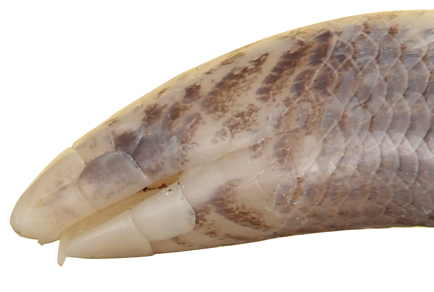
The present work reports on the discovery of a new sand swimming lizard (Scincidae: Scincinae) in Madagascar. This limbless and eyeless skink was found during fieldwork in the northern part of the “great white sand belt”, a series of patchy white sand areas encircling the island’s western sedimentary basins. The new taxon shows a distinctive combination of derived morphological traits (miniaturized, limbless, elongated body, with absent or scale-covered eyes and ear openings, and a reduced head scale pattern) reminiscent of other Malagasy fossorial skinks adapted to sandy habitats (e.g. Voeltzkowia, Grandidierina and some Paracontias). Phylogenetic analyses based on two datasets (multilocus DNA from Sanger sequencing and genome-wide DNA sequences derived from double-digest Restriction Associated DNA [ddRAD]) reveal a highly divergent phylogenetic position of this taxon and, given its distinct morphology, justify its description as a new species in a new genus, Zig zag gen. nov. & sp. nov. This marks the first genuine field discovery of a new genus of Scincidae in Madagascar since the 19th century, i.e., the discovery of a formerly unknown deep clade rather than an identification (and split) from an already recognized genus. Our results also shed light on the ancient evolutionary history of this taxon and its sister clade, Paracontias. Finally, the present work explores the factors that may explain why ecosystems characterized by white sand substrates, an ecosystem often neglected in biodiversity research, but present in various regions of the globe (e.g., Florida sand scrub, South American WS savannah, Indonesian Keranga) have seemingly so frequently promoted the convergent evolution of fossorial squamates.
References
- Andreone, F. & Greer, A.E. (2002) Malagasy scincid lizards: descriptions of nine new species, with notes on the morphology, reproduction and taxonomy of some previously described species (Reptilia, Squamata: Scincidae). Journal of Zoology, 258, 139–181. https://doi.org/10.1017/S0952836902001280
- Angel, F. (1924) Sur une forme nouvelle de lézard, en provenance de Madagascar, appartenant au genre Grandidierina (Famille des Scincidés). Bulletin du Muséum d’histoire naturelle (Paris), 30, 450–452.
- Angel, F. (1930) Diagnoses d’espèces nouvelles de lézards de Madagascar, appartenant au genre Scelotes. Bulletin du Muséum d’histoire naturelle (Paris), (2) 2 (5), 506–509.
- Angel, F. (1934) Lézards nouveaux de Madagascar appartenant au genre Scelotes. Bulletin de la Société Zoologique de France, 41, 294–296.
- Angel, F. (1949) Description d’une espèce nouvelle du genre Paracontias. Mémoires de L’Institut Scientifique de Madagascar, 3 (1), 81–87.
- Antonelli, A., Smith, R.J., Perrigo, A.L., Crottini, A., Hackel, J., Testo, W., Farooq, H., Torres Jiménez, M.F., Andela, N., Andermann, T., Andriamanohera, A.M., Andriambololonera, S., Bachman, S.P., Bacon, C.D., Baker, W.J., Belluardo, F., Birkinshaw, C., Borrell, J.S., Cable, S., Canales, N.A., Carrillo, J.D., Clegg, R., Clubbe, C., Cooke, R.S.C., Damasco, G., Dhanda, S., Edler, D., Faurby, S., de Lima Ferreira, P., Fisher, B.L., Forest, F., Gardiner, L.M., Goodman, S.M., Grace, O.M., Guedes, T.B., Henniges, M.C., Hill, R., Lehmann, C.E.R., Lowry, P.P., Marline, L., Matos-Maraví, P., Moat, J., Neves, B., Nogueira, M.G.C., Onstein, R.E., Papadopulos, A.S.T., Perez-Escobar, O.A., Phelps, L.N., Phillipson, P.B., Pironon, S., Przelomska, N.A.S., Rabarimanarivo, M., Rabehevitra, D., Raharimampionona, J., Rajaonah, M.T., Rajaonary, F., Rajaovelona, L.R., Rakotoarinivo, M., Rakotoarisoa, A.A., Rakotoarisoa, S.E., Rakotomalala, H.N., Rakotonasolo, F., Ralaiveloarisoa, B.A., Ramirez-Herranz, M., Randriamamonjy, J.E.N., Randriamboavonjy, T., Randrianasolo, V., Rasolohery, A., Ratsifandrihamanana, A.N., Ravololomanana, N., Razafiniary, V., Razanajatovo, H., Razanatsoa, E., Rivers, M., Sayol, F., Silvestro, D., Vorontsova, M.S., Walker, K., Walker, B.E., Wilkin, P., Williams, J. & Ziegler, T., Zizka, A. & Ralimanana, H. (2022) Madagascar’s extraordinary biodiversity: Evolution, distribution, and use. Science, 378 (6623), eabf0869. https://doi.org/10.1126/science.abf0869
- Bauer, A.M., Schneider, V., Lamb, T., Moler, P.E. & Babb, R.D. (1999) New data on the South African acontine skink Typhlosaurus lomii Haacke 1986 (Squamata: Scincidae). African Journal of Herpetology, 48 (1–2), 21–25. https://doi.org/10.1080/21564574.1999.9651067
- Beaulieu, J.M. & O’Meara, B.C. (2016) Detecting hidden diversification shifts in models of trait-dependent speciation and extinction. Systematic Biology, 65, 583–601. https://doi.org/10.1093/sysbio/syw022
- Belluardo, F., Muñoz-Pajares, A.J., Miralles, A., Silvestro, D., Cocca, W., Ratsoavina, F.M., Villa, A., Roberts, S.H., Mezzasalma, M., Zizka, A., Antonelli, A. & Crottini, A. (2023) Slow and steady wins the race: Diversification rate is independent from body size and lifestyle in Malagasy skinks (Squamata: Scincidae: Scincinae). Molecular Phylogenetics and Evolution, 178, 107635. https://doi.org/10.1016/j.ympev.2022.107635
- Bocage, J.V.B. du (1889) Mélanges erpétologiques. I. Sur un Scincoidien nouveau de Madagascar. Jornal de sciências mathemáticas, físicas e naturais (Lisboa), 2 (2), 125–126.
- Boettger, O. (1881) Diagnoses reptilium et batrachiorum novorum ab ill. Antonio Stumpff in insula Nossi-Bé Madagascariensi lectorum. Zoologischer Anzeiger, 4 (87), 358–362.
- Boettger, O. (1882) Diagnoses Reptilium et Batrachiorum Novorum insulae Nossi Be Madagascariensis. Zoologischer Anzeiger, 5, 478–480.
- Boettger, O. (1893) Katalog der Reptilien-Sammlung im Museum der Senckenbergischen Naturforschenden Gesellschaft in Frankfurt am Main. I. Teil (Rhynchocephalen, Schildkröten, Krokodile, Eidechsen, Chamäleons). Gebrüder Knauer, Frankfurt a. M., 140 pp.
- Bouckaert, R., Vaughan, T.G., Barido-Sottani, J., Duchêne, S., Fourment, M., Gavryushkina, A., Heled, J., Jones, G., Kühnert, D., De Maio, N., Matschiner, M., Mendes, F.K., Müller, N.F., Ogilvie, H.A., Du Plessis, L., Popinga, A., Rambaut, A., Rasmussen, D., Siveroni, I., Suchard, M.A., Wu, C.H., Xie, D. & Zhang, C. (2019) BEAST 2.5: An advanced software platform for Bayesian evolutionary analysis. PLoS Computational Biology, 15, e1006650. https://doi.org/10.1371/journal.pcbi.1006650
- Boulenger, G.A. (1887) Catalogue of the lizards in the British Museum (Nat. Hist.) III. Lacertidae, Gerrhosauridae, Scincidae, Anelytropsidae, Dibamidae, Chamaeleontidae. London, 575 pp.
- Boulenger, G.A. (1888) XIII – Descriptions of new Reptiles and Batrachians from Madagascar. The Annals and Magazine of Natural History, 1 (2), 101–107. https://doi.org/10.1080/00222938809460688
- Boulenger, G.A. (1889) XXIX – Descriptions of new reptiles and batrachians from Madagascar. The Annals and Magazine of Natural History, 4 (21), 244–248. https://doi.org/10.1080/00222938909460511
- Boulenger, G.A. (1896) LXII – Descriptions of new lizards from Madagascar. The Annals and Magazine of Natural History, 17 (102), 444–449. https://doi.org/10.1080/00222939608680395
- Boumans, L., Vieites, D.R., Glaw, F. & Vences, M. (2007) Geographical patterns of deep mitochondrial differentiation in widespread Malagasy reptiles. Molecular Phylogenetics and Evolution, 45, 822–839. https://doi.org/10.1016/j.ympev.2007.05.028
- Brelsford, A., Dufresnes, C. & Perrin, N. (2016) High-density sex-specific linkage maps of a European tree frog (Hyla arborea) identify the sex chromosome without information on offspring sex. Heredity, 116 (2), 177–181. https://doi.org/10.1038/hdy.2015.83
- Brown, J.L., Sillero, N., Glaw, F., Bora, P., Vieites, D.R. & Vences, M. (2016) Spatial biodiversity patterns of Madagascar’s amphibians and reptiles. PLoS One, 11, e0144076. https://doi.org/10.1371/journal.pone.0144076
- Brygoo, E.R. (1980) Systématique des lézards scincidés de la région malgache. III. Les « Acontias » de Madagascar: Pseudoacontias Barboza du Bocage, 1889, Paracontias Mocquard, 1894, Pseudoacontias Hewitt, 1929, et Malacontias Greer, 1970. IV. Amphiglossus reticulatus (Kaudern, 1922) nov. comb., troisième espèce du genre; ses rapports avec Amphiglossus waterloti (Angel, 1920). Bulletin du Muséum national d’Histoire Naturelle, Section A, 2 (3), 905–918.
- Brygoo, E.R. (1981) Systématique des lézards scincidés de la région malgache. VI. Deux scincinés nouveaux. Bulletin du Muséum national d’Histoire naturelle, section A, 3 (1), 261–268. https://doi.org/10.5962/p.285822
- Buerki, S., Devey, D.S., Callmander, M.V., Phillipson, P.B. & Forest, F. (2013) Spatio-temporal history of the endemic genera of Madagascar. Botanical Journal of the Linnean Society, 171 (2), 304–329. https://doi.org/10.1111/boj.12008
- Burnham, K.P. & Anderson, D.R. (2002) Model Selection and Multimodel Inference: A Practical Information-Theoretic Approach, second ed. Springer, New York, 515 pp.
- Catchen, J., Hohenlohe, P.A., Bassham, S., Amores, A. & Cresko, W.A. (2013) Stacks: an analysis tool set for population genomics. Molecular Ecology, 22, 3124–3140. https://doi.org/10.1111/mec.12354
- Conroy, C.J., Papenfuss, T., Parker, J. & Hahn, N. (2009) Use of tricaine methanesulfonate (MS-222) for euthanasia of reptiles. Journal of the American Association for Laboratory Animal Science, 48, 28–32.
- Costa, E., Garcés, M., Sáez, A., Cabrera, L. & López-Blanco, M. (2011) The age of the “Grande Coupure” mammal turnover: New constraints from the Eocene–Oligocene record of the Eastern Ebro Basin (NE Spain). Palaeogeography, Palaeoclimatology, Palaeoecology, 301, 97–107. https://doi.org/10.1016/j.palaeo.2011.01.005
- Costa, F.M., Terra‐Araujo, M.H., Zartman, C.E., Cornelius, C., Carvalho, F.A., Hopkins, M.J.G., Viana, P.L., Prata, E.M.B. & Vicentini, A. (2020) Islands in a green ocean: Spatially structured endemism in Amazonian white‐sand vegetation. Biotropica, 52 (1), 34–45. https://doi.org/10.1111/btp.12732
- Crottini, A., Dordel, J., Köhler, J., Glaw, F., Schmitz, A. & Vences, M. (2009) A multilocus phylogeny of Malagasy scincid lizards elucidates the relationships of the fossorial genera Androngo and Cryptoscincus. Molecular Phylogenetics and Evolution, 53, 345–350. https://doi.org/10.1016/j.ympev.2009.05.024
- De Block, P., Rakotonasolo, F., Vrijdaghs, A. & Dessein, S. (2020) Two new species of Phialiphora (Spermacoceae, Rubiaceae) exemplify drought adaptations in western Madagascar. Plant Ecology and Evolution, 153 (2), 267–282. https://doi.org/10.5091/plecevo.2020.1675
- Duméril, A.M.C. & Bibron, G. (1839) Erpétologie Générale ou Histoire Naturelle Complète des Reptiles. Vol. 5. Roret, Fain et Thunot, Paris, 871 pp.
- Erens, J., Miralles, A., Glaw, F., Chatrou, L. & Vences, M. (2017) Extended molecular phylogenetics and revised systematics of Malagasy scincine lizards. Molecular Phylogenetics and Evolution, 107, 466–472. https://doi.org/10.1016/j.ympev.2016.12.008
- Fishman, B., Taha, H. & Akbari, H. (1994) Meso-Scale Cooling Effects of High Albedo Surfaces: Analysis of Meteorological Data from White Sands National Monument and White Sands Missile Range. Lawrence Berkeley National Laboratory. LBNL Report #: LBL-35056. Available from: https://escholarship.org/uc/item/1kh4b67k (accessed 01 October 2025) https://doi.org/10.2172/10180636
- Flores, B.M. & Holmgren, M. (2021) White-Sand savannas expand at the core of the Amazon after forest wildfires. Ecosystems, 24 (7), 1624–1637. https://doi.org/10.1007/s10021-021-00607-x
- Glaw, F. & Vences, M. (2007) A Field Guide to the Amphibians and Reptiles of Madagascar. Third edition. Vences and Glaw Verlag, Cologne, 496 pp.
- Godfrey, L.R., Samonds, K.E., Baldwin, J.W., Sutherland, M.R., Kamilar, J.M. & Allfisher, K.L. (2020) Mid-Cenozoic climate change, extinction, and faunal turnover in Madagascar, and their bearing on the evolution of lemurs. BMC Evolutionary Biology, 20 (97). https://doi.org/10.1186/s12862-020-01628-1
- Grandidier, A. (1867) Liste des reptiles nouveaux découverts, en 1866, sur la côte sud-ouest de Madagascar. Revue et Magazine de Zoologie (Paris), Série 2, 19, 232–234.
- Grandidier, A. (1869) Descriptions de quelques animaux nouveaux découverts, pendant l’année 1869, sur la côte ouest de Madagascar. Revue et Magazine de Zooogie (Paris), Série 2, 21, 337–342.
- Grandidier, A. (1872) Descriptions de quelques Reptiles nouveaux découverts à Madagascar en 1870. Annales des Sciences Naturelles, Zoologie et Paléontologie, 15 (5), 6–11.
- Guindon, S., Dufayard, J.-F., Lefort, V., Anisimova, M., Hordijk, W. & Gascuel, O. (2010) New algorithms and methods to estimate maximum-likelihood phylogenies: Assessing the performance of PhyML 3.0. Systematic Biology, 59 (3), 307–321. https://doi.org/10.1093/sysbio/syq010
- Günther, A. (1877) Descriptions of some new species of reptiles from Madagascar. The Annals and Magazine of Natural History, 19 (112), 313–317. https://doi.org/10.1080/00222937708682150
- Hanes, M.M., Shell, S., Shimu, T., Crist, C. & Machkour-M’Rabet, S. (2022) The phylogeographic history of Megistostegium (Malvaceae) in the dry, spiny thickets of southwestern Madagascar using RAD-seq data and ecological niche modeling. Ecology and Evolution, 12, e8632. https://doi.org/10.1002/ece3.8632
- Hansen, J., Sato, M., Russell, G. & Kharecha, P. (2013) Climate sensitivity, sea level and atmospheric carbon dioxide. Philosophical Transactions of the Royal Society A: Mathematical, Physical and Engineering Sciences, 371 (2001), 20120294. https://doi.org/10.1098/rsta.2012.0294
- Hays, G.C., Ashworth, J.S., Barnsley, M.J., Broderick, A.C., Emery, D.R., Godley, B.J., Henwood, A. & Jones, E.L. (2001) The importance of sand albedo for the thermal conditions on sea turtle nesting beaches. Oikos, 93, 87–94. https://doi.org/10.1034/j.1600-0706.2001.930109.x
- Henschel, J.R. & Jürgens, N. (in press) Ecology of psammophily in the Namib dunes. In: Eckhardt, F.D., Livingstone, I. & Thomas, D.S.G. (Eds.), Southern African Dunes. Springer.
- Hernández-Hernández, T., Brown, J.W., Schlumpberger, B.O., Eguiarte, L.E. & Magallón, S. (2014) Beyond aridification: multiple explanations for the elevated diversification of cacti in the New World Succulent Biome. New Phytologist, 202, 1382–1397. https://doi.org/10.1111/nph.12752
- Hoang, D.T., Chernomor, O., Von Haeseler, A., Minh, B.Q. & Vinh, L.S. (2018) UFBoot2: improving the ultrafast bootstrap approximation. Molecular Biology and Evolution, 35 (2), 518–522. https://doi.org/10.1093/molbev/msx281
- Huey, R.B., Pianka, E.R., Egan, M.E. & Coons, L.W. (1974) Ecological shifts in sympatry: Kalahari fossorial lizards (Typhlosaurus). Ecology, 55, 304–316. https://doi.org/10.2307/1935218
- Huey, R.B. & Bennett, A.F. (1987) Phylogenetic studies of coadaptation: preferred temperatures versus optimal performance temperatures of lizards. Evolution, 41 (5), 1098–1115. https://doi.org/10.1111/j.1558-5646.1987.tb05879.x
- IUCN Standards and Petitions Committee (2024) Guidelines for Using the IUCN Red List Categories and Criteria. Version 16. Prepared by the Standards and Petitions Committee. Available from: https://www.iucnredlist.org/resources/redlistguidelines (accessed 1 October 2025)
- Jocque, M., Wellens, S., Andrianarivosoa, J.D., Rakotondraparany, F., The Seing, S. & Jocqué, R. (2017) A new species of Ocyale (Araneae, Lycosidae) from Madagascar, with first observations on the biology of a representative in the genus. European Journal of Taxonomy, 355, 1–13. https://doi.org/10.5852/ejt.2017.355
- Kaffenberger, N., Wollenberg, K.C., Köhler, J., Glaw, F., Vieites, D.R. & Vences, M. (2012) Molecular phylogeny and biogeography of Malagasy frogs of the genus Gephyromantis. Molecular Phylogenetics and Evolution, 62, 555–560. https://doi.org/10.1016/j.ympev.2011.09.023
- Kalyaanamoorthy, S., Minh, B.Q., Wong, T.K., Von Haeseler, A. & Jermiin, L.S. (2017) ModelFinder: fast model selection for accurate phylogenetic estimates. Nature Methods, 14 (6), 587–589. https://doi.org/10.1038/nmeth.4285
- Katoh, K. & Standley, D.M. (2013) MAFFT Multiple Sequence Alignment Software version 7: Improvements in performance and usability. Molecular Biology and Evolution, 30, 772–780. https://doi.org/10.1093/molbev/mst010
- Kaudern, W. (1922) Sauropsiden aus Madagascar. Zoologische Jahrbücher. Abteilung für Systematik, Geographie und Biologie der Tiere, 45, 395–458. https://doi.org/10.5962/bhl.part.5180
- Kerfahi, D., Tripathi, B.M., Slik, J.W.F., Sukri, R.S., Jaafar, S., Dong, K., Ogwu, M.C., Kim, H.-K. & Adams, J.M. (2019) Soil metagenome of tropical white sand heath forests in Borneo: what functional traits are associated with an extreme environment within the tropical rainforest? Pedosphere, 29 (1), 12–23. https://doi.org/10.1016/S1002-0160(18)60054-2
- Köhler, J., Vences, M., Erbacher, M. & Glaw, F. (2010) Systematics of limbless scincid lizards from northern Madagascar: morphology, phylogenetic relationships and implications for classification (Squamata: Scincidae). Organisms Diversity and Evolution, 10, 147–159. https://doi.org/10.1007/s13127-010-0011-5
- Köhler, J., Vieites, D.R., Glaw, F., Kaffenberger, N. & Vences, M. (2009) A further new species of limbless skink, genus Paracontias, from eastern Madagascar. African Journal of Herpetology, 58, 98–105. https://doi.org/10.1080/21564574.2009.9650029
- Lanfear, R., Frandsen, P.B., Wright, A.M., Senfeld, T. & Calcott, B. (2016) PartitionFinder 2: new methods for selecting partitioned models of evolution formolecular and morphological phylogenetic analyses. Molecular Biology and Evolution, 34, 772–773. https://doi.org/10.1093/molbev/msw260
- Lauretano, V., Kennedy-Asser, A.T., Korasidis, V.A., Wallace, M.W., Valdes, P.J., Lunt, D.J., Pancost, R.D. & Naafs, B.D.A. (2021) Eocene to Oligocene terrestrial Southern Hemisphere cooling caused by declining pCO2. Nature Geoscience, 14, 659–664. https://doi.org/10.1038/s41561-021-00788-z
- Liu, Z., Pagani, M., Zinniker, D., Deconto, R., Huber, M., Brinkhuis, H., Shah, S.R., Leckie, R.M. & Pearson, A. (2009) Global Cooling During the Eocene-Oligocene Climate Transition. Science, 323, 1187–1190. https://doi.org/10.1126/science.1166368
- Lüthy, J. & Lavranos, J. (2005) Pachypodium rosulatum ssp bemarahense a new subspecies from Madagascar. Cactus and Succulent Journal, 77 (1), 38–42. https://doi.org/10.2985/0007-9367(2005)77[38:PRSBAN]2.0.CO;2
- Maddison, W.P., Midford, P.E. & Otto, S.P. (2007) Estimating a binary character’s effect on speciation and extinction. Systematic Biology, 56, 701–710. https://doi.org/10.1080/10635150701607033
- Maddison, W.P. & Maddison, D.R. (2023) Mesquite: a modular system for evolutionary analysis. Version 3.81. Available from: http://www.mesquiteproject.org (accessed 1 October 2025)
- Mahony, S., Kamei, R.G., Brown, R.M. & Chan, K.O. (2024) Unnecessary splitting of genus-level clades reduces taxonomic stability in amphibians. Vertebrate Zoology, 74, 249–277. https://doi.org/10.3897/vz.74.e114285
- Masters, J.C., Génin, F., Zhang, Y., Pellen, R., Huck, T., Mazza, P.P.A., Rabineau, M., Doucouré, M. & Aslanian, D. (2021) Biogeographic mechanisms involved in the colonization of Madagascar by African vertebrates: Rifting, rafting and runways. Journal of Biogeography, 48, 492–510. https://doi.org/10.1111/jbi.14032
- Matschiner, M. (2016) Fitchi: haplotype genealogy graphs based on the Fitch algorithm. Bioinformatics, 32 (8), 1250–1252. https://doi.org/10.1093/bioinformatics/btv717
- Mietton, M., Cordier, S., Frechen, M., Dubar, M., Beiner, M. & Andrianaivoarivony, R. (2014) New insights into the age and formation of the Ankarokaroka lavaka and its associated sandy cover (NW Madagascar, Ankarafantsika natural reserve). Earth Surface Processes and Landforms, 39, 1467–1477. https://doi.org/10.1002/esp.3536
- Minh, B.Q., Schmidt, H.A., Chernomor, O., Schrempf, D., Woodhams, M.D., Von Haeseler, A. & Lanfear, R. (2020) IQ-TREE 2: new models and efficient methods for phylogenetic inference in the genomic era. Molecular Biology and Evolution, 37 (5), 1530–1534. https://doi.org/10.1093/molbev/msaa015
- Miralles, A., Anjeriniana, M., Hipsley, C.A., Müller, J., Glaw, F. & Vences, M. (2012) Variations on a bodyplan: description of a new Malagasy “mermaid skink” with flipper-like forelimbs only (Scincidae: Sirenoscincus Sakata & Hikida, 2003). Zoosystema, 34 (4), 701–710. https://doi.org/10.5252/z2012n4a3
- Miralles, A., Hipsley, C.A., Erens, J., Gehara, M., Rakotoarison, A., Glaw, F., Müller, J. & Vences, M. (2015) Distinct patterns of desynchronized limb regression in Malagasy scincine lizards (Squamata, Scincidae). PLoS One, 10 (6), e0126074. https://doi.org/10.1371/journal.pone.0126074
- Miralles, A., Jono, T., Mori, A., Gandola, R., Erens, J., Köhler, J., Glaw, F. & Vences, M. (2016a) A new perspective on the reduction of cephalic scales in fossorial legless skinks (Squamata, Scincidae). Zoologica Scripta, 45 (4), 380–393. https://doi.org/10.1111/zsc.12164
- Miralles, A., Köhler, J., Glaw, F. & Vences, M. (2011c) A molecular phylogeny of the Madascincus polleni species complex, with description of a new species of scincid lizard from the coastal dune area of northern Madagascar. Zootaxa, 2876, 1–16. https://doi.org/10.11646/zootaxa.2876.1.1
- Miralles, A., Köhler, J., Glaw, F. & Vences, M. (2016b) Species delimitation methods put into taxonomic practice: Two new Madascincus species formerly allocated to historical species names (Squamata: Scincidae). Zoosystematics and Evolution, 92 (2), 257–275. https://doi.org/10.3897/zse.92.9945
- Miralles, A., Köhler, J., Vieites, D.R., Glaw, F. & Vences, M. (2011b) Hypotheses on rostral shield evolution in fossorial lizards derived from the phylogenetic position of a new species of the Paracontias (Scincidae). Organisms Diversity and Evolution, 11, 135–150. https://doi.org/10.1007/s13127-011-0042-6
- Miralles, A., Raselimanana, A.P., Rakotomalala, D., Vences, M. & Vieites, D.R. (2011a) A new large and colorful skink of the genus Amphiglossus from Madagascar revealed by morphology and multilocus molecular study. Zootaxa, 2918, 47–67. https://doi.org/10.11646/zootaxa.2918.1.5
- Miralles, A., Schmidt, R., Rakotoarison, A., Delaunay, A., Freiwald, A., Rahagalala, N.A., Rakotomanga, S., Razafimanafo, D., Ratsoavina, F.M., Crottini, A., Raselimanana, A.P., Glaw, F. & Vences, M. (2025) Integrative taxonomy of Madagascar’s sand-swimming skinks (Scincidae: Voeltzkowia, Grandidierina) and preliminary evidence for an overlooked inland belt of white sand patches across the island’s west. Zoological Journal of the Linnean Society, 205 (3), zlaf147. https://doi.org/10.1093/zoolinnean/zlaf147
- Miralles, A. & Vences, M. (2013) New metrics for comparison of taxonomies reveal striking discrepancies among species delimitation methods in Madascincus lizards. PLoS One, 8 (7), e68242. https://doi.org/10.1371/journal.pone.0068242
- Mocquard, F. (1894) Reptiles nouveaux ou insuffisamment connus de Madagascar. Compte-Rendu sommaire des séances de la Société Philomatique de Paris, 8 (5–6), 3–10.
- Mocquard, F. (1897) Notes herpétologiques. Bulletin du Muséum d’histoire naturelle (Paris), Série 1, 3 (6), 211–217. https://doi.org/10.5962/p.144947
- Mocquard, F. (1901) Note préliminaire sur une collection de reptiles et de batraciens recueillis par M. Alluaud dans le sud de Madagascar. Bulletin du Muséum d’histoire naturelle (Paris), 7, 251–256. https://doi.org/10.5962/bhl.part.1622
- Mocquard, F. (1905) Note préliminaire sur une collection de reptiles et de Batraciens offerte au Muséum par M. Maurice de Rothschild. Bulletin du Muséum d’histoire naturelle (Paris), 11, 285–288.
- Mocquard, F. (1906a) Description de quelques reptiles et d’un batracien d’espèces nouvelles. Bulletin du Muséum d’histoire naturelle (Paris), 12 (5), 247–253.
- Mocquard, F. (1906b) Description de quelques espèces nouvelles de Reptiles. Bulletin du Muséum d’histoire naturelle (Paris), 12 (7), 464–466.
- Mocquard, F. (1908) Description de quelques reptiles et d’un batracien nouveaux de la collection du Muséum. Bulletin du Muséum d’histoire naturelle (Paris), 14, 259–262. https://doi.org/10.5962/bhl.part.5657
- Muñoz-Pajares, A.J., Belluardo, F., Cocca, W. & Crottini, A. (2019) PipeLogeny: An automated pipeline for phylogenetic reconstruction. Available from: https://sites.google.com/site/pipelogenydownload/ (accessed 1 November 2024)
- Nagy, Z.T., Sonet, G., Glaw, F. & Vences, M. (2012) First large-scale DNA barcoding assessment of reptiles in the biodiversity hotspot of Madagascar, based on newly designed COI primers. PLoS One, 7, e34506. https://doi.org/10.1371/journal.pone.0034506
- Nussbaum, R.A. & Raxworthy, C.J. (1994) A new species of Mabuya Fitzinger (Reptilia: Squamata: Scincidae) from southern Madagascar. Herpetologica, 50 (3), 309–319.
- Nussbaum, R.A. & Raxworthy, C.J. (1995a) Review of the scincine genus Pseudoacontias Barboza du Bocage (Reptilia: Squamata: Scincidae) of Madagascar. Herpetologica, 51 (1), 91–99.
- Nussbaum, R.A. & Raxworthy, C.J. (1995b) A new Mabuya (Reptilia: Squamata: Scincidae) of the aureopunctata-group from southern Madagascar. Journal of Herpetology, 29 (1), 28–38. https://doi.org/10.2307/1565082
- Nussbaum, R.A. & Raxworthy, C.J. (1998a) New long-tailed Mabuya Fitzinger from Lokobe Reserve, Nosy Be, Madagascar (Reptilia: Squamata: Scincidae). Copeia, 1998 (1), 114–119. https://doi.org/10.2307/1447706
- Nussbaum, R.A. & Raxworthy, C.J. (1998b) A new species of Mabuya Fitzinger (Reptilia: Squamata: Scincidae) from the High Plateau (Isalo National Park) of South-Central Madagascar. Herpetologica, 54 (3), 336–343. https://doi.org/10.2307/1447706
- Nussbaum, R.A., Raxworthy, C.J. & Ramanamanjato, J.B. (1999) Additional species of Mabuya Fitzinger (Reptilia: Squamata: Scincidae) from Western Madagascar. Journal of Herpetology, 33 (2), 264–280. https://doi.org/10.2307/1565724
- O’Shaughnessy, A.W.E. (1879) Description of new species of lizards in the collection of the British Museum. Annals of Natural History and Magazine of Natural History, (5)4, 295–303. https://doi.org/10.1080/00222937908679832
- Paris, J.R., Stevens, J.R. & Catchen, J.M. (2017) Lost in parameter space: A road map for stacks. Methods in Ecology and Evolution, 8 (10), 1360–1373. https://doi.org/10.1111/2041-210X.12775
- Pasteur, G. & Paulian, R. (1962) Diagnose d’un lézard apode de Madagascar: Pygomeles petteri n. sp. (Scincidae). Bulletin du Muséum national d’Histoire naturelle (Paris), Série 2, 34 (1), 66.
- Percival, J.E.H., Sato, H., Razanaparany, T.P., Rakotomamonjy, A.H., Razafiarison, Z.L. & Kitajima, K. (2024) Non fire-adapted dry forest of Northwestern Madagascar: Escalating and devastating trends revealed by Landsat timeseries and GEDI lidar data. PLoS One, 19 (2), e0290203. https://doi.org/10.1371/journal.pone.0290203
- Peters, W.C.H. (1854) Diagnosen neuer Batrachier, welche zusammen mit der früher (24. Juli und 17. August) gegebenen Übersicht der Schlangen und Eidechsen mitgetheilt werden. Bericht über die zur Bekanntmachung geeigneten Verhandlungen der Königlich Preussische Akademie der Wissenschaften zu Berlin, 1854, 614–628.
- Peters, W. (1880) Über die von Hrn. J. M. Hildebrandt auf Nossi-Bé und Madagascar gasammelten Säugethiere und Amphibien. Monatsberichte der Königlich Preussischen Akademie der Wissenschaften zu Berlin, 1880, 508–511.
- Ramanamanjato, J.B., Nussbaum, R.A. & Raxworthy, C.J. (1999a) A new species of Mabuya Fitzinger (Squamata: Scincidae: Lygosominae) from northern Madagascar. Occasional Papers of the Museum of Zoology University of Michigan, 728, 1–22.
- Ramanamanjato, J.B., Nussbaum, R.A. & Raxworthy, C.J. (1999b) A new species of Mabuya Fitzinger (Reptilia: Squamata: Scincidae) from the Onilahy River of south-west Madagascar. The Herpetological Journal, 9 (2), 65–72.
- Ramanamanjato, J.B. & Rabibisoa, N. (2002) Evaluation rapide de la diversité biologique des reptiles et amphibiens de la Réserve Naturelle Intégrale d’Ankarafantsika. In: Alonso, L.E., Schulenberg, T.S., Radilofe, S. & Missa, O. (Eds.), Une evaluation biologique de la Réserve Naturelle Intégrale d’Ankarafantsika, Madagascar. Bulletin RAP d’evaluation rapide 23, Washington : Conservation International, pp. 98–103.
- Rambaut, A. (2010) FigTree v1.3.1. Institute of Evolutionary Biology, University of Edinburgh, Edinburgh. Available from: http://tree.bio.ed.ac.uk/software/figtree/ (accessed 20 Nov 2024)
- Rambaut, A., Drummond, A.J., Xie, D., Baele, G. & Suchard, M.A. (2018) Posterior summarization in Bayesian phylogenetics using Tracer 1.7. Systematic Biology, 67, 901–904. https://doi.org/10.1093/sysbio/syy032
- Raxworthy, C.J. & Nussbaum, R.A. (1993) Four new species of Amphiglossus from Madagascar (Squamata: Scincidae). Herpetologica, 49 (3), 326–341.
- Razanaka, S.L. (1996) Répartition des espèces xerophiles dans le sud-ouest de Madagascar. In: Lourenço, W.R. (Ed.), Biogeography of Madagascar. Actes du Colloque International Biogéographie de Madagascar, Société de Biogéographie – Muséum - ORSTOM, Paris: ORSTOM éditions, pp. 171–176.
- R Core Team (2024) R: A Language and Environment for Statistical Computing. R Foundation for Statistical Computing, Vienna, Austria. Available from: https://www.R-project.org/ (accessed 1 October 2025)
- Rochette, N.C., Rivera-Colón, A.G. & Catchen, J.M. (2019) Stacks 2: Analytical methods for paired-end sequencing improve RADseq-based population genomics. Molecular Ecology, 28 (21), 4737–4754. https://doi.org/10.1111/mec.15253
- Rodrigues, M.T., Camacho, A., Nunes, P.M.S., Recoder, R.S., Teixeira, M. Jr., Valdujo, P.H., Ghellere, J.M.B., Mott, T. & Nogueira, C. (2008) A new species of the lizard genus Bachia (Squamata: Gymnophthalmidae) from the Cerrados of Central Brazil. Zootaxa, 1875 (1), 39–50. https://doi.org/10.11646/zootaxa.1875.1.3
- Ronquist, F., Teslenko, M., Van Der Mark, P., Ayres, D.L., Darling, A., Höhna, S., Larget, B., Liu, L., Suchard, M.A. & Huelsenbeck, J.P. (2012) MrBayes 3.2: Efficient Bayesian phylogenetic inference and model choice across a large model space. Systematic Biology, 61, 539–542. https://doi.org/10.1093/sysbio/sys029
- Sakata, S. & Hikida, T. (2003a) A new fossorial scincine lizard of the genus Pseudoacontias (Reptilia: Squamata: Scincidae) from Nosy Be, Madagascar. Amphibia-Reptilia, 24 (1), 57–64. https://doi.org/10.1163/156853803763806948
- Sakata, S. & Hikida, T. (2003b) A fossorial lizard with forelimbs only: description of a new genus and species of Malagasy skink (Reptilia: Squamata: Scincidae). Current Herpetology, 22, 9–15. https://doi.org/10.5358/hsj.22.9
- Salzburger, W., Ewing, G.B. & Von Haeseler, A. (2011) The performance of phylogenetic algorithms in estimating haplotype genealogies with migration. Molecular Ecology, 20, 1952–1963. https://doi.org/10.1111/j.1365-294X.2011.05066.x
- Scherz, M.D., Vences, M., Rakotoarison, A., Andreone, F., Köhler, J., Glaw, F. & Crottini, A. (2017) Lumping or splitting in the Cophylinae (Anura: Microhylidae) and the need for a parsimony of taxonomic changes: a response to Peloso et al. (2017). Salamandra, 53, 479–483.
- Schmalzer, P.A. & Foster, T.E. (2020) Variation of Florida scrub vegetation along gradients of soil pH and landscape age on a barrier island complex. The Journal of the Torrey Botanical Society, 147 (2), 140–155. https://doi.org/10.3159/TORREY-D-19-00033.1
- Schmitz, A., Brandley, M.C., Mausfeld, P., Vences, M., Glaw, F., Nussbaum, R.A. & Reeder, T.W. (2005) Opening the black box: phylogenetics and morphological evolution of the Malagasy fossorial lizards of the subfamily “Scincinae”. Molecular Phylogenetics and Evolution, 34 (1), 118–133. https://doi.org/10.1016/j.ympev.2004.08.016
- Sellan, G., Thompson, J., Majalap, N. & Brearley, F.Q. (2019) Soil characteristics influence species composition and forest structure differentially among tree size classes in a Bornean heath forest. Plant Soil, 438, 173–185. https://doi.org/10.1007/s11104-019-04000-5
- Smith, L.A. & Adams, M. (2007) Revision of the Lerista muelleri species-group (Lacertilia: Scincidae) in Western Australia, with a redescription of L. muelleri (Fischer, 1881) and the description of nine new species. Records of the Western Australian Museum, 23 (4), 309–357. https://doi.org/10.18195/issn.0312-3162.23(4).2007.309-357
- Soulebeau, A., Pellens, R., Lowry, P.P., Aubriot, X., Evans, M.E.K. & Haevermans, T. (2016) Conservation of phylogenetic diversity in Madagascar’s largest endemic plant family, Sarcolaenaceae. In: Pellens, R. & Grandcolas, P. (Eds.), Biodiversity Conservation and Phylogenetic Systematics, Topics in Biodiversity and Conservation, vol 14. Springer, Cham, pp. 255–374. https://doi.org/10.1007/978-3-319-22461-9_18
- Stephens, M., Smith, N.J. & Donnelly, P. (2001) A new statistical method for haplotype reconstruction from population data. American Journal of Human Genetics, 68 (4), 978–989. https://doi.org/10.1086/319501
- Sternfeld, R. (1918) Zur Tiergeographie Papuasiens und der pazifischen Inselwelt. Abhandlungen der Senckenbergischen Naturforschenden Gesellschaft (Frankfurt), 36, 375–436.
- Sun, J., Liu, W., Guo, Z., Qi, L. & Zhang, Z. (2022) Enhanced aridification across the Eocene/Oligocene transition evidenced by geochemical record in the Tajik Basin, Central Asia. Global and Planetary Change, 211, 103789. https://doi.org/10.1016/j.gloplacha.2022.103789
- Tamura, K., Stecher, G. & Kumar, S. (2021) MEGA11: Molecular Evolutionary Genetics Analysis version 11. Molecular Biology and Evolution, 38, 3022–3027. https://doi.org/10.1093/molbev/msab120
- Uchôa, L.R., Delfim, F.R., Mesquita, D.O., Colli, G.R., Garda, A.A. & Guedes, T.B. (2022) Lizards (Reptilia: Squamata) from the Caatinga, northeastern Brazil: Detailed and updated overview. Vertebrate Zoology, 72, 599–659. https://doi.org/10.3897/vz.72.e78828
- Uetz, P. (2025, editor) The Reptile Database. Available from: http://www.reptile-database.org (accessed February 1st, 2025)
- Vences, M., Guayasamin, J.M., Miralles, A. & De la Riva, I. (2013) To name or not to name: Criteria to promote economy of change in Linnaean classification schemes. Zootaxa, 3636, 201–244. https://doi.org/10.11646/zootaxa.3636.2.1
- Vences, M., Patmanidis, S., Schmidt, J.C., Matschiner, M., Miralles, A. & Renner, S.S. (2024) Hapsolutely: a user-friendly tool integrating haplotype phasing, network construction, and haploweb calculation. Bioinformatics Advances, 4 (1), vbae083. https://doi.org/10.1093/bioadv/vbae083
- Weppe, R., Orliac, M.J., Guinot, G. & Condamine, F.L. (2021) Evolutionary drivers, morphological evolution and diversity dynamics of a surviving mammal clade: cainotherioids at the Eocene–Oligocene transition. Proceedings of the Royal Society B, 28820210173. https://doi.org/10.1098/rspb.2021.0173
- Wieczorek, II, P. (2021) Home Range Area, Overlap, Homing Behavior and Movement Patterns in Plestiodon Reynoldisi. M.S. Thesis, University of South Florida. Available from: https://digitalcommons.usf.edu/etd/9260 (accessed 1 October 2025)
- Wollenberg, K.C., Vieites, D.R., Van Der Meijden, A., Glaw, F., Cannatella, D.C. & Vences, M. (2008) Patterns of endemism and species richness in malagasy cophyline frogs support a key role of mountainous areas for speciation. Evolution, 62 (8), 1890–1907. https://doi.org/10.1111/j.1558-5646.2008.00420.x
- Zhang, C., Rabiee, M., Sayyari, E. & Mirarab, S. (2018) ASTRAL-III: Polynomial time species tree reconstruction from partially resolved gene trees. BMC Bioinformatics, 19, 153. https://doi.org/10.1186/s12859-018-2129-y